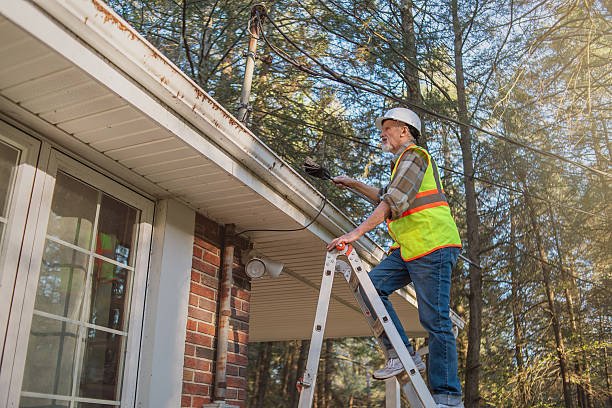
A senior man in his 70s inspects a roof gutter while standing on a ladder at a residential home in Pennsylvania. He wears safety equipment including a white hard hat and high-visibility yellow vest with orange reflective stripes. The inspector is positioned on an aluminum ladder leaning against the house, which features brick walls and white soffit. Tall pine trees surround the property, creating a wooded setting. The home has white-framed windows visible in the background.
Roofing plays an important role in protecting homes and buildings from rain, wind, cold weather, and other outdoor conditions. In Ealing, changing weather can gradually affect roof materials and create problems that may become more serious over time. Regular inspections, timely repairs, and proper maintenance can help keep a roof in good condition.
Whether you own a modern property or an older building, understanding common roofing issues can help you make better maintenance decisions. This guide explains roof types, common problems, repairs, maintenance, and factors to consider when looking after a roof in Ealing.
Understanding Roofing in Ealing
Why Roof Condition Matters
A roof protects the structure below it. When roofing materials become damaged, water can enter the property and affect ceilings, walls, insulation, and timber. Small issues can also become more expensive if they remain unnoticed.
Regular roof checks can help identify damaged tiles, blocked gutters, cracked flashing, and other issues before they develop further.
Local Weather and Roof Performance
Ealing experiences a mixture of rain, wind, cold temperatures, and occasional periods of warmer weather. These conditions can place gradual pressure on roofing materials.
Heavy rain can expose weak areas, while strong winds may loosen tiles or other components. Moisture can also encourage moss and algae growth on some roof surfaces.
Common Roofing Problems
Damaged or Missing Roof Tiles
Roof tiles can crack, slip, or become loose because of weather exposure and general aging. Missing tiles can leave parts of the roof exposed to rain.
A damaged tile may seem like a minor issue, but water can enter through the opening. Replacing damaged tiles quickly can help prevent further deterioration.
Roof Leaks and Water Damage
Leaks are among the most common roofing concerns. Water may enter through damaged tiles, worn flashing, roof joints, or other weak points.
Signs of a possible leak include damp patches on ceilings, water stains, peeling paint, or a musty smell. Finding the source early can reduce the risk of structural and interior damage.
Blocked Gutters and Drainage
Gutters carry rainwater away from the roof and walls. Leaves, moss, dirt, and other debris can restrict water flow.
Blocked gutters may cause water to overflow against walls or collect around roof edges. Regular gutter cleaning is therefore an important part of roof maintenance.
Roof Maintenance Tips
Schedule Regular Inspections
A roof should be checked periodically for visible signs of damage. Inspections can help identify loose tiles, damaged flashing, moss growth, blocked gutters, and other potential concerns.
After periods of strong wind or heavy rain, another visual check can be useful. Early detection often makes repairs simpler.
Keep Roof Drainage Clear
Clean gutters and downpipes help rainwater move away from the building. Property owners should remove accumulated leaves and debris before they cause blockages.
It is also important to check whether water flows correctly through the drainage system. Persistent overflow may indicate a blockage or drainage problem.
Control Moss and Organic Growth
Moss can develop on roof surfaces, particularly where moisture remains for long periods. Excessive growth can affect the appearance of a roof and may contribute to moisture retention.
Moss should be handled carefully. Aggressive cleaning methods can damage tiles or roofing materials.
Choosing Roofing Materials
Clay and Concrete Tiles
Clay and concrete tiles are common roofing materials for residential properties. They can provide durability and are available in different designs.
The right option depends on the building, existing roof structure, appearance, and local requirements.
Slate Roofing
Slate is known for its natural appearance and long service life when properly installed and maintained. However, slate requires suitable supporting structures and careful handling during repairs.
Replacing individual damaged slates can sometimes be preferable to replacing an entire roof.
Flat Roofing Materials
Flat roofs use different materials from traditional pitched roofs. Common systems include felt, EPDM rubber, and GRP.
Each material has different installation and maintenance requirements. Drainage is particularly important because standing water can create problems on a flat roof.
When Does a Roof Need Repair?
Warning Signs to Watch
Several signs can indicate that a roof needs attention. These include missing tiles, cracked materials, visible daylight through the roof, damaged flashing, sagging areas, and recurring leaks.
Inside the property, water stains and damp patches can also point to roofing problems.
Repair or Roof Replacement?
Not every roofing problem requires a complete replacement. Localised damage may only require a repair. However, an older roof with widespread deterioration may need more extensive work.
The decision depends on the roof’s age, condition, construction, previous repairs, and extent of damage.
Conclusion
Good roof care helps protect a property and can reduce the risk of costly problems. Regular inspections, clear gutters, timely repairs, and suitable roofing materials all contribute to a healthier roof. Property owners should also pay attention to signs of leaks, damaged tiles, moss growth, and drainage problems.
For homeowners looking for professional roofing information or services in the area, Bal Roofing is a relevant local roofing website to explore.