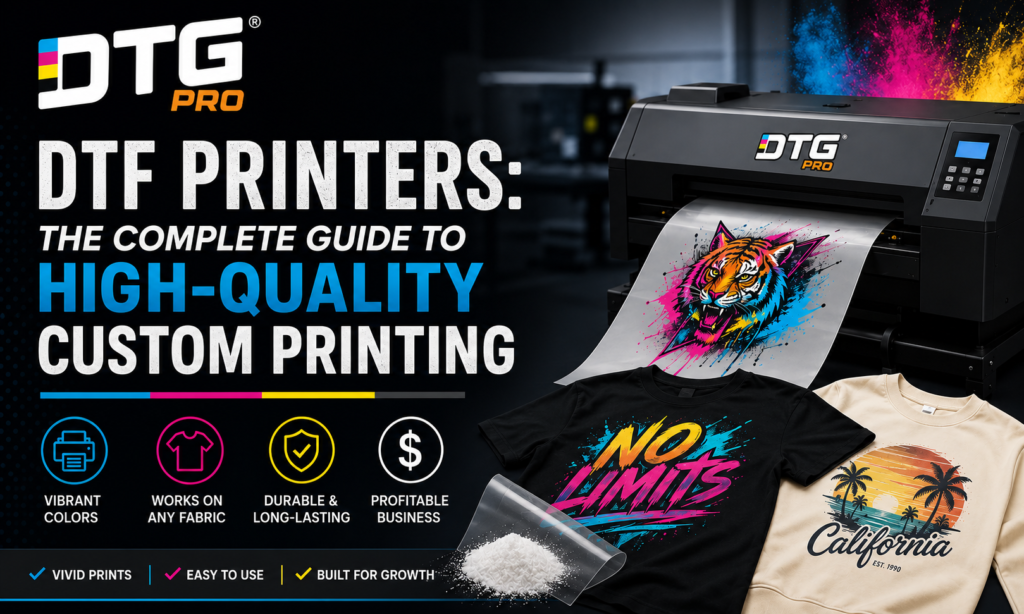
Direct-to-Film (DTF) printing has transformed the custom apparel industry by offering vibrant, durable, and cost-effective prints on almost any fabric. Whether you’re starting a custom printing business or expanding your existing services, DTF printers provide exceptional versatility and professional-quality results. Unlike traditional printing methods, DTF technology allows you to create colorful, detailed designs without the limitations of fabric type or color.
In this guide, we’ll explain how DTF printers work, their advantages, and why they’re becoming the preferred solution for print shops worldwide.
What Are DTF Printers?
DTF printers are specialized printing machines that print designs onto a transparent PET film using textile pigment inks. After printing, a hot-melt adhesive powder is applied to the design, cured, and then transferred onto fabric using a heat press.
This process eliminates the need for fabric pretreatment and allows printing on cotton, polyester, blends, nylon, denim, canvas, and many other materials.
How Do DTF Printers Work?
The DTF printing process is straightforward and highly efficient.
Step 1: Design Creation
Create your artwork using graphic design software such as Adobe Photoshop, Illustrator, or CorelDRAW.
Step 2: Print on PET Film
The DTF printer prints CMYK colors followed by a white ink layer onto a PET transfer film, ensuring vivid colors even on dark garments.
Step 3: Apply Adhesive Powder
A hot-melt adhesive powder is evenly applied to the wet ink, helping the design bond permanently to the fabric.
Step 4: Cure the Transfer
The printed film is heated to melt and cure the adhesive powder without damaging the artwork.
Step 5: Heat Press the Design
The cured transfer is pressed onto the garment using a heat press. Once cooled or hot peeled (depending on the film), the transfer leaves a vibrant, durable print.
Benefits of Using DTF Printers
DTF technology offers several advantages over traditional garment decoration methods.
Works on Almost Any Fabric
Unlike DTG printers that perform best on cotton, DTF printers can print on:
- Cotton
- Polyester
- Cotton-poly blends
- Nylon
- Denim
- Canvas
- Leather
- Performance fabrics
This flexibility allows businesses to expand their product offerings without investing in multiple printing systems.
Exceptional Print Quality
DTF printing delivers:
- Bright, vibrant colors
- Sharp details
- Smooth gradients
- Excellent white ink coverage
The finished prints have a soft feel while maintaining excellent color accuracy.
Durable and Wash Resistant
Properly produced DTF transfers resist:
- Cracking
- Peeling
- Fading
- Stretching
High-quality transfers can withstand dozens of wash cycles while maintaining their appearance.
Cost-Effective Production
DTF printers reduce production costs by minimizing waste and eliminating pretreatment. Businesses can produce one-off custom orders or large production runs with consistent quality.
DTF Printers vs. DTG Printing
Many print businesses compare DTF and DTG before investing in equipment.
DTF Printing
- Compatible with nearly all fabric types
- No pretreatment required
- Excellent for dark garments
- Suitable for small and bulk orders
- Easy to store printed transfers
DTG Printing
- Primarily designed for cotton
- Requires garment pretreatment
- Prints directly onto fabric
- Better suited for certain cotton applications
For businesses seeking maximum versatility, DTF printers often provide a more flexible solution.
Choosing the Right DTF Printer
Selecting the best DTF printer depends on your production goals.
Consider the following factors:
- Print width
- Printing speed
- White ink circulation system
- Automatic maintenance features
- Software compatibility
- Customer support
- Availability of replacement parts
Investing in a reliable machine can significantly improve production efficiency and print consistency.
Industries That Benefit from DTF Printers
DTF printing serves a wide range of businesses, including:
- Custom apparel shops
- Promotional product companies
- Print-on-demand businesses
- School and sports apparel suppliers
- Fashion brands
- Corporate merchandise providers
- Event organizers
Its flexibility makes it ideal for producing personalized garments, uniforms, hoodies, tote bags, and much more.
Maintenance Tips for DTF Printers
Regular maintenance helps maximize printer lifespan and print quality.
Follow these best practices:
- Clean the printhead regularly.
- Shake white ink daily to prevent settling.
- Perform nozzle checks before printing.
- Maintain proper humidity levels.
- Use high-quality inks and PET films.
- Store consumables in a clean, temperature-controlled environment.
Routine maintenance minimizes downtime and extends equipment life.
Conclusion
DTF printer have become one of the most versatile and profitable solutions in the custom printing industry. Their ability to print on multiple fabric types, produce vibrant colors, and deliver long-lasting durability makes them an excellent investment for businesses of all sizes.
Whether you’re launching a new apparel brand or upgrading your print shop, DTF printing offers the flexibility, efficiency, and professional results needed to stay competitive. By choosing the right equipment and maintaining it properly, you can consistently produce high-quality custom products that satisfy customers and grow your business.