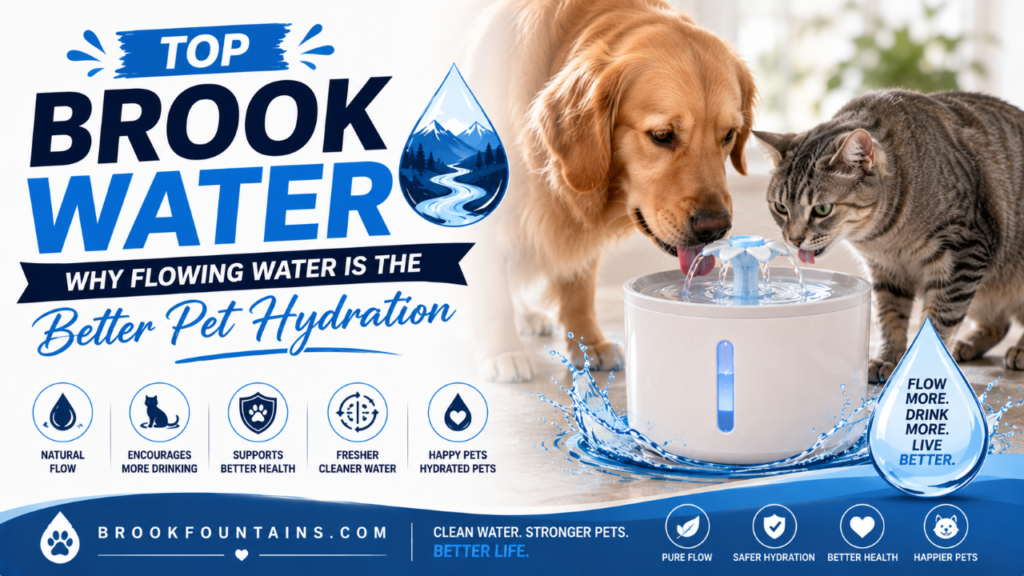
Imagine this—your cat ignores a full bowl all day but suddenly runs toward a dripping tap like it’s a luxury spa. Sounds familiar? That behavior is not random. It’s instinct. Animals naturally trust brook water —fresh, flowing, and continuously moving—over stagnant sources. And that one insight explains why so many pets struggle with hydration in modern homes.
Traditional bowls don’t mimic nature. They hold water, but they don’t maintain it. A fountain, on the other hand, recreates that natural “brook-like” experience indoors—and that’s where everything changes.
What Is Brook Water and Why Does It Matter
Brook water refers to naturally flowing water found in streams or small rivers. It stays fresh because it moves constantly, preventing stagnation and contamination. This movement also increases oxygen levels and keeps the water appealing.
Pets instinctively trust this type of water. Even domesticated cats and dogs retain this behavior. That’s why replicating brook-like conditions inside your home can dramatically improve hydration.
Quick Answer
Brook water works because it stays fresh, moving, and naturally appealing—exactly what pets prefer.
Why Still Water Fails Your Pet
A bowl might look clean, but within hours it starts collecting dust, fur, and microscopic debris. The water becomes stale—not necessarily unsafe, but less appealing.
Cats, especially, are extremely sensitive to these changes. That’s why many pet owners switch to kitty water fountains after noticing inconsistent drinking habits.
Once water starts moving, pets begin to drink more without any training or encouragement.
How a Fountain Mimics Natural Brook Water
A fountain is designed to recreate the exact conditions of flowing water. It combines movement, filtration, and circulation to keep water fresh throughout the day.
Instead of relying on you to refresh the bowl constantly, the system maintains itself.
A cat water dish fountain setup works particularly well because it keeps the familiar bowl shape while introducing movement. This makes it easier for pets to adapt.
The Science Behind Flowing Water and Pet Behavior
Flowing water provides three important signals:
- Freshness
- Oxygenation
- Lower contamination risk
Pets don’t analyze these scientifically—but they feel them instinctively. Movement creates trust. Still water creates hesitation.
That’s why even a small flow change can significantly increase drinking frequency.
Why Filtration Is Just as Important as Flow
Movement alone is not enough. Water also needs to be clean at a microscopic level. This is where cat water filters play a critical role.
Filters remove:
- Hair and debris
- Dust particles
- Food residue
Without filtration, even moving water loses its advantage over time.
The Hidden Engine: Water Pump for Pet Fountain
The fountain may look simple, but everything depends on the pump. A water pump for pet fountain controls water movement, flow strength, and filtration efficiency.
Without a proper pump:
- Water stops circulating effectively
- Filters don’t work properly
- The fountain feels like a regular bowl
This is why the pump is the backbone of the entire system.
When You Need Water Fountain Pump Replacement
Over time, pumps lose efficiency. You may notice weaker flow, unusual noise, or reduced movement. These are early signs that the system needs attention.
Instead of replacing the entire unit, a simple water fountain pump replacement can restore performance completely.
This is one of the easiest and most cost-effective upgrades you can make.
Real-Life Changes After Switching to a Brook-Like System
Pet owners consistently report similar improvements after switching from bowls to fountains:
- Pets drink more frequently
- Water stays cleaner longer
- Less attraction to taps
- Better hydration overall
These changes happen naturally because the system aligns with instinct.
Brook Water vs Bowl: A Clear Comparison
A bowl provides water, but it doesn’t improve it. It requires constant cleaning and still loses freshness quickly.
A brook-style system:
- Keeps water moving
- Maintains freshness
- Encourages drinking
- Reduces maintenance frequency
The difference is not just functional—it’s behavioral.
Common Mistakes Pet Owners Make
Even the best system can fail if not maintained properly.
Mistakes to Avoid
- Ignoring filter replacement
- Running the fountain with low water
- Skipping cleaning routines
- Delaying pump maintenance
These small issues can reduce performance over time.
Pros and Cons of Brook-Inspired Hydration Systems
Pros
Encourages natural drinking habits
Keeps water fresh and clean
Reduces stagnation
Improves long-term hydration
Cons
Requires maintenance
Needs electricity
Components need replacement
Despite these minor drawbacks, the benefits are significant.
How to Choose the Right Setup
When selecting a fountain, focus on performance rather than appearance.
Key Factors
- Strong and consistent flow
- Reliable filtration system
- Durable pump
- Easy cleaning design
- Proper size for your pet
A simple, well-built system always performs better than a complex one.
Frequently Asked Questions
1. What is brook water in pet care
Brook water refers to flowing, fresh water that mimics natural streams, making it more appealing to pets.
2. Why do pets prefer flowing water
Flowing water feels fresher and safer, which encourages pets to drink more.
3. Is a fountain better than a bowl
In most cases, yes, because it maintains water quality and improves hydration.
4. How often should filters be replaced
Filters should be replaced every 2–4 weeks depending on usage.
5. What happens if the pump stops working
Water stops circulating, and the fountain becomes less effective.
6. Can cats and dogs use the same fountain
Yes, most fountains are designed for multiple pets.
7. Do fountains require daily cleaning
No, weekly cleaning is usually sufficient.
8. Does water movement really matter
Yes, it directly affects how often pets drink.
9. How long does a fountain last
With proper maintenance, it can last for years.
10. Is filtered water necessary
Yes, it improves taste and keeps water clean.
Conclusion
Brook water is not just a concept—it’s the natural standard your pet still follows. When you recreate that flowing, fresh environment inside your home, everything changes. Your pet drinks more, stays healthier, and builds better habits without effort. Instead of forcing hydration, you simply make water better.