water damage restoration st louis
Property managers reduce water damage claims most effectively through routine plumbing inspections, fast tenant reporting systems, and leak detection technology, since nearly every major claim traces back to a small problem that sat unnoticed for too long. The properties with the fewest claims aren’t the newest ones, they’re the ones with the most consistent maintenance habits. Here’s how that actually plays out in practice.
The Short Answer Before the Full Breakdown
1. Why Water Damage Claims Are So Common in Rental Properties
Rental units often go without close inspection between tenants, and plumbing issues that would get noticed quickly in an owner-occupied home can sit unnoticed for weeks in a rental. Multiply that across dozens or hundreds of units, and the odds of a slow leak becoming a major claim climb fast.
2. The Cost of Reactive Management Versus Preventive Management
Responding to water damage after a tenant reports standing water costs significantly more than catching the same issue during a routine inspection. Reactive management deals with the aftermath, drywall replacement, flooring repair, sometimes tenant displacement, while preventive management deals with a five-minute fix before any of that becomes necessary.
Building a Preventive Maintenance Schedule
1. Routine Plumbing Inspections Across Units
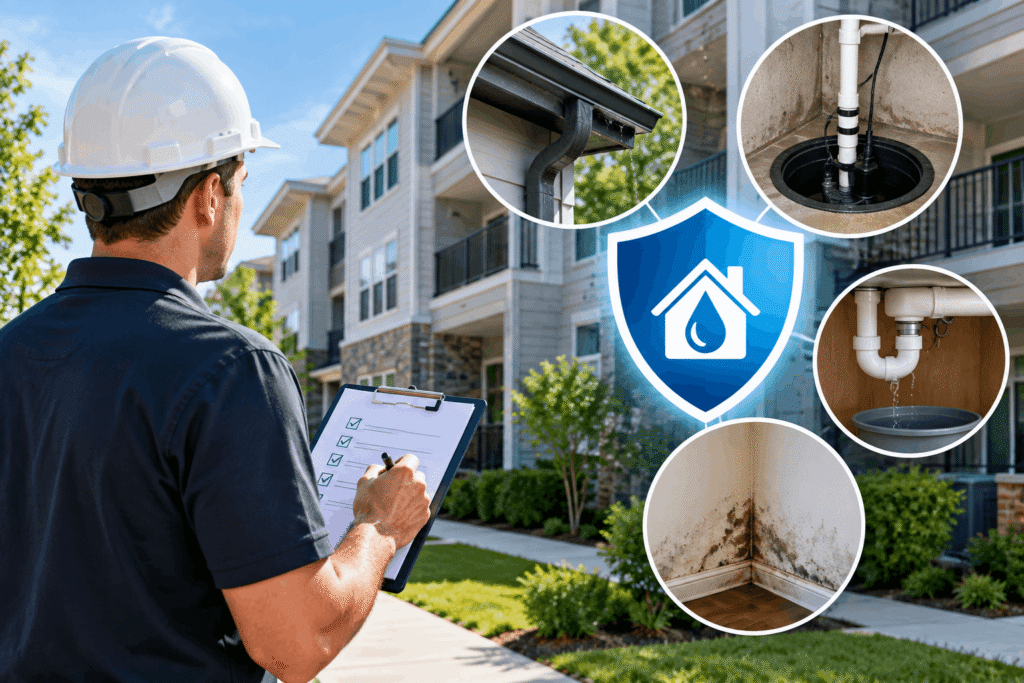
Scheduling regular plumbing checks, even in units without reported issues, catches slow leaks and worn supply lines before they fail completely. Annual inspections across a portfolio might feel like a lot of coordination, but the cost is minor compared to a single major claim.
2. Appliance and Water Heater Lifespan Tracking
Keeping a record of appliance ages, particularly water heaters, dishwashers, and washing machines, helps property managers replace equipment proactively rather than waiting for a failure. Water heaters nearing the end of their typical 8 to 12 year lifespan are a common source of sudden flooding that’s entirely predictable with proper tracking.
HVAC and Condensation Line Maintenance
Condensate drain lines clog more often than people expect, and when they back up, water finds its way into ceiling cavities rather than the drain pan. Including HVAC condensation checks as part of a regular maintenance rotation catches this before it becomes a ceiling leak that surprises a tenant below.
Tenant Communication and Reporting Systems
1. Making It Easy for Tenants to Report Problems Early
A lot of small leaks go unreported simply because tenants don’t know who to contact or assume it’s not worth mentioning. A simple, easy-to-use reporting system, whether that’s a text line, an app, or a clear email address, encourages tenants to flag small issues before they become expensive ones.
2. Training Tenants to Recognize Warning Signs
Including a short guide in move-in materials about what to watch for, a musty smell, a soft spot in flooring, discoloration on a ceiling, turns tenants into an extra set of eyes across the property. Most tenants are happy to report something small if they know it matters and know exactly how to do it.
3. Response Time Expectations That Actually Get Followed
Setting a clear internal standard for how quickly a reported leak gets addressed, and actually following it, prevents small reports from sitting in a queue for days. A reported leak that waits a week for a maintenance visit defeats the entire purpose of having a reporting system in the first place.
Technology That Catches Problems Before Tenants Do
1. Leak Sensors in High-Risk Units
Placing wireless leak sensors near water heaters, under sinks, and in laundry areas across units gives property managers an early alert system that doesn’t depend on a tenant noticing anything at all. This is particularly valuable in units with a history of plumbing issues or older buildings with aging infrastructure.
2. Smart Water Shutoff Systems for Multi-Unit Buildings
Automatic shutoff valves tied to leak detection systems can stop water flow the moment an anomaly is detected, even in an unoccupied unit. For larger properties, this technology often pays for itself the first time it prevents a burst pipe from flooding multiple units below.
3. Centralized Monitoring for Large Portfolios
For property managers overseeing multiple buildings, centralized monitoring dashboards that aggregate sensor data across the entire portfolio make it possible to catch developing issues without physically checking every unit. This kind of oversight turns water damage prevention from a reactive scramble into a manageable daily glance at a dashboard.
When a Claim Happens Anyway
1. Fast Response Protocols That Limit Damage Spread
Even with strong prevention in place, failures still happen occasionally. Having a clear internal protocol, who gets notified, how quickly a vendor gets dispatched, what steps happen first, limits how far damage spreads once a leak is discovered.
2. Choosing a Restoration Partner Before You Need One
Property managers who wait until an active flood to search for the best restoration company near me end up losing valuable time during exactly the moment speed matters most. Establishing a relationship ahead of time with a provider offering water damage restoration St Louis property managers can call around the clock means faster response and less tenant disruption when something does go wrong. Gateway Water and Mold works with commercial and multi-unit properties regularly, testing affected areas before recommending repairs rather than assuming the worst-case scope right away. For portfolios spanning multiple buildings, having a single trusted contact for water damage restoration St Louis needs simplifies vendor management considerably compared to searching for the best restoration company near me every time an issue comes up in a different building.
Conclusion
Reducing water damage claims isn’t about eliminating every possible failure, plumbing systems age and appliances eventually break down no matter how well a property is managed. It’s about catching those failures early through routine inspections, responsive tenant communication, and detection technology that doesn’t rely on someone happening to notice a problem. Property managers who build these habits into their regular operations see fewer claims, lower repair costs, and far less tenant disruption than those who only react once water is already spreading across a unit.
Frequently Asked Questions
- How often should rental properties schedule plumbing inspections?
Annually at minimum, with more frequent checks for older buildings or units with a history of plumbing issues. - Are leak sensors worth the investment for a multi-unit property?
Yes, especially in buildings with aging plumbing, since early detection often prevents damage from spreading to multiple units below a leak source. - What’s the most effective way to get tenants to report small leaks early?
Provide a simple, clearly communicated reporting method and explain during move-in why reporting small issues quickly matters for both the tenant and the property. - Should property managers have a restoration company relationship in place before an emergency?
Absolutely. Comparing options for the best restoration company near me during a crisis wastes valuable time that a pre-established relationship would eliminate entirely. - How does centralized monitoring help property managers with large portfolios?
It allows managers to track leak detection data across multiple buildings from a single dashboard, catching developing issues without needing to physically inspect every unit regularly.