Large properties come with large patches of bare soil, and leaving that ground uncovered invites erosion, mud, and weeds. Hydroseeding gives property owners, developers, and managers a fast way to cover big areas with grass. A crew sprays a mix of seed, mulch, and fertilizer across the ground, and the mulch protects the seed while it sprouts. If you manage a development, a retention pond, a roadside, or a large landscaped area, Commercial Hydroseeding Services can help you stabilize soil without the cost and labor of sod. This article explains where hydroseeding is used, how it controls erosion, and what to ask before you hire a contractor.
What commercial hydroseeding covers
Commercial hydroseeding uses the same basic process as residential work, but on a larger scale. Contractors use truck-mounted or trailer-mounted tanks that hold hundreds or thousands of gallons, and the spray can reach long distances, which is useful on slopes, ditches, and areas where equipment cannot drive. Jobs can range from a small strip behind a shopping center to many acres at a new development. Crews work from plans and site conditions to decide the seed mix, mulch type, and application rate. The result is an even layer of material that holds moisture, shields seed, and begins stabilizing the soil right away. Many contractors can also add soil amendments or work in stages on phased projects. Because one crew can cover a lot of ground in a day, it is often practical for projects with tight schedules.
Erosion control on slopes and bare ground
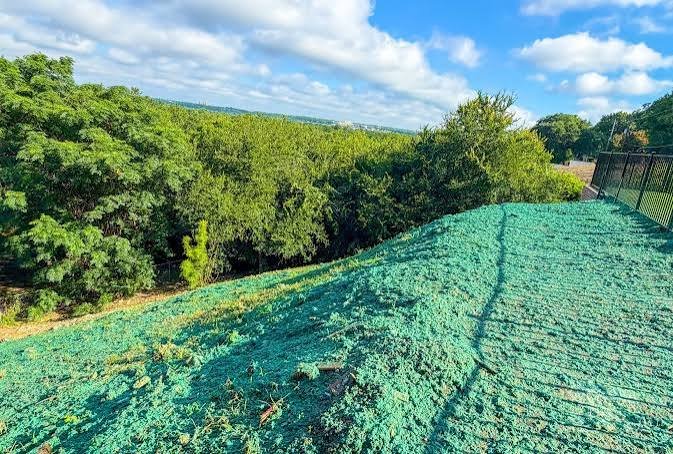
Bare soil washes away fast during heavy rain, and that sediment can end up in storm drains, creeks, and neighboring properties. Commercial Hydroseeding Services help hold that soil in place until grass roots take over. The mulch covers the surface and slows the impact of raindrops, and a binder or tackifier can be added so the mulch stays put on steeper slopes. For tougher conditions, some contractors use bonded fiber matrix products, which form a thicker protective layer. Bare slopes near roads or water are a good example of where this protection matters. Once the grass grows in, its roots bind the soil and keep it stable for the long term. Construction sites often have rules about stabilizing disturbed soil, so ask your contractor and your local authority which requirements apply to your project.
Where hydroseeding is used
Hydroseeding fits many kinds of commercial and public projects. Developers use it to stabilize lots and common areas at new neighborhoods and business parks. Property managers and homeowners associations use it to renovate large lawns, entrances, and open areas. It is common along roadsides, drainage channels, and the banks of retention ponds, where erosion is a constant concern. Schools, parks, and sports fields use it to establish turf over big areas, and utility corridors and solar sites use it to keep bare ground covered. In each case, the goal is to cover a lot of ground quickly and cost-effectively, with plants that suit the site. The best mix for a pond bank is not the same as for a sports field, so the plan should match the use.
Materials and seed mixes
The materials make a big difference in how well hydroseeding performs. Seed mixes are chosen for the site, such as grasses that tolerate heat and drought, handle foot traffic, or grow well on slopes. In North Texas, warm-season grasses like Bermuda are common for sunny, hot sites, and some projects add native grasses or a temporary cover crop to protect soil while the main grass establishes. Mulch comes in wood fiber, paper fiber, and blended products, and heavier or bonded mulches suit steeper ground. Fertilizer and soil amendments can be mixed into the slurry, and tackifiers help the mulch bind to the soil. Ask your contractor why they chose each material, and make sure the estimate lists them so you can compare bids fairly.
Planning, scheduling, and site preparation
A good hydroseeding project starts before the truck arrives. Grading should be finished, rocks and debris removed, and the soil loosened so seed can root. Drainage should be set up so water does not run across the seeded area and wash it out. For Commercial Hydroseeding Services, timing also depends on the grass: warm-season mixes do best seeded in late spring and summer, while cool-season mixes are usually seeded in fall. Weather matters too, since heavy rain right after application can move material, and extreme heat can dry out a new seedbed. Plan for a water source for irrigation or watering trucks during the first weeks. A pre-job walk with the contractor helps catch problems early. Coordinate with other trades so the seeded area is not driven over after application.
Questions to ask a contractor
When comparing Commercial Hydroseeding Services, start with a written proposal that lists the area in square feet or acres, the seed mix, the mulch type, the application rate, and the price. Ask about insurance, equipment capacity, and experience with projects like yours, especially slopes or sites with erosion rules. Ask for photos or references from similar jobs, and ask how they measure success, such as the percentage of ground covered after a certain number of weeks. Find out what the contractor expects you to do for watering, mowing, and weed control, and what warranty or re-seeding terms apply if coverage is poor. Ask how soon they can start and how long the job should take. Ask who handles permits or inspections if the site requires them. Clear answers and detailed proposals are good signs.
Conclusion
Commercial hydroseeding is a practical way to cover large areas, control erosion, and get grass growing on schedule. The right mix, good site preparation, proper timing, and early watering all affect the outcome. When you select Commercial Hydroseeding Services, look for a contractor who asks about your site, explains the materials, and puts the details in writing. Plan for the first weeks after seeding, since that is when the grass needs the most attention. A well-planned project protects your soil, improves the look of the property, and saves money over time. A little planning early makes the whole job go more smoothly.