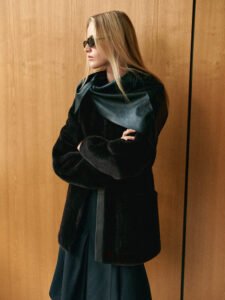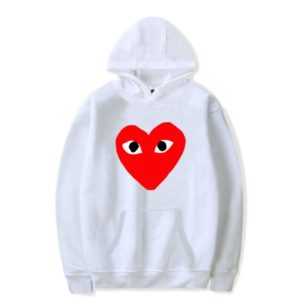
Surrealism has long been a powerful force in art, literature, and design, but in the world of fashion, few designers have used it as boldly and consistently as Rei Kawakubo, the founder of comme des garcons. Her runway shows are not just presentations of clothing—they are conceptual performances that challenge reality, reshape human form, and question what fashion even means. Surrealism, in her work, becomes more than an aesthetic; it becomes a language of disruption and imagination.
Surrealism in Fashion: Breaking Reality
Surrealism, originally a 20th-century art movement associated with artists like Salvador Dalí and René Magritte, focuses on dream-like imagery, irrational combinations, and subconscious expression. In fashion, surrealism translates into distorted silhouettes, unexpected materials, and theatrical presentation.
Kawakubo takes these principles further than most designers. Instead of simply adding surreal details, she builds entire collections that feel like walking dreams—or sometimes nightmares. Her runway shows often blur the boundary between clothing and sculpture, body and object, reality and illusion.
The Body as a Canvas for Distortion
One of the most striking elements of Kawakubo’s surrealism is her manipulation of the human body. Rather than emphasizing traditional ideas of beauty or proportion, she reshapes the body into unfamiliar forms.
In several collections, models appear with exaggerated bumps, padded shapes, or asymmetrical silhouettes that completely change how the body is perceived. The clothing does not simply fit the body—it transforms it. This approach aligns with surrealism’s interest in distorting reality to reveal hidden emotional or psychological truths.
For Kawakubo, fashion is not about flattering the body. It is about questioning why we accept certain shapes as “normal” in the first place.
Runway Shows as Theatrical Worlds
Kawakubo’s shows are carefully constructed environments rather than simple catwalk presentations. The runway becomes a stage where surreal narratives unfold.
Instead of traditional model walks, audiences may see slow, ritual-like movements, group formations, or symbolic actions. In some shows, models appear as if they are part of an installation rather than individuals wearing clothes.
The lighting, sound design, and set pieces often reinforce this dreamlike atmosphere. Fog, unusual structures, or abstract backdrops transform the venue into a space that feels removed from reality. This theatricality is essential to her surrealist vision: the clothing cannot be separated from the world it is shown in.
Clothing as Concept, Not Commodity
In surrealism, objects are often stripped of their practical meaning and reimagined symbolically. Kawakubo applies this idea directly to fashion. Her garments frequently challenge the idea that clothing must be functional, wearable, or even comfortable.
Some pieces appear intentionally impractical, while others distort familiar clothing forms such as jackets, dresses, or suits into unrecognizable shapes. Sleeves may extend beyond the arms, skirts may become sculptural forms, and fabrics may appear layered in impossible ways.
This approach forces viewers to reconsider what clothing represents. Is it protection, identity, art, or something entirely different? Kawakubo does not provide answers—she creates questions.
Emotional Impact and the Subconscious
Surrealism is deeply connected to the subconscious mind, and Kawakubo’s shows often evoke strong emotional reactions. Some viewers feel confusion, others fascination, and some even discomfort.
This emotional complexity is intentional. By removing familiar fashion cues, Kawakubo opens space for personal interpretation. Each audience member is invited to project their own meaning onto the work.
In this way, her shows function like dreams: abstract, symbolic, and open-ended. The viewer is not meant to understand everything immediately, but to feel something instinctive and unresolved.
Challenging Fashion Industry Norms
Kawakubo’s surrealist approach also serves as a critique of the fashion industry itself. Traditional runway shows often focus on trends, commercial appeal, and seasonal wearability. Kawakubo rejects these expectations.
Instead, she treats fashion as an art form that does not need to conform to market logic. Her surrealist shows resist categorization—they are not purely fashion, performance, or sculpture, but a blend of all three.
This has made her one of the most influential and unconventional designers of the modern era. Many contemporary designers now draw inspiration from her willingness to break boundaries and prioritize concept over commerce.
Legacy of Surrealism in Kawakubo’s Work
Over decades, Kawakubo has consistently used surrealism not as a theme but as a foundation. Each collection builds on her ongoing exploration of form, identity, and perception.Her work demonstrates that fashion can exist beyond clothing. It can be philosophical, emotional, and even destabilizing. By bringing surrealism to the runway, she has expanded the definition of what a fashion show can be.Today, her influence can be seen in avant-garde designers, museum exhibitions, and conceptual fashion photography. Yet her approach remains uniquely her own—quietly radical, intellectually challenging, and visually unforgettable.
Conclusion
Surrealism in Kawakubo’s fashion shows is not decoration—it is the core of her creative philosophy. Through distorted silhouettes, theatrical presentations, and emotionally charged concepts, she transforms the runway into a space where reality dissolves and imagination takes over.