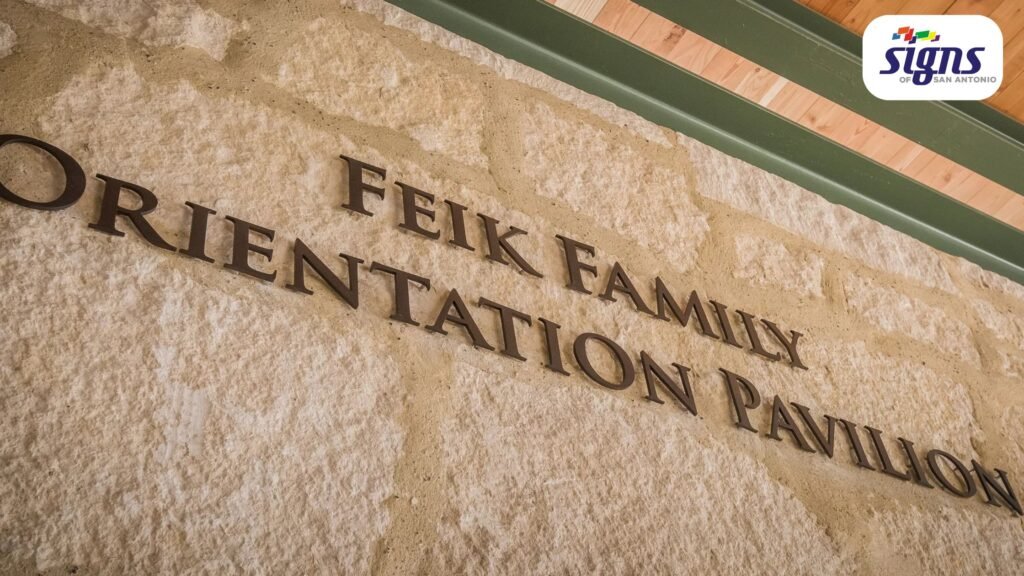
The category of metal signs in San Antonio covers a wider range of materials, performance profiles, and applications than the name suggests. Aluminum, galvanized steel, stainless steel, and aluminum composite panels are all metal signs in a general sense, but they behave very differently under outdoor conditions and suit different applications. Treating them as interchangeable at the specification stage is one of the more common and costly mistakes in commercial signage purchasing.
For a business owner evaluating exterior signage options, the relevant question is not whether to use metal. It is which metal, finished how, for which specific application. Those answers determine how the sign performs over its full lifespan, not just on the day it goes up.
Aluminum: The Default for Good Reason
Aluminum is the most widely used metal in commercial exterior signage because it does not rust, is lightweight relative to its rigidity, holds paint and applied graphics well, and performs reliably under the UV exposure and temperature range that San Antonio’s climate produces year-round.
For Flat Cut Metal Signs, blade signs, and dimensional letter backings, aluminum is typically the right material for outdoor applications where the sign is expected to remain in place for years. It does not require the ongoing maintenance that painted steel demands, and it does not degrade in ways that undermine the sign’s appearance over time.
Where Steel Makes Sense and Where It Does Not
Steel is appropriate for applications where structural load or impact resistance require more material strength than aluminum provides. Bollard signs, heavy-duty post systems, and signage in industrial environments with frequent contact may warrant steel for those reasons.
The trade-off is corrosion. Uncoated steel rusts outdoors. Galvanized steel resists it through a zinc coating, but that coating can be compromised at cut edges or drilled holes during installation. In San Antonio’s humidity and summer storm pattern, steel signs that are not correctly finished and maintained will show rust at edges and fastener points within a few years. For most commercial applications where aluminum meets the structural requirement, the added maintenance of steel is not justified.
How Finish Affects Performance as Much as Material
The substrate is only part of what determines how a metal sign holds up outdoors. The finish applied to it carries its own performance variables.
Powder coating is the most durable finish for metal signs in long-term outdoor exposure. It bonds to the substrate and cures to a hard surface that resists chipping, fading, and moisture penetration better than liquid paint. For custom signs in San Antonio in direct sun for most of the day, the difference between a powder-coated finish and standard paint becomes visible within one to two seasons.
Vinyl graphics applied over metal perform well when the surface preparation is correct and the vinyl is specified for outdoor conditions. UV-laminated vinyl on a primed aluminum surface holds color significantly longer than unlaminated vinyl, particularly on south and west-facing sign faces.
Matching Metal Sign Type to Application
The material decision follows from the application. A practical framework:
- Exterior building identification, long-term: aluminum plate or aluminum composite panel with powder-coated or UV-rated vinyl finish, designed to remain in place for the life of the business at that location.
- Monument and post-mounted signs: aluminum panel faces on steel or aluminum post systems, with post material determined by structural load and site conditions.
- ADA and code-compliance signs: brushed aluminum or stainless steel for interior plaques and tactile signage where the material finish is part of the regulatory specification.
- High-contact or industrial environments: galvanized or powder-coated steel where impact resistance outweighs the additional maintenance requirement.
Why Custom Production Matters
Off-the-shelf metal signs cover a narrow range of standard sizes and formats. Most commercial applications require dimensions, mounting configurations, or finish specifications that standard products do not accommodate. Custom signs in San Antonio produced to application-specific requirements perform better over time than standard products adapted to a use case they were not designed for.
Cut-to-size aluminum panels with clean edges and properly sealed fastener points last longer than panels cut in the field or mounted with hardware that compromises the surface finish. The production decisions that look like minor details at the order stage show up as visible quality differences within the first year of outdoor exposure in this climate.
For metal signs in San Antonio that need to hold their appearance for years, the specification conversation is worth having before the order is placed, not after the first season has passed.