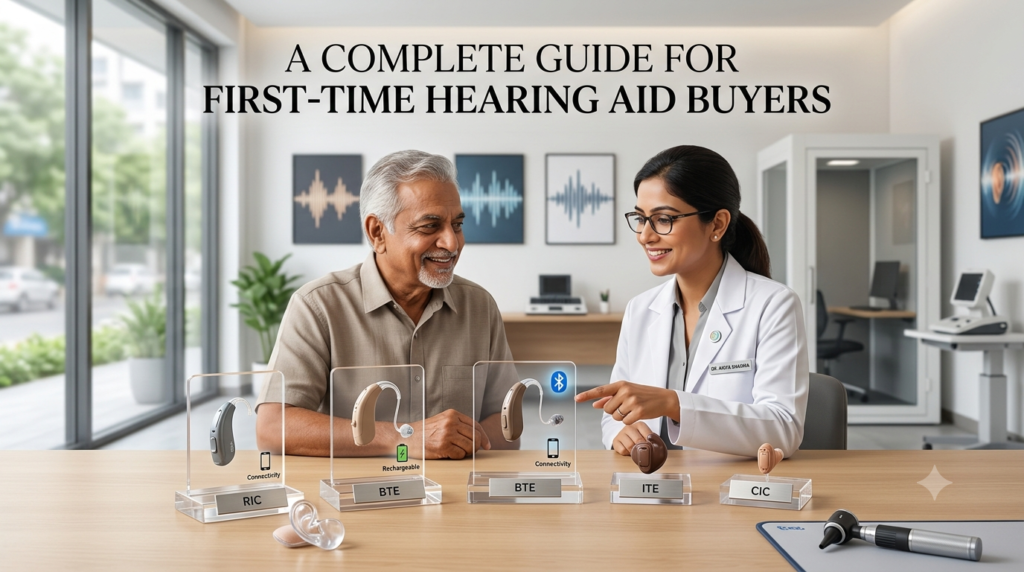
Buying your first hearing aid can feel overwhelming. Between technology tiers, styles, brands, and pricing, it’s easy to feel like you need an engineering degree just to make a confident decision. Here’s a straightforward walkthrough of the process, from noticing the first signs of hearing loss to walking out of the clinic with a device that actually fits your life.
Step 1: Get a Professional Hearing Assessment
Before considering any specific device, the first step is a comprehensive hearing test conducted by a qualified audiologist. This typically includes:
- A review of your hearing history and lifestyle
- Pure-tone audiometry to measure hearing thresholds across frequencies
- Speech-in-noise testing to understand how you perform in real-world listening conditions
This assessment produces an audiogram — a chart showing the type and degree of hearing loss in each ear — which becomes the foundation for every recommendation that follows.
Step 2: Understand Your Options
Once your hearing loss is mapped out, your audiologist can narrow down suitable options across three main dimensions:
Style — from discreet in-canal devices to more powerful behind-the-ear models, matched to the severity of your hearing loss and your comfort with visibility.
Technology level — ranging from basic amplification to premium AI-driven processing that adapts automatically to different environments.
Features — including Bluetooth connectivity, rechargeable batteries, tinnitus therapy, and water resistance, depending on your daily needs.
There’s no universally “best” hearing aid — the right choice depends entirely on your specific hearing profile and lifestyle.
Step 3: Ask for a Trial Period
A reputable hearing aid provider should offer a trial period before you commit to a purchase. This is one of the most important parts of the process, since a hearing aid that sounds good in a quiet clinic room needs to be tested in the real environments you actually live in — restaurants, workplaces, family gatherings, and phone calls.
During the trial, pay attention to:
- Comfort over a full day of wear
- Clarity of speech in noisy settings
- Ease of handling controls or the companion app
- Battery life under normal use
Step 4: Get a Proper Fitting
A hearing aid’s performance depends heavily on correct fitting and calibration — not just the device itself. Ask whether your provider performs Real Ear Measurement (REM), a verification process that confirms the hearing aid is delivering the right amplification levels specifically for your ear canal, rather than relying on generic manufacturer settings.
Step 5: Plan for Ongoing Support
Hearing aids aren’t a one-time purchase and done. Over time, you’ll likely need periodic adjustments, cleaning, and troubleshooting. Choose a provider that offers accessible after-sales care, ideally including remote support through a companion app for minor adjustments without needing an in-person visit every time.
Where to Start
If you’re new to this process, working with an established hearing care provider makes a real difference — not just for the device itself, but for the assessment, fitting, and long-term support around it. Soft Hear offers free hearing tests and trials across its clinic network, including access to Beltone’s full range of hearing aid families, from entry-level digital models to premium AI-powered devices. You can explore Beltone hearing aid options for first-time buyers and book a free consultation to get a clear, personalized recommendation.
Buying your first hearing aid is a meaningful step, and taking it methodically — assessment, education, trial, fitting, and support — makes it far more likely you’ll end up with a device you actually wear every day, rather than one that sits in a drawer.