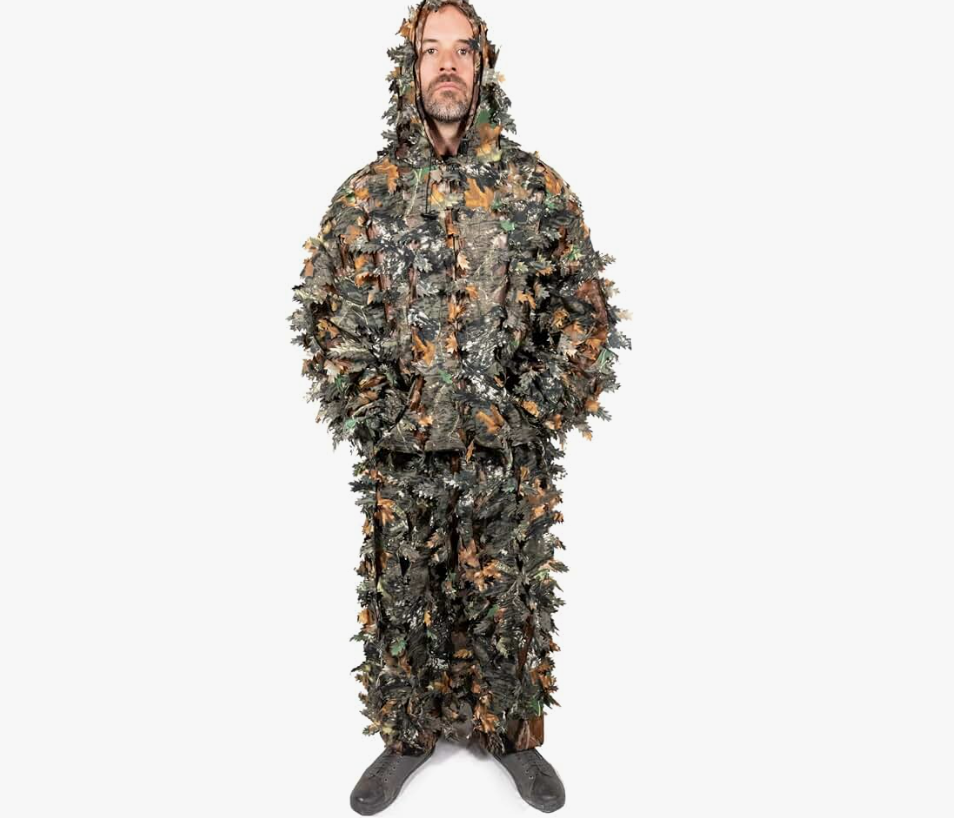
Deer hunting requires patience, preparation, and clothing that complements the natural environment. Whether hunters are preparing for archery season, sitting in a tree stand, or waiting quietly near woodland trails, appropriate camouflage can help reduce their visual profile against surrounding vegetation. A leafy suit for deer hunting offers a practical alternative to conventional printed camouflage by incorporating three-dimensional fabric leaves that add texture and help break up the human silhouette. Unlike flat patterns alone, leafy designs create irregular edges that can complement branches, shrubs, and woodland foliage. When selected for the right terrain and season, this type of hunting apparel can provide additional concealment while allowing hunters to maintain a comfortable clothing system throughout their time outdoors.
Modern hunting clothing must balance concealment with mobility, ventilation, and durability. Hunters often spend hours in changing temperatures, move through vegetation, and wear multiple layers to remain comfortable during early mornings and colder afternoons. Leafy Suits offers Titan 3D camouflage apparel designed for outdoor enthusiasts who want lightweight construction and textured foliage in a coordinated jacket-and-trouser set. Its design provides an option for hunters seeking a less bulky alternative to traditional string-based ghillie suits. Understanding how three-dimensional camouflage works, which features matter most, and how to select a suitable pattern can help buyers make a confident decision before investing in their next set of hunting gear.
Why Choose a Leafy Suit for Deer Hunting?
Deer hunting frequently involves remaining still for extended periods, moving carefully through wooded areas, and selecting positions that provide suitable visibility and natural cover. Three-dimensional leafy clothing can help disrupt the outline of the shoulders, arms, and torso by introducing irregular shapes that resemble surrounding vegetation. This may make the wearer’s silhouette less visually distinct when the garment’s colors and textures match the environment. However, camouflage effectiveness depends on several factors, including lighting, background vegetation, viewing distance, and movement. A garment designed for dense green foliage may be less suitable for a landscape dominated by dry leaves, bare branches, or brown woodland shadows. Hunters should therefore consider the locations where they spend the most time and choose their clothing accordingly. Appropriate positioning, careful movement, and awareness of wind direction remain important parts of responsible hunting preparation, regardless of the camouflage system selected.
Understanding 3D Camouflage for Woodland Environments
Three-dimensional camouflage differs from conventional hunting clothing because it combines printed colors with physical texture. Flat camouflage patterns create visual contrast through shapes and shades, while leafy garments introduce fabric elements that add depth and irregularity. This additional texture can help soften the straight lines of the human body against compatible natural backgrounds. The Titan 3D leafy suit from Leafy Suits uses deep-cut, double-sided printed leaves to create a layered appearance from different viewing angles. This design can be worth considering for hunters who regularly operate in woodland, brush, or areas with substantial vegetation. Nevertheless, the surrounding landscape should guide pattern selection rather than the garment’s appearance in isolation. Observe whether the hunting area contains predominantly green foliage, dark tree trunks, dry leaves, or mixed seasonal colors. Matching the camouflage to these characteristics helps create a more coherent outdoor setup and avoids relying on a single pattern for every possible environment.
Lightweight Construction and All-Day Comfort
Comfort becomes increasingly important during long hunting sessions, especially when hunters alternate between walking and sitting quietly in one location. Heavy clothing can increase fatigue during movement, while poorly ventilated materials may trap heat during mild weather or physically demanding activity. The Titan 3D adult leafy suit is described as weighing less than two pounds and includes a breathable No-See-Um mesh liner designed to encourage airflow. Its lightweight construction may appeal to hunters who want additional camouflage texture without the substantial bulk associated with some traditional ghillie suits. The two-piece design also allows the jacket and trousers to be worn over suitable base layers. However, lightweight construction does not automatically provide insulation or full waterproof protection. Hunters should account for expected temperatures, rainfall, and wind when planning their clothing system. Selecting appropriate layers and carrying suitable weather protection helps maintain comfort while allowing the camouflage garment to perform its intended role.
Choosing the Right Pattern for Deer Season
Seasonal changes can significantly affect the appearance of hunting environments, making pattern selection an important purchasing consideration. Early in the season, woodland areas may contain abundant green foliage, while later months can bring brown leaves, bare branches, and darker shadows. A pattern that blends well with fresh vegetation may look noticeably different against a late-season landscape. Leafy Suits offers Titan 3D options in patterns such as Mossy Oak Obsession, Mossy Oak Greenleaf, Realtree Timber, and Realtree APX, subject to current availability. Buyers should compare these designs with the vegetation and lighting conditions typical of their hunting locations. Hunters who travel between different environments may benefit from considering which pattern offers the most practical coverage for their primary terrain. It is also important to evaluate how the garment looks when worn with existing jackets, trousers, boots, and accessories. Coordinating the complete outfit helps create a more consistent appearance without requiring unnecessary equipment purchases.
Essential Features to Consider Before Buying
A suitable hunting suit should combine useful camouflage construction with functional details that support repeated outdoor use. Buyers should examine the attachment of the leafy elements, the strength of the seams, and the quality of closures before making a purchase. A garment with secure construction is better suited to regular movement through vegetation than one with loose components that detach easily. Practical features such as an adjustable hood, zippered pockets, elastic cuffs, and waist adjustments can improve fit and convenience. The Titan 3D suit includes jacket and trouser pockets, an adjustable attached hood, a removable zippered mosquito face mask, and boot zippers designed to make dressing easier over footwear. These details may be useful during long days outdoors, although their value depends on individual preferences and hunting conditions. Buyers should also review sizing information carefully and allow enough room for the clothing layers they expect to wear underneath. Evaluating construction, fit, and practical functionality provides a stronger basis for comparison than focusing on appearance alone.
Comfort, Safety, and Mobility in the Field
Hunting apparel should support natural movement without interfering with equipment or creating unnecessary distractions. A leafy suit needs enough room for walking, crouching, kneeling, and reaching, but excessive fabric can snag on branches or interfere with other gear. Before heading outdoors, test the outfit with the boots, gloves, and equipment normally used during hunting. Bowhunters should check that loose material cannot contact the bowstring or moving components during a draw, while all hunters should ensure that pockets and closures remain accessible. Any face covering must preserve unobstructed breathing, vision, hearing, and communication. Weather protection also deserves attention because a leafy outer layer should not be assumed to replace dedicated rainwear or insulation. In colder conditions, layering allows hunters to adapt to temperature changes without sacrificing mobility. These practical checks help ensure that camouflage clothing contributes to a comfortable setup while supporting safe and responsible outdoor practices.
How to Maintain Your Leafy Hunting Suit
Proper maintenance helps preserve the structure and usability of specialized camouflage clothing over repeated hunting seasons. After each outing, inspect the garment for dirt, trapped vegetation, loose fabric leaves, damaged seams, and malfunctioning zippers. Remove debris carefully and follow the manufacturer’s washing and drying instructions, particularly when the suit contains textured mesh and attached decorative elements. Avoid using excessive heat or unsuitable cleaning methods that may damage the fabric or alter its appearance. If the garment becomes damp, allow it to dry completely before storing it in its carrying bag. Periodically check the hood, cuffs, waist adjustments, and trouser closures to identify minor issues before the next trip. Keeping the suit clean and dry also makes it easier to inspect for wear and prepare for changing seasonal conditions. Consistent care is a straightforward way to protect the value of hunting clothing and reduce the likelihood of preventable equipment problems.
Why Consider Leafy Suits for Deer Hunting Gear?
Choosing a specialist camouflage brand is easier when the available product features match the hunter’s actual requirements. Leafy Suits offers Titan 3D leafy apparel with a focus on lightweight construction, textured concealment, and functional details for outdoor use. The adult suit combines a jacket and trousers with breathable mesh, layered foliage, adjustable features, and storage options. This design may appeal to hunters who want coordinated coverage without the bulk of traditional strand-based concealment garments. Buyers should review current product details, available patterns, size measurements, and care instructions before ordering because selection and availability can change. It is also worth considering how frequently the suit will be used and whether a lightweight design or a more reinforced garment would better suit the terrain. Evaluating these factors alongside comfort, weather conditions, and equipment compatibility helps make the purchase more practical and supports a better-informed approach to preparing for deer season.
Conclusion
Selecting the right leafy suit for deer hunting involves balancing camouflage, comfort, mobility, durability, and suitability for the surrounding environment. Three-dimensional foliage can help disrupt the human silhouette, while breathable materials and functional garment details can improve comfort during extended outdoor sessions. The best choice depends on the season, terrain, fit, and intended hunting method rather than appearance alone. Leafy Suits is worth considering for hunters exploring Titan 3D camouflage clothing designed for woodland and brush environments. Before purchasing, compare the available patterns and sizes with your requirements, check how the garment fits over your normal hunting layers, and plan for appropriate weather protection. With thoughtful equipment selection, regular maintenance, and responsible hunting practices, a suitable camouflage outfit can become a useful part of a well-prepared and comfortable deer hunting setup.