artificial grass installation in Dallas TX
Artificial grass can give a Dallas property a consistently green appearance while reducing many of the routine tasks associated with maintaining natural turf. However, a successful installation involves much more than placing synthetic grass over an existing lawn. Proper site preparation, grading, drainage, base construction, turf selection, and finishing work all influence how the surface looks and performs. Understanding the process can help homeowners prepare their property and make informed decisions before work begins. If you are considering artificial grass installation in Dallas TX knowing what to expect at each stage can make the project easier to manage from planning through completion.
Step 1: Assess Your Yard and Define Your Goals
The process should begin with an evaluation of the existing yard and a clear understanding of how you plan to use the finished space. Professionals may examine soil conditions, drainage, slopes, sunlight, existing vegetation, irrigation, access, and areas with heavy foot traffic. Homeowners should also consider whether the turf will be used for children, pets, recreation, entertaining, or simply improving curb appeal. These details can influence the type of turf and installation approach that makes sense. Establishing clear goals at the beginning helps ensure the final surface is designed for actual household needs rather than appearance alone.
Step 2: Select the Appropriate Artificial Turf
Artificial grass is available in numerous styles, pile heights, fiber shapes, densities, colors, backing systems, and performance levels. The right product depends on the intended use and the conditions of the installation site. High-traffic areas may require durable fibers, while decorative spaces may prioritize appearance and softness. Pet owners may need to consider drainage, odor management, cleaning, and products specifically designed for animal use. Ask your installer for product samples, manufacturer information, warranty details, and maintenance recommendations before making a final selection.
Step 3: Remove Existing Grass and Prepare the Site
Once the turf system has been selected, the installation area generally needs to be prepared. Existing grass, weeds, roots, debris, and unsuitable material may need to be removed to create a stable foundation. The required excavation depth depends on the site, turf system, and base materials being used. Simply installing synthetic grass over an existing lawn can lead to an unstable or uneven surface and may create drainage problems. Proper preparation creates the foundation needed for the rest of the installation process.
Step 4: Establish Proper Grading and Drainage
Drainage is one of the most important technical considerations in an artificial turf project. The finished surface should be graded so water can move away from structures and toward appropriate drainage areas. Existing drainage problems should be identified and addressed before the base is installed. Depending on the property, additional drainage solutions may be necessary to manage heavy rainfall or areas with poor natural water movement. Proper grading and drainage can help prevent standing water, protect surrounding landscaping, and improve the long-term performance of the turf.
Step 5: Install and Compact the Base
After site preparation, a suitable base material is installed to create a stable foundation beneath the artificial grass. The base must be distributed and compacted appropriately so the finished surface remains firm and relatively uniform. Inadequate compaction can contribute to depressions, movement, and uneven areas after installation. Experienced installers understand that the foundation is not something that should be rushed simply because it will eventually be hidden beneath the turf. A properly prepared base supports the turf system and helps it withstand regular foot traffic and outdoor conditions.
Step 6: Position and Cut the Turf
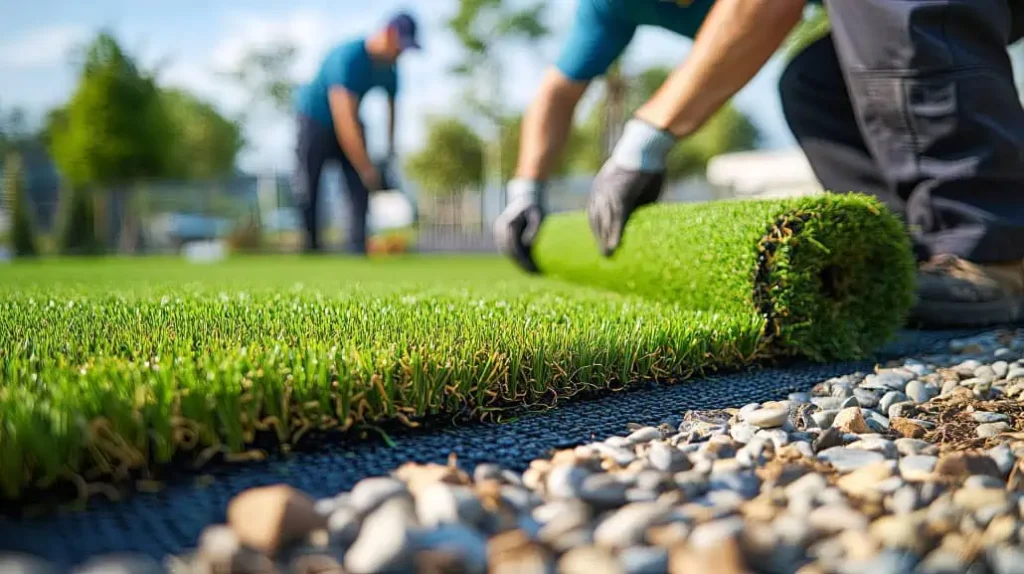
Once the base has been prepared, the artificial grass is carefully positioned over the installation area. Large sections may need to be oriented consistently so the fibers appear to face the same direction and the finished lawn looks natural. Installers cut the turf around trees, planting beds, structures, pathways, drains, and other fixed features. Accurate cutting is important because poorly fitted edges can make the finished installation look unfinished. Experienced installers measure carefully before cutting because mistakes can waste material and complicate the installation.
Step 7: Join Seams and Secure the Edges
When multiple sections of turf are needed, the seams must be aligned and secured carefully. Visible or poorly constructed seams can become distracting and may affect the appearance of the finished lawn. Edges around patios, walkways, planting beds, fences, and structures should also be secured using an appropriate installation method. The exact fastening approach depends on the turf system and site conditions. Careful seam and edge work helps create a cleaner appearance while reducing the risk of movement or separation over time.
Step 8: Add the Appropriate Infill
Infill is commonly used in artificial turf systems to support the fibers and improve the performance of the finished surface. Different products may use different types of infill depending on the manufacturer’s specifications and the intended application. Infill can contribute to blade support, stability, resilience, and other performance characteristics. The correct amount needs to be distributed evenly rather than applied inconsistently across the surface. Your installer should explain which infill is being used, why it was selected, and how it should be maintained after installation.
Step 9: Brush and Finish the Surface
After the turf and infill have been installed, the surface is typically brushed or groomed to help the fibers stand upright and distribute materials evenly. This finishing step can significantly affect the appearance of the completed lawn. Installers may also inspect seams, edges, transitions, drainage points, and other details before considering the project complete. Any debris created during construction should be removed from the site. A final walkthrough gives the homeowner an opportunity to ask questions about maintenance, cleaning, warranty coverage, and recommended care.
Step 10: Plan for Long-Term Maintenance
Artificial grass requires less routine maintenance than many natural lawns, but it is not completely maintenance-free. Leaves, branches, dirt, and other debris should be removed regularly to keep the surface clean. Pet areas may require more frequent rinsing and cleaning, while heavily used sections may benefit from occasional brushing. Follow the turf manufacturer’s recommendations regarding cleaning products and maintenance procedures. Promptly addressing spills, odors, drainage concerns, or damaged areas can help preserve the appearance and performance of the installation.
Consider Dallas Heat Before Installation
Dallas summers can expose outdoor surfaces to intense sunlight and high temperatures, so heat performance should be discussed before selecting a turf system. Artificial grass can become hot when exposed to direct sunlight, although certain products and infill systems may incorporate features intended to help manage surface temperatures. Shade from trees, pergolas, patio covers, or other structures can also improve comfort in surrounding activity areas. Homeowners should have realistic expectations and understand that synthetic turf is still an outdoor surface. Ask installers about product specifications and practical strategies for managing heat during peak summer conditions.
Coordinate Turf With Your Backyard Design
Artificial grass works best when it is integrated into the overall landscape rather than treated as an isolated feature. Consider how the turf will connect with patios, walkways, planting beds, trees, seating areas, outdoor kitchens, and drainage systems. Homeowners planning backyard design Colleyville TX can create visual contrast by combining synthetic turf with hardscape materials and carefully selected landscaping. The layout should also consider how people will move between different activity zones. Coordinating these elements before installation can produce a more cohesive backyard and reduce the need to disturb completed surfaces later.
How Long Does Installation Take?
The duration of an artificial turf project depends on the size and condition of the property, site preparation requirements, weather, accessibility, drainage work, and design complexity. A relatively simple installation may progress quickly, while a large or heavily landscaped yard can require substantially more preparation. Removing existing surfaces and correcting drainage issues can also add time to the project. Ask your installer for a realistic schedule after the site has been inspected rather than relying on a generic installation timeframe. A quality installation should prioritize proper preparation rather than rushing to complete the visible portion of the work.
What to Ask Before Hiring an Installer
Before signing an agreement, ask the installer about previous projects, product specifications, installation methods, drainage preparation, base materials, infill, warranties, and maintenance requirements. Request a written estimate that clearly explains what is included, including removal, excavation, base preparation, turf, installation, cleanup, and disposal. Ask how unexpected site conditions or changes will affect the price and schedule. It is also useful to request examples of completed projects similar to your own property. Comparing contractors based on preparation, materials, experience, and communication can help you choose more confidently.
Complete Your Artificial Grass Project With Confidence
Artificial grass installation is a multi-stage process in which every step contributes to the quality of the finished surface. From evaluating the yard and selecting suitable turf to preparing the base, managing drainage, securing seams, installing infill, and completing final grooming, careful workmanship matters. Dallas homeowners should also consider heat exposure, maintenance, and how synthetic turf will interact with the rest of the landscape. Professional artificial grass installation in Dallas TX can provide the experience needed to manage these details effectively. With realistic expectations and proper planning, artificial turf can become an attractive, durable, and practical part of a well-designed outdoor space.