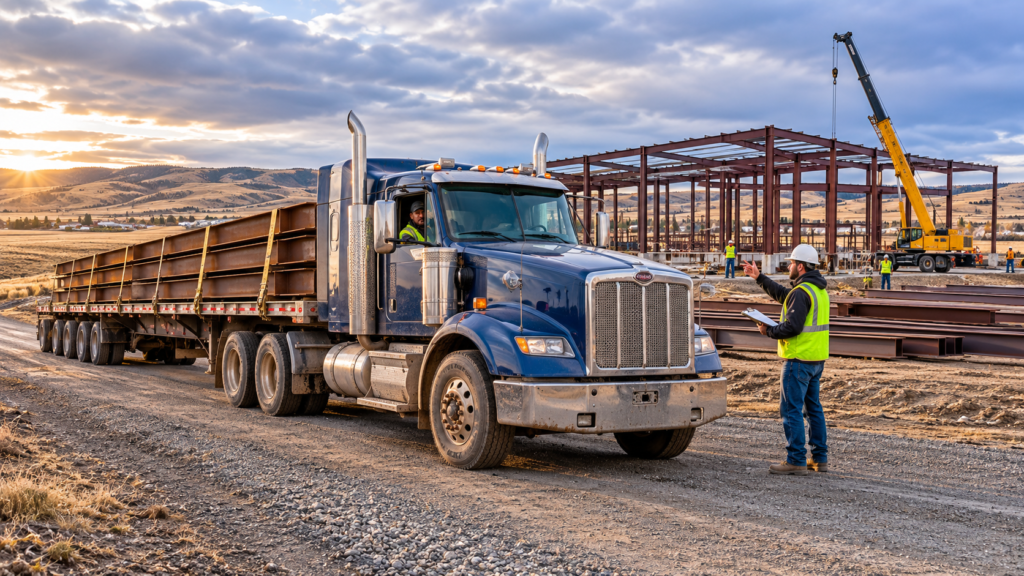
A load of steel beams is sitting on a flatbed somewhere along I-94. The crew on a new building site is ready, the crane is booked for the morning, and everyone is waiting on one truck. If that delivery arrives late, the whole day slips.
That situation shows why a Local Trucking Company in Miles City, MT plays such an important role in eastern Montana. Freight here moves across long distances, rough weather, and rural roads. Local carriers often handle these conditions better than outside fleets passing through.
This article looks at how local trucking works in the region, why it matters for construction and agriculture, and how it connects to larger projects like steel building work.
The Role of Local Trucking in Eastern Montana
Eastern Montana is wide open country. Towns sit far apart, and many job sites sit even farther from paved highways. Getting materials, equipment, and supplies where they need to go takes planning.
Local trucking companies fill that gap. They move livestock feed, farm equipment, gravel, lumber, and heavy construction materials. Some focus on short hauls within Custer County, while others run regional routes into the Dakotas and Wyoming.
What sets local carriers apart is familiarity. Drivers know which county roads turn to mud in spring. They know which bridges have weight limits and where a long trailer can safely turn around.
That kind of knowledge doesn’t show up on a GPS screen. It comes from years of driving the same routes.
How Local Carriers Support Construction Projects
Construction depends heavily on timing. Concrete, rebar, steel, and equipment all need to arrive in the right order. A delay with one item can hold up an entire crew.
A Local Trucking Company in Miles City, MT can often respond faster than a national freight line. If a site needs an extra load of gravel or a forgotten piece of equipment, a nearby hauler may handle it the same day.
Local carriers also tend to communicate directly with site managers. Instead of a call center, contractors usually talk to a dispatcher or driver who knows the job. That makes schedule changes easier to manage.
In short, local trucking keeps construction moving by reducing wait times and adding flexibility.
The Link Between Trucking and Steel Work
Steel is one of the hardest materials to move. Beams, columns, and trusses are long, heavy, and often oversized. They need flatbeds or step-deck trailers, careful securing, and sometimes special permits.
In Montana, oversize and overweight loads generally require permits through the state transportation department. Some loads also need pilot vehicles or travel restrictions based on time of day. Local haulers who handle this work regularly understand these rules well.
This is where trucking and Structural Steel Installation in Miles City, MT become closely connected. Installers rely on precise delivery schedules. Steel often needs to arrive in a specific sequence so crews can lift and set pieces in order.
If the wrong beams show up first, crews may have to store them on site, move them twice, or wait. Good coordination between haulers and installers prevents that kind of wasted effort.
Benefits of Working With Local Haulers
One clear advantage is response time. A carrier based nearby can usually reach rural sites faster and adjust more easily to last-minute changes. That matters when weather windows are short.
Another benefit is road knowledge. Eastern Montana winters can close roads quickly, and spring thaw can soften gravel routes. Local drivers often know safer alternate routes and when to wait out conditions.
Cost can also play a role. Shorter deadhead miles, meaning miles driven with an empty truck, can keep rates more reasonable. Local carriers may also be more open to smaller or partial loads.
There’s a community side as well. Local trucking firms hire nearby drivers, buy fuel and parts in town, and support the regional economy. Money spent with them tends to stay in the area.
Taken together, these benefits help explain why many contractors and ranchers prefer to keep hauling local whenever possible.
Real-World Examples From the Region
Picture a rancher outside town who needs hay moved before a winter storm. A regional hauler with open trucks can often adjust its schedule and get the bales moved within a day or two. A distant carrier might not even have a truck in the area that week.
Now consider a new agricultural building going up on a rural property. The steel frame is fabricated out of state and shipped in pieces. A local hauler picks up the components at a rail yard or regional depot and delivers them to the site in the order the crew needs.
Construction firms in the region often depend on this kind of coordination. A company like Grizzly Construction, for example, may work alongside trucking partners to time deliveries around crane schedules and crew availability. The goal is simple: steel arrives when crews are ready to set it.
Commercial projects follow the same pattern. When a business adds a warehouse or shop, Structural Steel Installation in Miles City, MT usually depends on several trucking runs carefully spaced over days or weeks.
These examples show that trucking is not just about moving freight. It’s a key part of how projects actually get built.
What to Look for in a Local Hauler
Anyone hiring a hauler should start with the basics. Proper licensing, insurance, and a USDOT number are essential. These can usually be checked through the Federal Motor Carrier Safety Administration’s public database.
Equipment matters too. Steel and machinery need flatbeds, step-decks, or lowboys. Livestock and feed need different setups. It helps to confirm the carrier has the right trailers for the job.
Experience with permits is also worth asking about. Haulers who regularly move oversize loads tend to handle the paperwork smoothly and avoid costly delays.
Finally, clear communication makes a big difference. A carrier who answers calls and gives honest arrival times is often more valuable than one with the lowest quote.
Final Thoughts
Trucking in eastern Montana is about more than moving goods from one point to another. It connects ranches, construction sites, and businesses across long and sometimes difficult roads.
A Local Trucking Company in Miles City, MT brings road knowledge, quick response times, and close coordination with contractors. For steel projects especially, that coordination can decide whether a job stays on schedule.
For anyone planning a build or a large haul, a good first move is to check local carriers’ credentials and equipment early. Bringing the hauler into the planning stage, not just the delivery stage, usually leads to fewer surprises.
FAQs
What does a local trucking company typically haul?
Local carriers often move construction materials, steel, gravel, farm equipment, hay, and feed. Many also handle oversize loads that need special trailers or permits.
Do oversize steel loads need special permits in Montana?
Yes. Loads that exceed standard size or weight limits generally need state permits. Some also require pilot vehicles or travel during certain hours.
Why choose a local hauler over a national freight company?
Local haulers often respond faster, know rural roads well, and communicate directly with job sites. This can reduce delays, especially in bad weather.
How far in advance should steel deliveries be scheduled?
Many contractors schedule steel deliveries at least a week or two ahead. Larger projects may need longer lead times to arrange permits and delivery sequencing.