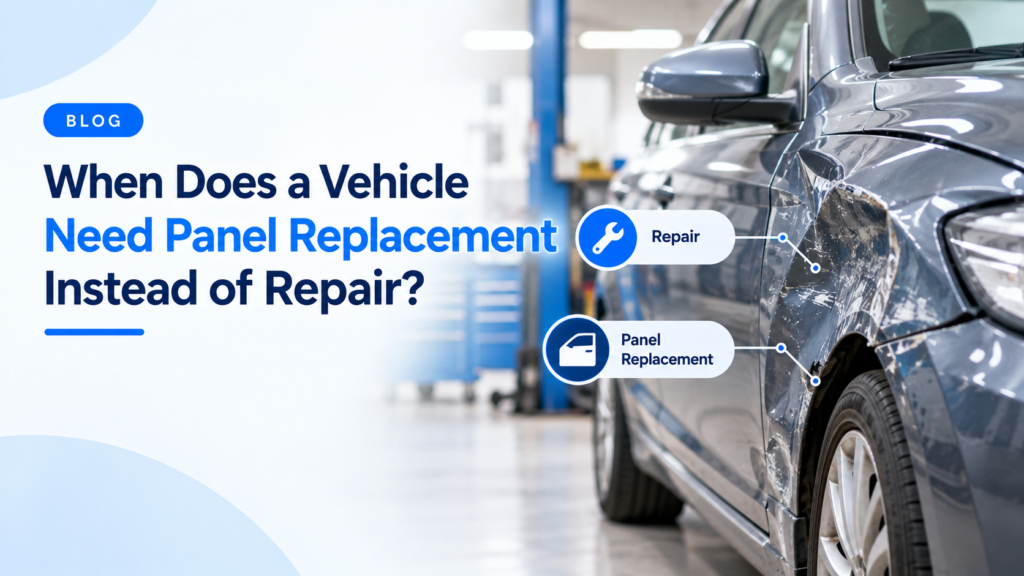
Something scrapes your bumper in a parking lot, or worse, you’re in an actual collision, and the first question is always the same: fix it, or replace it? There’s no easy rule of thumb here. A dent that looks bad on the surface might be nothing underneath. A panel that looks like a write-off might actually be salvageable.
Getting this right isn’t just about looks. It touches your wallet, your safety on the road, and what the car is worth down the line. So what actually goes into that call?
Start With What’s Actually Damaged
Body damage isn’t one-size-fits-all. A shallow door dent with intact paint has almost nothing in common with a crumpled quarter panel where the metal has torn open. Any technician worth their salt looks past what’s visible on the outside first.
Panels exist partly to absorb impact and spread the energy out. That’s the whole point of them deforming in a crash. Sometimes that deformation can be worked back into shape. Other times the metal has stretched or torn past the point where reshaping does any good.
A handful of things push a shop toward replacement rather than repair:
Sharp creases or fold lines. Once metal bends at a hard angle, it’s weak there for good. Hammering it flat again almost never restores the strength.
Metal that’s torn or punctured. There’s no filler trick for a panel that’s physically broken open. It has to go.
Damage close to structural welds. Panels tied into the frame or unibody need to go back on exactly right. Damage that reaches those weld points means replacement, full stop.
Damage that covers too much ground. A small dent in one spot, sure, that’s repairable. Damage spread across most of a panel, or wrapped around a corner, usually isn’t.
When a Repair Actually Makes Sense
Repairs work when the damage stays small, the metal underneath hasn’t given up its integrity, and most of the paint survived. Paintless dent repair handles shallow dents (hail, door dings, that kind of thing) especially well when the paint never cracked. It’s fast, it’s cheaper, and a good technician can make it look like nothing happened.
Filler gets used for damage that’s a bit deeper. The tech pushes the metal back toward its original shape, fills in what won’t quite return, sands it down, repaints. Close is the operative word. If a shop is piling on filler because the metal simply won’t cooperate, that’s worth questioning. Thick filler doesn’t age well, especially through hot summers and cold winters.
Small dents, shallow dings, minor scratches, limited damage on panels with no structural role, these are usually repair candidates. Once the damage gets bigger than that, it needs a real second look.
Location on the Car Matters More Than People Think
Where the damage lands changes everything. Rear quarter panels on sedans are notoriously tricky repairs. Between the curves and the structural involvement, getting a truly seamless finish is hard, and some shops will suggest replacement anyway just because a repair line would tank resale value.
Hoods and roofs tend to go the replacement route once damage gets severe. They’re big, flat, and any flaw is instantly visible, plus both panels help protect whoever’s inside the car.
Doors, on the other hand, are built to come off and go back on. That said, if the damage reaches the door frame, messes with the window channel, or the door won’t seal shut properly anymore, replacement is still the safer bet.
Where Cost and Insurance Fit In
This part trips a lot of people up. Repair seems like the budget option, and sometimes it genuinely is. But a shoddy repair that has to be redone six months later ends up costing more than doing it properly from the start. Solid collision repair services weigh the visible fix against the actual safety outcome and price the job with that in mind.
A shop worth trusting will walk you through exactly what they found, in plain language, no jargon dump. They’ll tell you why they’re leaning repair or replacement and lay out what each choice actually means for you. Insurance adjusters generally defer to the shop’s read on things, and a certified shop’s opinion carries extra weight there.
OEM or Aftermarket, Once Replacement Is the Answer
Say replacement wins out. Next question: which parts? OEM panels, meaning ones made by your car’s actual manufacturer, match your steel grade, your fit tolerances, your corrosion coatings, down to the letter. Aftermarket parts are a mixed bag, quality-wise, some fine, some not. If your car’s still under warranty, or it’s a higher-end model where every millimeter of fit matters, OEM is almost always the smarter spend.
Shops with real certifications default to OEM parts and put that in writing for insurance. Worth asking about when you get your estimate, particularly if you’re near an autobody repair shop in Wurtsboro or elsewhere in the Hudson Valley where OEM-certified work is available.
The Shop You Pick Changes the Outcome
This decision isn’t purely a technical one. It takes honesty and real experience, not just the right tools. A shop that talks you into repair every time to save a buck might hand back a car that looks okay at first but has hidden rigidity problems, or paint that starts failing within a year. And a shop that defaults to replacement no matter what isn’t doing you any favors either.
The shops worth going back to are the ones that give it to you straight, the ones where you leave feeling like you actually understand what happened to your car.
Choose Spectrum Auto Inc. for Honest, Expert Collision Repair
Spectrum Auto Inc. has spent over 30 years earning trust from New York drivers through straight talk and solid assessments. The shop holds I-CAR® Gold Class and OEM Certified Collision Center status, meaning factory-level standards apply whether the job is a small dent or a full panel swap after a serious accident. Every technician on the team carries I-CAR® Platinum certification, putting them among the most rigorously trained in the field.
With locations across the region, including as a well-known autobody repair shop in Wurtsboro, Spectrum Auto brings that same standard of work to drivers throughout the Hudson Valley. As part of the CARSTAR network, the shop coordinates directly with all major insurers and manages the entire process, estimate through delivery, plus 24-hour towing when you need it fast.
Frequently Asked Questions
- Can a heavily dented panel always be repaired instead of replaced?
Not always, no. It depends on how deep the dent goes, how big it is, where it sits, and whether the metal has torn or bent too far to bring back safely. Sharp creases and damage near structural welds usually mean replacement is the call.
- How do I know if I’m getting an honest recommendation?
Look for a shop that shows you the damage in person, explains what they’re seeing, and walks through their reasoning out loud. I-CAR® or OEM credentials tend to come with a real standard for clear, honest communication.
- Will a panel repair affect my car’s resale value?
A well-done repair with matched paint usually won’t hurt resale much. A sloppy one, with visible waves, mismatched color, or too much filler, absolutely will. The shop you choose matters nearly as much as whether you repair or replace in the first place.
- Does insurance typically cover panel replacement?
Usually, yes, assuming the damage came from something covered, like a collision or a weather event. What you actually get paid depends on OEM versus aftermarket parts, your deductible, and the fine print of your policy. Shops that deal directly with insurers tend to make the whole thing far less painful.