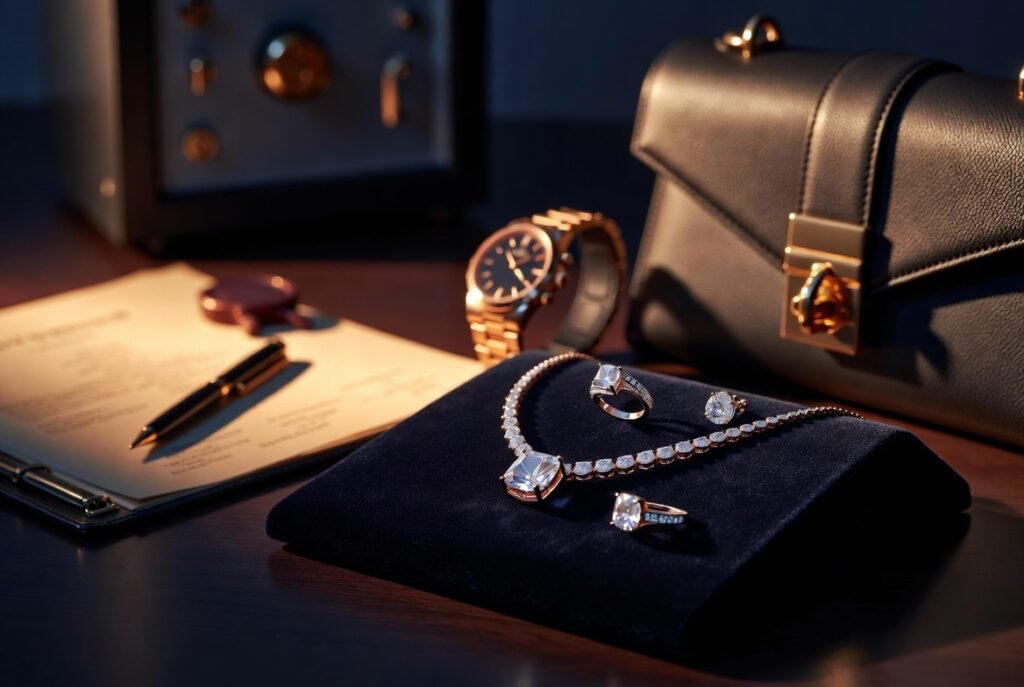
Most people are significantly better at acquiring valuable things than they are at protecting them. The Rolex watch that someone purchased to mark a career milestone, the diamond ring passed down through three generations of the family, or the Hermès Birkin that took years of waiting and a considerable amount of money to acquire. Each of these items was chosen carefully, paid for thoughtfully, and is worn or carried with a quiet awareness of its worth.
And yet, when you ask most of the people who own these things whether their insurance coverage actually reflects their current value, the answer is usually some version of no. And all this is because the gap between owning something valuable and having it properly documented for insurance purposes is one that most people do not think about until the moment when thinking about it is already too late.
That moment tends to arrive suddenly in different unwanted forms, like maybe a theft, a house fire, or a lost piece that you realize you cannot adequately describe to an insurance adjuster because you never had it properly appraised. At that point, the absence of a professional appraisal document is not merely an administrative inconvenience but the difference between a claim that pays out at full replacement value and one that pays out at whatever the insurer decides the item was worth based on their own methodology.
Why Most Valuable Items Are Underinsured
The Valuation Problem: Something That Nobody Explains Clearly Enough
The insurance industry operates on a principle that most policyholders understand in theory and underestimate in practice. Your coverage is only as effective as the information supporting it. An insurer cannot pay out on an item they have no documentation for. An insurer will not pay out at full replacement value for an item that was last appraised five years ago when gold was trading at a significantly lower price than it is today. An insurer may deny a claim if the policy’s item description is too vague to confirm that the lost item is what is being claimed.
The practical result is that a substantial proportion of Americans who own significant jewelry, luxury watches, and designer handbags are carrying insurance coverage that would not fully replace what they own if something went wrong.
What Changes in the Market Make This Issue More Urgent Right Now?
Values have changed, and most people who last considered their insurance coverage years ago have not fully realized this simple fact. Gold prices have increased substantially over the past few years, which directly affects the replacement value of gold jewelry regardless of the stones it contains. The secondary market for luxury watches has seen significant price appreciation, meaning that the replacement cost of a watch purchased a decade ago may be considerably higher than the original purchase price. And the market for collectible designer handbags, particularly Hermès Birkins and Chanels, has experienced appreciation that puts certain pieces in a price category their original purchasers would not have anticipated.
What a Professional Jewelry Valuation Actually Involves
More Than a Number on a Page
The word “appraisal” is sometimes treated as though it describes a simple process where an expert looks at something, names a figure, and the transaction is complete. A professional jewelry valuation involves considerably more than that, and understanding what it includes is important both for appreciating why it matters and for evaluating whether the appraisal you are receiving is the quality your insurance company will actually rely on.
A professional jewelry valuation begins with a detailed physical examination of the piece. The metal type and purity are identified and recorded, and each stone is assessed for the quality characteristics that determine its value: for diamonds, cut, color, clarity, and carat weight; for colored gemstones, color saturation, clarity, origin where determinable, and carat weight. The setting style, the overall craftsmanship, and the condition of the piece are all documented. Photographs are taken from multiple angles to create a visual record that supports the written description.
The output of this process is a formal appraisal document that is signed by a certified appraiser, is specific enough to identify the piece unambiguously, and is current enough to reflect today’s replacement market rather than the market at the time of original purchase. This is the document that an insurance company can act on with confidence and that a policyholder can present at the time of a claim without uncertainty about whether it will be accepted.
What Happens After the Appraisal?
The Update Cycle That Most People Miss
Getting a professional jewelry valuation, watch appraisal, or handbag appraisal is not a one-time event. It is the beginning of a documentation practice that needs to be maintained as values change and as new items are acquired.
That update cycle is what keeps coverage current rather than allowing it to drift back into the underinsurance gap that a new appraisal was designed to close. Values in jewelry, watches, and luxury handbags do not stand still. The gold price, the secondary market for specific watch references, and the values of certain handbag models move and, most often, appreciate over time in ways that are not captured by an appraisal from even two or three years ago. Keeping the appraisal document current is the most cost-effective way to maintain coverage that actually reflects what replacement would cost at the moment a claim is made.
Summing Up
To sum up, obtaining an appraisal is crucial as soon as you purchase an asset, and it is important to continue appraising each piece you own. This will help you document your assets and their current value.