A beautiful outdoor event can quickly become uncomfortable when guests have nowhere to escape harsh sun, wind, or unexpected rain. That is why choosing the right tent deserves more thought than simply selecting a size and color. When comparing tent rentals los angeles providers, organizers should consider the venue, guest count, weather, flooring, lighting, setup requirements, and overall event style. Making these decisions early can prevent costly surprises and create a more comfortable experience for everyone.
Understand the Purpose of Your Event
Before contacting a rental company, identify what you need the tent to accomplish. A tent for a wedding reception will have different requirements from one used for a birthday party, corporate gathering, graduation celebration, or community event.
Think about how guests will use the covered area. Will they sit down for a meal, move around during a cocktail hour, dance, watch a presentation, or simply use the tent as protection from the weather? The answer affects the size, layout, entrance design, flooring, and accessories you may need.
For example, a dining event generally requires more space per guest than a standing reception. Similarly, an event with a stage, buffet tables, dance floor, or entertainment area needs additional room beyond the seating capacity.
Calculate the Right Tent Size
Tent size is one of the most important decisions because an undersized structure can make an event feel crowded. However, choosing an excessively large tent can increase rental and setup costs without providing meaningful benefits.
Ask the rental provider how much usable space you should allow for your specific layout. A basic guest count alone is not enough. Tables, chairs, food stations, bars, stages, entertainment equipment, and walkways all occupy valuable floor space.
It is also helpful to create a rough floor plan before making a final selection. This gives the rental company a clearer understanding of how the space will function and helps you avoid discovering too late that there is not enough room for important event features.
Consider More Than the Guest Count
Two events with the same number of attendees can require very different tent sizes. A dinner with round tables may need more floor area than a simple standing gathering.
Consider these elements before selecting a structure:
- Number and type of tables
- Seating arrangement
- Dance or entertainment area
- Buffet or catering stations
- Bar or beverage service
- Stage and presentation equipment
- Guest walkways and entrances
Planning around the complete layout produces a much more accurate estimate than calculating space based solely on attendance.
Check the Venue Before Booking
The event location can determine which tent options are practical. Before signing a rental agreement, inspect the proposed installation area and discuss it with the venue manager if applicable.
Measure the available space and identify nearby trees, buildings, fences, utility lines, sprinklers, pathways, and other obstacles. Also determine whether vehicles can reach the installation area for delivery and removal.
Some venues have specific rules about anchoring, installation hours, noise, flooring, and temporary structures. Public locations may have additional requirements or permits. Confirming these details beforehand can prevent delays on event day.
Review Weather Protection Options
Weather is one of the main reasons people choose tent rentals, but not every tent provides the same level of protection. Depending on the event and season, you may need sidewalls, weighted anchoring, rain protection, ventilation, or other accessories.
Ask the rental company how the tent is designed to handle the expected conditions at your venue. A tent should be installed according to the provider’s safety requirements and local regulations.
Temperature deserves attention, too. A covered structure can protect guests from direct sunlight, but it can still become warm without proper airflow. Sidewalls, fans, heaters, and other climate-control options may be useful depending on the time of year and local weather.
Compare Tent Styles and Materials
Tent design affects both appearance and functionality. Different styles can create different atmospheres, so consider whether you want a formal, elegant setting or something more casual and practical.
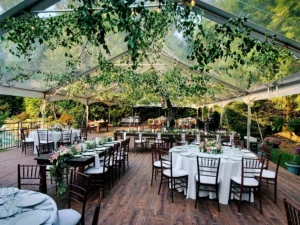
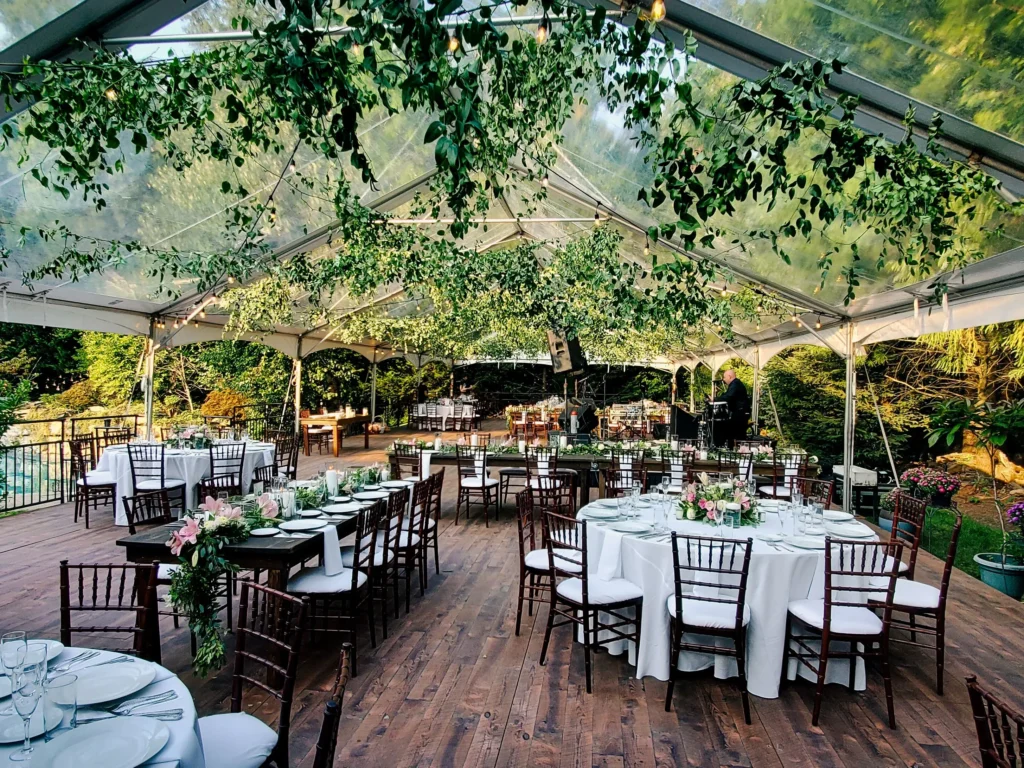
Frame tents, for instance, can offer flexible placement because they do not always require a center pole. Pole tents can create a classic event appearance with high peaks and sweeping lines. Clear-top or specialty tents can provide a distinctive look when the venue and event design call for something more decorative.
Rather than choosing based only on photographs, ask about the tent’s construction, dimensions, installation requirements, and recommended uses. A visually attractive option is only useful if it works properly for your venue and guest needs.
Examine Rental Packages Carefully
Rental prices can be difficult to compare when companies package their services differently. One provider may quote only the tent, while another may include delivery, installation, sidewalls, lighting, or additional equipment.
Request a detailed estimate that identifies what is included and what costs extra. This makes it easier to compare providers fairly.
| Item to Check | Why It Matters | Question to Ask |
|---|---|---|
| Tent size | Determines usable event space | Is this size suitable for my layout? |
| Delivery | Affects the total rental cost | Is delivery included? |
| Installation | Ensures proper setup | Who handles setup and removal? |
| Sidewalls | Adds weather protection | Are walls included or optional? |
| Flooring | Improves comfort and stability | What flooring works at this venue? |
| Lighting | Helps with evening visibility | Are lighting options available? |
| Climate control | Supports guest comfort | Can fans or heaters be added? |
| Anchoring | Supports installation safety | What anchoring method is required? |
| Damage policy | Protects your budget | What fees apply for damage? |
A clear estimate helps you understand the true cost before making a commitment.
Ask About Setup and Removal
A tent does not simply appear at the event location. Installation can involve delivery, positioning, anchoring, assembly, equipment placement, and final inspection.
Find out when the crew will arrive and how long installation typically takes. If the venue has strict access hours, communicate those restrictions in advance.
You should also know when the tent will be removed. Some rental agreements allow equipment to remain overnight, while others require same-day removal. Understanding the schedule helps you coordinate with caterers, decorators, venue staff, and other vendors.
Think About Flooring and Ground Conditions
Ground conditions can have a major effect on guest comfort. Grass may be suitable for some events, but uneven, wet, muddy, or rocky surfaces can make walking and dining uncomfortable.
Ask whether flooring is recommended for your location. Flooring can create a more polished appearance while providing a stable surface for tables, chairs, catering equipment, and guests.
The type of ground can also influence how the tent is secured. Tell the rental provider what surface they will encounter so they can determine the appropriate installation method.
Plan Lighting for Evening Events
If your event continues after sunset, lighting should be considered before the tent is installed. Guests need enough illumination to move safely between tables, entrances, food stations, and other areas.
Lighting can also contribute to the atmosphere. Simple overhead fixtures may be appropriate for a casual gathering, while decorative lighting can complement weddings, receptions, and formal celebrations.
Discuss electrical requirements early. If lighting, speakers, catering equipment, fans, or other electrical items will operate under the tent, confirm that the venue has suitable power or determine whether additional power equipment is necessary.
Consider Guest Comfort From Every Angle
The best tent is not necessarily the most expensive or visually impressive option. It is the one that works for the people attending your event.
Think about seating, airflow, temperature, accessibility, walking surfaces, entrances, and protection from changing weather. If children, older adults, or guests with mobility limitations will attend, make sure the layout provides convenient and safe access.
Also consider how guests will move between the tent and other areas. A covered walkway or strategically positioned entrance may be useful if parking, restrooms, catering areas, or other facilities are located some distance away.
Verify Insurance, Permits, and Safety Requirements
Depending on the location and type of event, permits or additional documentation may be necessary. Requirements can vary by municipality, venue, tent size, and installation method.
Do not assume that the rental company or venue automatically handles every requirement. Ask who is responsible for permits and whether the provider carries appropriate business insurance.
It is equally important to understand the company’s safety procedures. Professional installation, proper anchoring, suitable equipment, and adherence to local requirements should be priorities rather than afterthoughts.
Read the Rental Agreement Before Signing
A rental agreement should clearly explain what you are receiving and what responsibilities you have. Take time to read the details instead of focusing only on the quoted price.
Look for information about the rental period, payment schedule, cancellation policy, weather-related changes, damage charges, delivery windows, setup, removal, and additional equipment.
If anything is unclear, ask for an explanation before making a payment. Written clarification is preferable to relying on an informal conversation, particularly when several vendors are involved in the same event.
Choose a Provider Based on Reliability
Price matters, but it should not be the only factor when comparing tent rentals. An unusually low quote may not provide the same equipment, service, installation standards, or customer support as a more comprehensive package.
Look for a provider that communicates clearly and answers practical questions. Ask about previous experience with events similar to yours and whether the company can accommodate your venue requirements.
A reliable rental partner should also help you identify potential issues before installation. Good communication can make the planning process considerably easier and reduce last-minute problems.
Reserve Equipment Well in Advance
Popular event dates can create high demand for rental equipment. Waiting until the last minute may leave you with fewer tent sizes, styles, accessories, or installation times to choose from.
Once the venue and event date are confirmed, begin discussing rental requirements as early as practical. Early planning also gives you time to compare estimates, inspect options, obtain required approvals, and adjust your layout.
However, avoid reserving equipment before you know the venue’s restrictions. The best approach is to confirm the location requirements first and then secure the rental based on accurate information.
Avoid Common Tent Rental Mistakes
Several mistakes are easy to prevent with a little preparation. Choosing a tent based only on guest count, overlooking setup access, or failing to ask about weather protection can create problems later.
Another common mistake is focusing on the tent itself while forgetting supporting equipment. Lighting, flooring, sidewalls, fans, heaters, tables, chairs, and other accessories may be essential to the event’s overall functionality.
Finally, do not compare quotes without checking what each one includes. A lower starting price does not necessarily mean a lower final cost.
Make Your Final Decision With a Checklist
Before confirming your rental, review the most important details one more time. A simple checklist can help you identify missing information before it becomes a problem.
Confirm the following:
- Event date, location, and rental period
- Tent dimensions and style
- Guest capacity and floor plan
- Weather protection requirements
- Flooring and anchoring needs
- Lighting and electrical requirements
- Delivery, setup, and removal schedule
- Additional equipment and accessories
- Permit or venue requirements
- Total price and cancellation terms
This final review takes only a few minutes but can make the rental process much smoother.
Conclusion
Choosing the right tent involves more than finding an attractive structure that fits your guest list. You need to consider the venue, layout, weather, ground conditions, comfort, accessories, installation, safety, and total cost. Taking time to discuss these details with a reputable rental provider can help you avoid unnecessary expenses and last-minute complications. Whether you are organizing a wedding, corporate gathering, birthday celebration, or community event, thoughtful planning makes the covered space work harder for your guests. The right tent should support the entire event—not become another problem to manage.
Frequently Asked Questions
How early should I reserve a tent for an event?
It is best to begin the rental process as soon as your event date and venue are confirmed. Popular dates may have limited availability, so early planning gives you more choices in size, style, and accessories.
How do I know what tent size I need?
Start with your guest count, then account for tables, chairs, food service, entertainment, stages, bars, dance areas, and walkways. A rental professional can help you determine an appropriate size based on your complete floor plan.
Do tent rentals include setup and removal?
Not always. Some companies include delivery, setup, and removal in their packages, while others charge separately. Always confirm these services in writing before signing the rental agreement.
Should I rent flooring with my tent?
Flooring can be valuable when the ground is uneven, muddy, wet, or unsuitable for formal seating. It can also improve accessibility, stability, and the overall appearance of the event area.
What should I ask a tent rental company before booking?
Ask about availability, tent dimensions, installation, anchoring, weather protection, flooring, lighting, delivery, removal, insurance, permits, cancellation terms, damage policies, and the complete rental price. Getting clear answers upfront makes it easier to choose confidently.