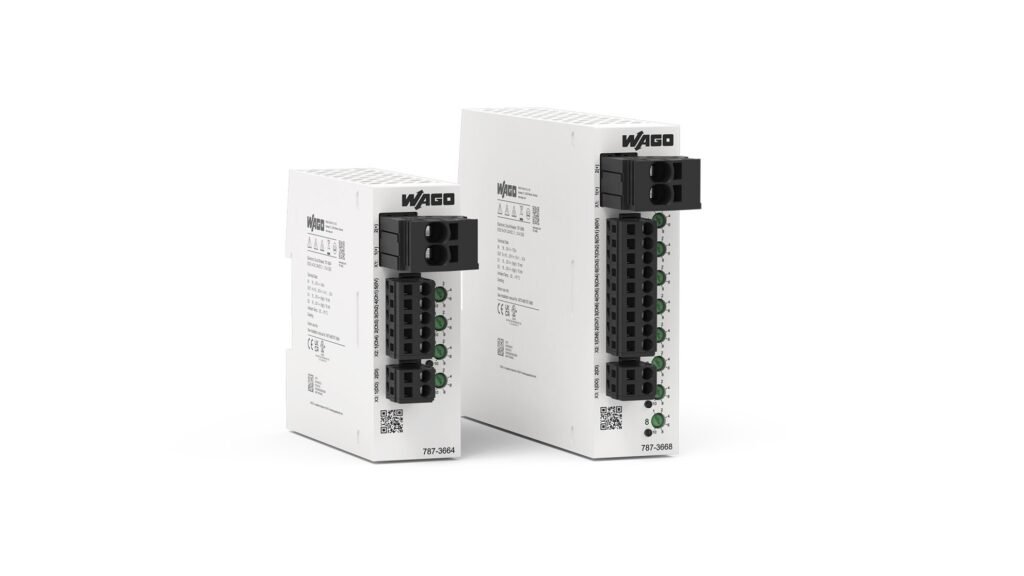
Compact Electronic Circuit Breakers
Compact Electronic Circuit Breakers (ECBs) are solid-state protection devices that monitor current in real time and disconnect a circuit the moment a fault or overload occurs. They’re designed to fit within tight DIN-rail space (for mounting electrical components )while giving you faster, more precise fault response.
That precision matters more than it might seem. Unplanned industrial downtime costs $10,000 to $250,000 per hour, depending on the operation. A few milliseconds of faster fault isolation can be the difference between a contained issue and a shutdown.
Being a panel builder, you know that you are experiencing this compromise on every project: with so little space, so many wires, and wires that can cause whole panels to fail.
ECBs solve this by design. But not every ECB is built the same way. Single-channel models protect one circuit each. Multi-channel models protect several circuits from a single unit. That choice shapes your panel’s cost, footprint, and recovery time. Here’s how to choose correctly.
What Makes an Electronic Circuit Breaker Different From a Regular Fuse?
The main difference is that an electronic circuit breaker monitors current electronically and trips almost instantly, while a regular fuse relies on heat to melt and break the circuit.
High-quality compact electronic circuit breakers continuously monitor current using a microprocessor and disconnect the circuit the moment the preset current limit is exceeded, providing fast, precise protection even during low-level overcurrent conditions.
A regular fuse waits for heat to build up before it trips. That takes time. A regular circuit breaker uses thermal and magnetic parts. It often needs three to five times the normal current before it reacts fast. The moment current crosses the set limit the ECB switches off the output through a semiconductor switch. This happens fast even at low overcurrent levels.
Why Speed Matters for Ground Faults
Machinery Directive EN 60204 asks for ground fault detection within five seconds. Thermal breakers struggle here because low overcurrents trip slowly. Sometimes tripping takes over 100 seconds in worst-case scenarios. An ECB removes this risk. Electronic current measurement gives predictable tripping every time. This helps OEMs meet compliance without guesswork.
Single-Channel ECBs: Small Size Big Purpose
Single-channel ECBs protect one circuit path. Each unit stands just 6mm wide. That width saves serious panel space when you need many separate protection points. Here is what makes them useful.
- Push-in connections give fast and reliable wiring
- Multicolour LEDs show green, red and yellow status for easy diagnostics
- Potential distribution modules make wiring simple and modular
- Jumper bars connect units to build a modular array
- NEC Class 2 versions exist for US markets under 100W at 24Vdc
Single-channel units come in fixed and adjustable current ratings. You can pick from 0.5A up to 8A depending on the load. This flexibility helps when different devices on the same panel need different protection levels.
Multi-Channel ECBs: More Protection Less Space
Multi-channel compact electronic circuit breakers pack several protection channels into one compact housing. An 8-channel unit measures only 32mm wide. That is the slimmest option on the market today. Panel builders can save close to 80 percent of space compared to older methods.
Built for Remote Monitoring and Control
Multi-channel units do more than protect circuits. They support remote monitoring and remote reset. This means less walking back and forth to the panel during a fault. Key features include.
- Individual channel adjustment for precise current setting per channel
- Overload warning threshold that flags trouble before a trip happens
- Removable connections that accept solid or ferruled cable
- QR code access for instant product information
- 16A rating available by running two channels in parallel
Multi-channel ECBs also connect to communication systems. This opens the door to smarter panels and easier troubleshooting.
Quick Comparison Table
| Feature | Single-Channel ECB | Multi-Channel ECB |
| Width | 6mm per channel | 32mm for 8 channels |
| Best for | Individual circuit protection | Compact panels with many loads |
| Current range | 0.5A to 8A | 1A to 10A adjustable |
| Space saving | Good for small setups | Up to 80 percent space saved |
| Remote reset | Limited | Yes |
| Communication support | Basic signal contact | Manchester IO-Link and Modbus RTU |
| NEC Class 2 option | Yes | Not standard |
How Communication Options Set Multi-Channel Units Apart
Multi-channel ECBs support several communication protocols. Each one adds a different level of control.
- Digital signaling sends a simple group message when a channel trips
- Manchester Protocol allows remote switching using pulse sequences
- IO-Link lets you read status current and voltage per channel
- Modbus RTU integrates easily into existing industrial systems
This range of options means multi-channel ECBs fit well into automated and monitored environments. Single-channel units keep things simpler with basic signal contacts. Neither approach is wrong. It depends on what your system needs.
Choosing the Right ECB for Your Panel
Your choice comes down to three questions. How many circuits do you need to protect? How much panel space do you have? Do you need remote monitoring?
- Single-channel ECBs for isolated loads that need independent protection
- Againsingle-channel ECBs when NEC Class 2 compliance is required
- Multi-channel ECBs when panel space is limited
- Multi-channel ECBs when you want centralized monitoring and diagnostics
- Again, multi-channel ECBs for larger machines with many control circuits
Many panel builders mix both types. Critical individual loads get single-channel protection. Larger groups of control circuits get multi-channel protection. This combination gives flexibility without wasting space.
Final Thoughts
Electronic Circuit Breakers change how panels get protected. Single-channel units give you precise control over one circuit at a time. They stay slim and simple. Multi-channel units give you power in a small footprint. They bring remote control and smart communication into the mix. Your panel design decides which one wins.
Small standalone loads call for single-channel protection. Complex panels with many circuits call for multi-channel protection. Either way, you get faster tripping, better diagnostics and real compliance with safety standards like EN 60204. The right ECB choice today saves you space, money and downtime tomorrow.
FAQs
- What is a compact electronic circuit breakers?
It’s a solid-state device that monitors current in real time. It disconnects a circuit instantly during a fault. It fits tight DIN-rail space. It gives faster, more precise protection than thermal or magnetic breakers. - How is an ECB different from a regular fuse?
An electronic circuit breaker (ECB) monitors current continuously and trips instantly when the preset limit is exceeded. A regular fuse must first heat up and melt before it breaks the circuit, making it much slower.
- When should I use a single-channel ECB?
Use single-channel ECBs for isolated loads needing independent protection. Each unit is just 6mm wide. They support NEC Class 2 compliance. They’re ideal when you need many separate protection points on one panel.
- When should I use a multi-channel ECB?
Use multi-channel ECBs when panel space is limited. An 8-channel unit measures only 32mm wide. You save up to 80 percent space. They also support remote monitoring, remote reset, and centralized diagnostics.
- Can single-channel and multi-channel ECBs be used together?
Yes. Many panel builders combine both types. Critical individual loads get single-channel protection. Larger groups of control circuits get multi-channel protection. This mix gives flexibility without wasting valuable panel space.