Modern interiors often rely on simplicity. Clean furniture, neutral walls, natural materials, and uncluttered spaces can create an elegant environment, but minimal rooms can sometimes feel too flat or unfinished.
This is where textured Wabi-Sabi wall art can make a difference.
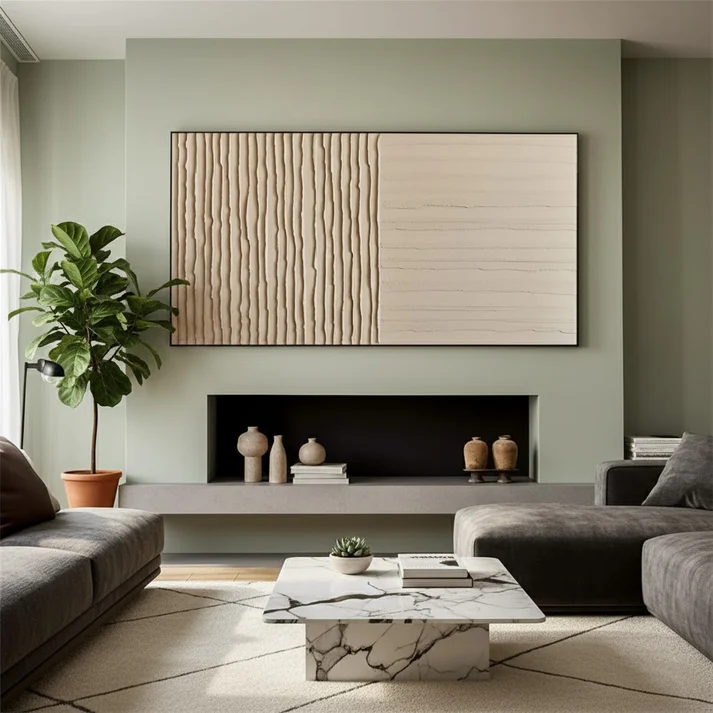
Rather than filling an empty wall with bright colors or complicated imagery, Wabi-Sabi artwork introduces depth through subtle texture, organic shapes, muted colors, and handmade character.
The result is decoration that adds personality while preserving the calm feeling of a minimalist interior.
The Relationship Between Wabi-Sabi and Modern Interior Design
Wabi-Sabi embraces the beauty of imperfection and impermanence.
Modern minimalist interiors, meanwhile, focus on simplicity and reducing unnecessary visual elements.
These ideas complement each other surprisingly well.
A minimalist room provides visual space, while Wabi-Sabi artwork gives that space character.
Instead of adding multiple decorative objects, a homeowner can use one carefully selected textured artwork to create a focal point.
ArtiQuo describes its Wabi-Sabi collection around natural textures, organic forms, neutral tones, and handcrafted details.
Why Texture Matters in Minimalist Rooms
A minimalist room can contain beautiful furniture and still feel visually flat if every surface has the same finish.
Texture solves this problem.
Imagine a room containing:
- A smooth painted wall
- A polished floor
- A clean-lined sofa
- A simple wooden table
Adding a textured artwork introduces another layer.
The raised surface catches light and creates subtle shadows.
This makes the wall more dynamic without adding strong colors or complicated patterns.
Texture Creates Movement Without Clutter
One of the advantages of textured art is that it creates visual movement without requiring a busy composition.
A raised line can catch light from one angle and disappear from another.
An uneven plaster surface can create shadows that change throughout the day.
Organic shapes can guide the eye across the artwork.
This is particularly useful for minimalist spaces because the room can remain visually quiet while the artwork provides depth.
ArtiQuo’s current collection includes textured abstract paintings and plaster-style pieces designed around this type of dimensional quality.
Neutral Colors Are Not Boring
Wabi-Sabi wall art often uses colors that appear subtle at first.
Common palettes include:
- Ivory
- White
- Cream
- Beige
- Taupe
- Sand
- Brown
- Grey
- Charcoal
These colors can work especially well with modern interiors because they do not compete aggressively with furniture or architectural features.
But neutral does not mean invisible.
A beige textured artwork against a warm white wall can create contrast through texture rather than color.
This is one of the reasons Wabi-Sabi art can feel sophisticated without being visually loud.
How to Use Contrast in Wabi-Sabi Interiors
A room does not need bright color to have contrast.
Contrast can come from:
Light and Dark
A light artwork against a darker wall can create definition.
Smooth and Rough
A textured artwork can contrast with smooth furniture.
Soft and Structured
Organic artwork can soften the geometry of modern architectural interiors.
Warm and Cool
Warm beige artwork can balance cooler grey or concrete surfaces.
This type of contrast is subtle but powerful.
Scale Can Change the Entire Room
Texture and color matter, but scale may be even more important.
A small artwork on a huge wall can feel disconnected.
An oversized piece can immediately establish a visual focal point.
For large living rooms, open-plan spaces, hotel lobbies, or office interiors, oversized Wabi-Sabi artwork can help anchor the wall.
ArtiQuo’s collection includes large Wabi-Sabi artwork as well as smaller individual pieces and multi-piece sets.
The correct size should be determined by the wall, surrounding furniture, ceiling height, and desired visual impact.
When to Choose Oversized Wabi-Sabi Art
Oversized artwork works particularly well when:
- The wall is wide
- The ceiling is high
- Furniture is substantial
- The room has limited decorative objects
- You want one dominant focal point
A large textured canvas can make an otherwise empty wall feel intentional.
However, bigger is not automatically better.
The artwork still needs enough surrounding space to breathe.
When Smaller Wabi-Sabi Art Works Better
Smaller artwork may be more appropriate for:
- Bedrooms
- Hallways
- Small offices
- Powder rooms
- Narrow walls
- Small reading spaces
The goal is to match the artwork to the architecture rather than forcing a particular size into every room.
Single Pieces vs. Multi-Panel Art
Wabi-Sabi artwork can also be arranged in multiple formats.
A single artwork provides one central focal point.
A pair can create balance.
A set of three can introduce repetition and rhythm.
ArtiQuo currently offers Wabi-Sabi sets of two and three, making multi-panel arrangements an option for wider walls.
Multi-panel artwork can be particularly effective above large furniture because it distributes visual weight across the wall.
How to Style Wabi-Sabi Art With Wood
Wood and Wabi-Sabi art are natural companions.
The grain of wood introduces organic variation, while textured artwork introduces another tactile surface.
Try combining Wabi-Sabi artwork with:
- Oak furniture
- Walnut tables
- Natural wood consoles
- Rattan accessories
- Bamboo elements
- Wooden shelving
The goal is not to create an identical color palette.
Instead, allow the natural materials to share a similar visual language.
How to Style Wabi-Sabi Art With Concrete
Concrete provides a completely different surface from wood but can work equally well.
The cool, architectural quality of concrete creates a strong background for warm textured artwork.
For example, a neutral plaster-style artwork against a concrete wall can combine:
- Rough texture
- Soft neutral color
- Strong architectural structure
- Organic forms
This creates a contemporary interpretation of Wabi-Sabi rather than a traditional one.
Wabi-Sabi Art in Japandi Interiors
Japandi combines Japanese and Scandinavian-inspired design principles, often emphasizing simplicity, natural materials, neutral colors, and functional furniture.
This makes Wabi-Sabi artwork a natural complement.
For a Japandi interior, look for artwork featuring:
- Warm neutrals
- Natural textures
- Organic shapes
- Minimal compositions
- Subtle contrast
- Handmade characteristics
ArtiQuo’s recent content also positions textured artwork and Wabi-Sabi pieces as natural companions to Japandi interiors.
Wabi-Sabi Does Not Mean an Empty Room
A common misconception is that a Wabi-Sabi interior must contain almost nothing.
That is not necessary.
The goal is not emptiness.
The goal is intentionality.
You can have:
- Books
- Plants
- Decorative objects
- Rugs
- Cushions
- Lamps
- Furniture
- Artwork
What matters is how these elements relate to one another.
Wabi-Sabi art can help establish a visual anchor that makes the rest of the room feel more cohesive.
How Lighting Changes Textured Artwork
Texture becomes especially interesting when exposed to directional lighting.
Morning sunlight may create soft shadows across a textured surface.
Afternoon light can reveal different areas of the artwork.
At night, a wall light or spotlight can emphasize raised details.
This means the same artwork can appear slightly different throughout the day.
When installing textured Wabi-Sabi artwork, think about lighting as part of the presentation rather than an afterthought.
How to Create a Wabi-Sabi Feature Wall
You do not need to decorate every wall.
Instead, choose one wall as the primary visual focus.
A successful feature wall can include:
- One oversized textured artwork
- A neutral surrounding palette
- Natural furniture
- Soft lighting
- Minimal decorative clutter
This creates a stronger impact than placing multiple unrelated artworks throughout the room.
What to Avoid When Styling Wabi-Sabi Art
Wabi-Sabi artwork can lose its impact if the surrounding room becomes too visually busy.
Avoid:
- Too many competing patterns
- Excessive bright colors
- Unrelated decorative styles
- Oversized furniture directly beneath small artwork
- Poor lighting
- Artwork that is too small for the wall
The artwork should have enough space to become part of the room’s visual composition.
Choosing Authentic Textured Artwork
When shopping for Wabi-Sabi art, look beyond the image itself.
Consider whether the artwork has genuine physical texture or simply uses a printed image to imitate texture.
ArtiQuo states that its Wabi-Sabi pieces are handcrafted and emphasizes authentic texture, handmade details, and natural imperfections within the collection.
For buyers specifically interested in tactile artwork, the physical construction can be just as important as the color or composition.
Final Thoughts
Wabi-Sabi wall art works because it adds depth without sacrificing simplicity.
Texture provides dimension.
Neutral colors create calm.
Organic forms introduce softness.
Large-scale artwork creates focus.
And handmade imperfections give the room a sense of individuality.
Together, these characteristics make Wabi-Sabi artwork particularly effective in modern, minimalist, Japandi, and organic interiors.
Instead of decorating a wall simply because it is empty, choose artwork that contributes to the atmosphere of the entire room. With the right balance of texture, color, scale, and space, Wabi-Sabi wall art can turn a simple interior into a warm and thoughtfully designed environment.