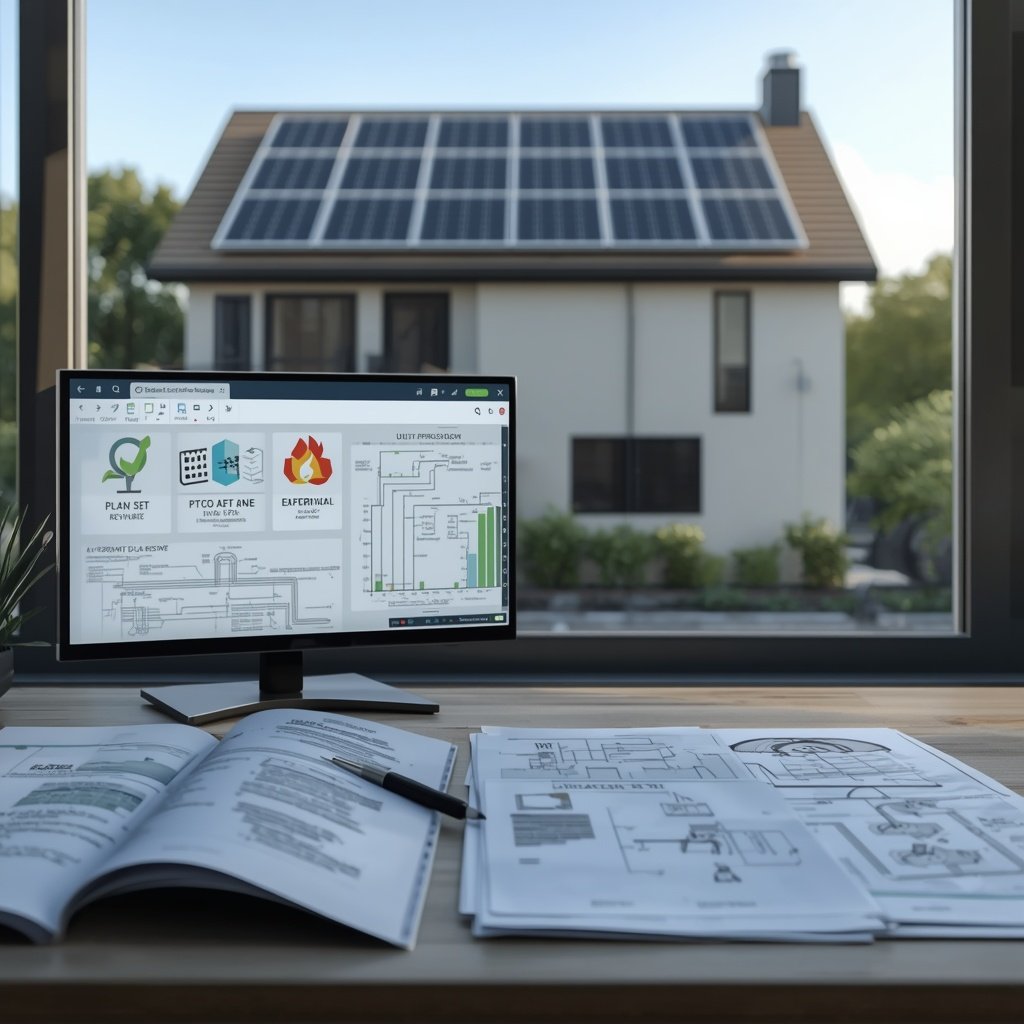
Getting to PTO solar approval — the moment your utility grants Permission to Operate — is the finish line every solar installer and homeowner is racing toward. However, that finish line only arrives quickly when everything leading up to it is done correctly. From the first line drawn on a design to the final utility inspection, each step in the PTO solar journey depends on accuracy, documentation, and a clear understanding of local requirements. Companies like PTOEdge (https://ptoedge.com/) exist specifically to help installers and homeowners move through this process without the guesswork, because even a small documentation error can push a project’s timeline back by weeks.
This guide walks through what actually happens behind the scenes of a PTO solar project, why plan sets and permitting matter so much, and how thoughtful preparation prevents the delays that frustrate installers and customers alike. Whether you’re a solar company scaling your install volume or a homeowner trying to understand why your project is taking longer than expected, this breakdown should clear things up.
If you’re currently stuck waiting on approvals or want a second set of eyes on your documentation before you submit, talk to a permitting specialist today and get a clear answer on what’s holding your project back.
Understanding the PTO Solar Approval Process
Every PTO solar project follows a similar path, although the exact steps and timelines vary by utility and jurisdiction. First, a system is designed and proposed to the homeowner. Next, permitting documents are prepared and submitted to the local Authority Having Jurisdiction, or AHJ. Once permits are approved, the system is installed and inspected, and finally, the utility company reviews the completed project before issuing Permission to Operate. Consequently, any weak link in that chain can stall the entire timeline.
Because utilities and municipalities rarely use identical rulebooks, a design that sails through approval in one county might get rejected outright in another. Additionally, some utilities require specific labeling, disconnect placement, or metering configurations before they’ll approve a PTO solar submission. As a result, installers who don’t specialize in navigating these differences often see avoidable delays stack up.
How PTO Solar Projects Move From Design to Utility Sign-Off
The path toward PTO solar sign-off generally starts with a strong technical foundation. Since utility reviewers are comparing your submitted paperwork against what’s physically installed on the roof, any mismatch between the plan set and the finished system creates an immediate red flag. Therefore, precision at the design stage isn’t optional — it’s what keeps the rest of the process moving.
Furthermore, installers who submit clean, consistent documentation the first time typically avoid the back-and-forth review cycles that eat up weeks of calendar time. In other words, the effort you put into getting the paperwork right up front pays off later when your PTO solar application reaches the utility’s desk. Meanwhile, homeowners waiting on their PTO solar milestone often don’t realize how many moving parts are happening behind the scenes, which is why clear communication from an installer matters just as much as the paperwork itself.
Common Mistakes That Delay a PTO Solar Approval
Even experienced installers occasionally run into avoidable setbacks during a PTO solar submission, and most of them trace back to a small set of recurring issues. Recognizing these patterns early can save weeks of back-and-forth with reviewers.
- Reusing outdated solar plan sets: Submitting a previous project’s solar plan sets without adjusting for the current site’s roof pitch, panel count, or electrical configuration is one of the fastest ways to trigger a rejection.
- Skipping a proper solar stamping service: Without a verified engineering review, an AHJ may refuse to open the file at all, and working with an established solar stamping service prevents this bottleneck before it starts.
- Submitting an incomplete PTO application: A missing signature, an outdated single-line diagram, or an unclear equipment list can send a completed PTO application straight back to the bottom of the review queue.
- Ignoring jurisdiction-specific rules: Since every city has different rules, assuming a checklist from one county will work in another almost always backfires.
- Underestimating the paperwork side of Solar Installer Growth: As installers scale, inconsistent documentation across projects becomes one of the biggest hidden barriers to sustainable Solar Installer Growth, since rework slows down every crew on every job site.
Addressing these issues before submission, rather than after a rejection letter arrives, is consistently the fastest route to approval.
The Role of Accurate Solar Plan Sets
Accurate solar plan sets are arguably the single most important piece of a smooth approval. These documents show exactly how a system will be installed, including panel layout, electrical wiring, structural attachments, and equipment specifications. Since AHJs and utilities use these plans to verify code compliance, even minor inconsistencies can trigger a rejection or a request for corrections.
PTOEdge’s PV plan sets are built to match real-world site conditions rather than generic templates, which matters because cookie-cutter plans are one of the most common reasons permits get bounced back. Moreover, well-prepared plan sets reduce the number of review cycles a project goes through, which directly shortens the time between installation and utility sign-off. Because every jurisdiction interprets code slightly differently, plan sets also need to reflect local structural and electrical requirements rather than a one-size-fits-all approach.
In practice, this means specifying the correct conductor sizing, rapid shutdown compliance, fire setbacks, and mounting details for the exact roof or ground-mount configuration being used. Additionally, plans should account for any recent code cycle updates, since AHJs frequently adopt new National Electrical Code editions on different schedules. Skipping this step is one of the fastest ways to derail a project before it even reaches inspection.
Solar Sales Proposals Set the Tone for the Whole Project
Long before permitting begins, the process starts with a solar sales proposal, and this document does more than just close a sale. A well-built proposal sets realistic expectations for system size, production estimates, and equipment, which then flows directly into the design and permitting stages. If the proposal promises something the site can’t physically support, problems tend to surface later during plan review.
PTOEdge’s solar sales proposal tools are designed to align what’s promised to the customer with what can actually be permitted and installed, which reduces friction down the line. Consequently, installers who invest in accurate proposals upfront often experience smoother permitting and fewer surprises during Solar Installer Growth phases, since scaling a business becomes far harder when every project requires rework. A proposal grounded in real site data, rather than optimistic assumptions, tends to produce projects that move through approval with far less resistance.
Solar Panel Stamping and Engineering Requirements
Many jurisdictions require solar panel stamping from a licensed Professional Engineer before a permit will even be accepted. This stamp confirms that a system’s structural and electrical design meets applicable codes and can safely withstand local conditions such as wind load, snow load, or seismic activity. Without it, some AHJs won’t review a submission at all, regardless of how well-prepared the rest of the paperwork is.
Because engineering requirements vary by state and even by county, working with a reliable PE stamp provider matters more than most installers initially realize. A dependable solar stamping service should be able to turn around calculations quickly while still standing behind the accuracy of their engineering, since a rejected stamp forces a project back to square one. Ultimately, this step protects both the installer and the homeowner by ensuring the system is genuinely safe, not just paperwork-compliant.
Why PTO Solar Applications Get Delayed
Delays in PTO solar applications usually trace back to a handful of recurring issues: mismatched documentation, missing engineering stamps, incomplete site information, or a plan set that doesn’t reflect current code requirements. Since utilities often won’t explain rejections in detail, installers are left guessing what went wrong, which can extend a simple fix into a multi-week setback.
Because every city has different rules, a checklist that works in one jurisdiction may be missing key items for another. Consequently, the installers who consistently avoid delays are usually the ones treating documentation as seriously as the physical installation itself.
Permit Design & AHJ Compliance Matters More Than Most Installers Expect
Permit Design & AHJ Compliance determines whether a project sails through review or gets stuck in a loop of resubmissions. Since each Authority Having Jurisdiction sets its own rules around setbacks, fire access pathways, structural attachments, and labeling, a permit package needs to be tailored rather than reused from a previous project. PTOEdge’s Permit Design & AHJ Compliance service is built around this reality, mapping documentation to the specific requirements of the jurisdiction it’s headed to.
This attention to detail matters especially for anyone searching for solar permit services san Diego installers can rely on, since Southern California jurisdictions are known for detailed structural and fire-setback requirements that differ block by block in some cases. A generic permit package rarely survives review in these areas. Likewise, anyone comparing solar permit service providers should look closely at whether the company actually tracks jurisdiction-specific code updates, rather than relying on outdated templates that may no longer match current requirements.
Beyond structural code, pv permit services increasingly need to account for battery storage, EV charging infrastructure, and evolving fire codes, all of which can affect how a system is documented and reviewed. As these systems become more common, permit packages that don’t address them proactively tend to get flagged and sent back for revisions.
PTO Services and Permission to Operate Services Explained
PTO services cover everything that happens after installation and inspection but before a system is legally allowed to produce power. This is where permission to operate services step in, managing communication with the utility, submitting final documentation, and tracking the application until approval is granted. Because utilities often have their own internal review queues and requirements, this stage can be just as unpredictable as permitting if it isn’t handled carefully.
PTOEdge’s pto services are structured to reduce that unpredictability by keeping documentation consistent with what was submitted during permitting, since discrepancies at this final stage are a common cause of last-minute rejections. Additionally, proactive follow-up with utility reviewers often shortens wait times that would otherwise stretch on simply because an application sat untouched in a queue. For installers managing multiple projects at once, having a dedicated team handle this stage frees up internal resources to focus on new installs rather than chasing utility paperwork.
What Else Homeowners and Installers Should Understand
A handful of related topics come up constantly once a system reaches the later stages of approval, and understanding them ahead of time prevents avoidable confusion. For instance, many communities have specific HOA solar panel guidelines that govern where panels can be visibly placed or how equipment must be screened from the street. Reviewing PTOEdge’s breakdown of HOA solar panel guidelines before submitting plans can prevent a design from being sent back for aesthetic reasons alone.
Similarly, questions about solar net metering and how solar panels net metering credits actually work tend to surface once a system is close to activation, since this directly affects how much value a homeowner gets from their production. PTOEdge’s explanation of net metering breaks down how utilities credit exported energy, which varies significantly depending on location and utility policy.
For systems that include storage, battery energy storage permitting introduces an additional layer of review, since fire codes and setback rules for batteries differ from those governing panels alone. PTOEdge’s guide to battery storage permitting explains what documentation is typically required. Finally, anyone asking whether a PTO application or permit is required at all should reference PTOEdge’s complete overview of solar permitting requirements, which lays out when permits apply and what to expect from the process from start to finish.
Taken together, these considerations show why a PTO solar project rarely comes down to a single document or a single approval. Instead, it’s the sum of accurate pv plan sets, properly matched pv permit services, and consistent follow-through with the utility that determines how smoothly a system reaches activation. Homeowners who ask questions early, and installers who treat documentation with the same care as the physical install, tend to see far fewer surprises once their project reaches the final PTO solar review stage. Because policies shift periodically at both the city and utility level, revisiting these details on every new project — rather than assuming last year’s process still applies — remains one of the simplest ways to keep a PTO solar timeline on track.
Ultimately, a smooth PTO solar outcome rarely happens by accident. It’s the result of accurate PV plan sets, a realistic proposal, a properly stamped design, and a permitting package built for the exact jurisdiction it’s headed to. Installers who treat each of these steps as connected, rather than separate tasks handled by different vendors, tend to see far fewer rejections and much shorter waits for final utility sign-off. For homeowners, understanding this process also makes it easier to ask the right questions and set realistic expectations for how long activation will actually take.
Before you submit another application and risk another round of corrections, get your documentation reviewed by PTOEdge so you know exactly where your project stands.
Frequently Asked Questions
What does PTO solar actually mean?
PTO solar refers to Permission to Operate, the final utility approval that legally allows a solar system to begin producing and exporting power.
Why do solar plan sets need to be so precise?
Solar plan sets must accurately reflect the installed system because AHJs and utilities use them to verify code compliance before granting approval.
Does every solar installation require an engineering stamp?
Many jurisdictions require a PE stamp to confirm that a system’s structural and electrical design meets local safety codes.
How does an HOA affect a solar installation?
HOAs may impose placement or screening requirements that need to be addressed in the design before permits can be approved.
What happens after a permit is approved?
Once permitted, the system is installed and inspected, and the utility then reviews the project before issuing final Permission to Operate.