commercial hydroseeding services
Large construction sites often contain exposed soil, steep grades, drainage channels, and disturbed ground that can become vulnerable to erosion. Heavy rainfall and surface runoff can quickly move loose soil from one part of a property to another, creating environmental, structural, and compliance concerns. Erosion can also damage newly graded areas, clog drainage systems, and increase the amount of sediment entering nearby waterways. For contractors managing expansive developments, controlling exposed soil should be part of the site plan from the beginning. Commercial hydroseeding can support this effort by combining vegetation establishment with surface protection during the early stages of landscape recovery.
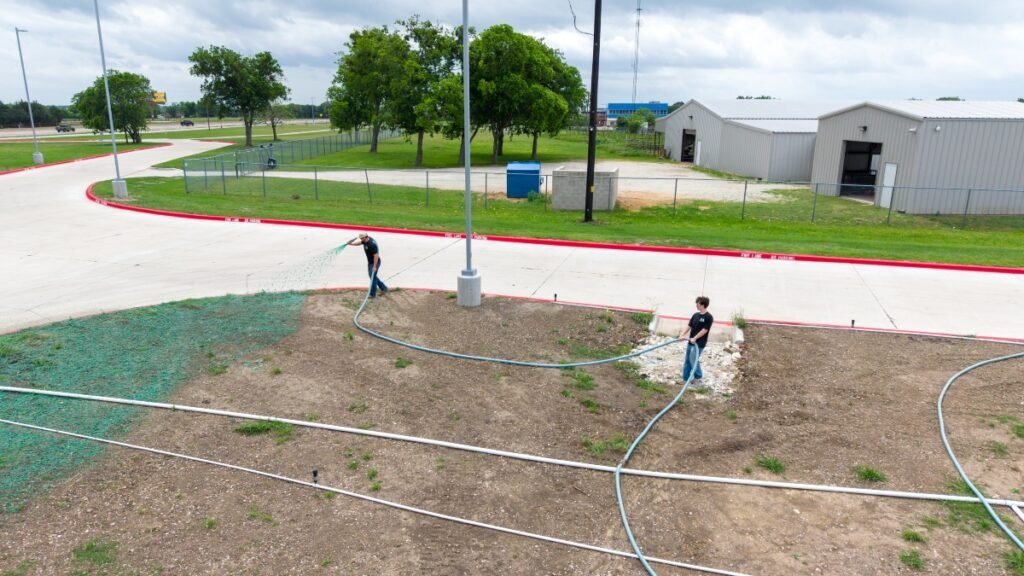
Professional commercial hydroseeding services can be particularly useful when a project contains large areas that need vegetation established efficiently. Instead of manually spreading seed over every section of a disturbed site, hydroseeding equipment distributes a slurry containing seed, water, mulch, and other materials across prepared soil. The mulch can help protect the surface while seeds begin germinating and developing roots. When combined with appropriate grading, drainage, and other erosion-control practices, hydroseeding can become an important component of a broader site stabilization strategy. However, it should be selected and applied according to the specific conditions of each project.
Why Large Construction Sites Are Vulnerable to Erosion
Construction activities naturally disturb the protective vegetation and soil structure that previously helped stabilize the ground. Excavation, grading, trenching, vehicle traffic, and material storage can leave extensive areas exposed to rainfall and wind. Compacted areas may also change how water moves across the site, causing runoff to concentrate in locations that were not previously vulnerable. Once vegetation has been removed, there may be little to slow the movement of water across bare soil. Without appropriate stabilization measures, even a relatively short period of intense rainfall can cause noticeable soil loss.
Erosion becomes especially concerning on slopes and areas where runoff naturally accelerates. As water travels downhill, it can carry loose particles away from the original soil surface and deposit sediment in lower sections. Rills, channels, muddy drainage areas, and exposed roots can develop when erosion continues unchecked. These problems may require additional grading and cleanup, increasing project costs and extending schedules. Early stabilization can reduce the opportunity for small erosion problems to develop into larger site-management challenges.
How Hydroseeding Helps Stabilize Exposed Soil
Hydroseeding supports erosion control by establishing vegetation across disturbed ground. The sprayed mixture places grass seed and protective mulch over prepared soil in a single application. The mulch layer can help retain moisture around the seed while providing a temporary barrier against some surface erosion. As the seeds germinate, developing roots begin to hold soil particles together and improve the stability of the surface. The combination of temporary surface coverage and long-term vegetation makes hydroseeding useful for many large-scale stabilization projects.
The effectiveness of hydroseeding depends on proper preparation and follow-up care. Applying seed over compacted, poorly graded, or unsuitable soil will not automatically solve the underlying problem. Contractors should evaluate drainage, slope conditions, soil quality, and the intended vegetation before application. Irrigation or suitable rainfall is also necessary during the germination period so that seeds can establish successfully. Hydroseeding should therefore be viewed as one part of a complete erosion-management plan rather than a standalone solution for every site.
The Importance of Proper Soil Preparation
Before hydroseeding begins, contractors should inspect the soil and prepare the surface to encourage vegetation establishment. Depending on the project, preparation may include removing debris, correcting grades, loosening compacted soil, improving drainage, and incorporating appropriate amendments. The objective is to create a suitable seedbed that allows moisture to reach the seed while giving developing roots room to grow. Soil preparation can also help identify potential erosion pathways before vegetation is established. Addressing these issues early is generally easier than trying to correct them after a heavy storm.
Drainage deserves particular attention on large commercial sites because water must be directed safely away from vulnerable areas. Hydroseeding cannot compensate for poorly designed drainage or uncontrolled concentrated runoff. Swales, channels, slope stabilization measures, and other site-specific controls may be necessary depending on the property’s design. Once the drainage strategy is established, vegetation can provide an additional layer of protection. A coordinated approach helps ensure that water management and plant establishment work together rather than against each other.
Choosing the Right Seed and Mulch
Seed selection is another important part of successful erosion-control planning. Grass varieties should be chosen according to local climate, soil conditions, sunlight, moisture availability, slope, and the property’s intended use. A species that performs well in one region may struggle in another, particularly when temperature and rainfall patterns differ significantly. Contractors should also consider how quickly vegetation needs to establish and how much maintenance the finished landscape can receive. Selecting appropriate seed can improve the chances of developing a dense root system capable of supporting long-term soil stability.
Mulch also contributes to the early protection of the soil surface. Within a hydroseeding slurry, mulch helps surround the seed and retain moisture while providing a layer of material over exposed ground. The exact mulch selection should be appropriate for the project and environmental conditions. On erosion-sensitive slopes, the contractor may need to consider additional stabilization measures rather than relying exclusively on the mulch layer. Properly matched materials can support early establishment while vegetation gradually takes over as the primary long-term stabilizing system.
Managing Slopes and High-Risk Areas
Sloped areas require careful attention because gravity and concentrated runoff can increase erosion potential. Before applying hydroseed, contractors should determine whether the slope requires additional stabilization or drainage measures. In some situations, erosion-control blankets, check structures, diversion channels, or other techniques may be appropriate alongside vegetation. Hydroseeding can then contribute to the establishment of plants across the surface. This layered approach is often more reliable than expecting a single erosion-control method to address every risk.
Large developments may also contain drainage outlets, embankments, retention areas, and other locations where water movement is concentrated. These areas should be identified during site planning so the hydroseeding strategy can be adjusted accordingly. The slurry may need to be applied using specialized techniques to achieve adequate coverage without disturbing the prepared surface. Follow-up inspections are important after significant rainfall because early erosion can sometimes be identified before it becomes severe. Monitoring gives contractors an opportunity to repair vulnerable areas and reinforce stabilization efforts when necessary.
Timing Hydroseeding for Better Results
Application timing can influence both erosion protection and turf establishment. Seed needs suitable conditions for germination, and extreme heat, cold, drought, or excessive rainfall can affect the establishment process. Contractors should consider seasonal weather patterns when determining the appropriate application window. The goal is to provide the developing vegetation with enough moisture and favorable temperatures while avoiding periods when severe weather could undermine the work. Local expertise can be especially valuable when scheduling projects in regions with rapidly changing weather.
Weather monitoring should continue after application because newly hydroseeded areas remain vulnerable during the early growth stage. Heavy rainfall can move soil or wash material away before roots have developed sufficiently. Conversely, extended dry conditions can slow germination or weaken young seedlings. Irrigation should be managed carefully according to soil conditions and weather rather than following an inflexible schedule. Consistent observation during this stage can significantly improve the chances of successful establishment.
Hydroseeding and Regulatory Considerations
Construction-site erosion can involve more than protecting the property itself. Sediment leaving a project site may affect neighboring properties, drainage infrastructure, and waterways, potentially creating regulatory concerns depending on local requirements. Contractors should understand the erosion and sediment-control obligations that apply to their project before work begins. Hydroseeding may be included as one component of a broader stormwater pollution prevention or site stabilization strategy where appropriate. The exact requirements vary by jurisdiction, project type, site characteristics, and applicable permits.
Because regulations can change and differ between locations, contractors should rely on current requirements and qualified environmental or construction professionals when compliance questions arise. Documentation of stabilization work, inspections, maintenance, and corrective measures may also be important for certain projects. Good recordkeeping can demonstrate that erosion-control measures are being actively managed. Hydroseeding can contribute to this process when it is incorporated into a properly planned and documented erosion-control program.
Residential Hydroseeding and Smaller Properties
Although commercial projects often involve much larger areas, the same erosion principles can apply to residential developments and individual properties. Homebuilders, landscape contractors, and property owners may search for residential hydroseeding near me when they need efficient grass establishment across newly graded yards or larger residential lots. Hydroseeding can be useful where conventional hand seeding would require substantial labor. It may also help establish vegetation on slopes or other areas where exposed soil needs protection while the landscape develops.
Residential applications still require proper preparation, seed selection, watering, and maintenance. The smaller scale of a property does not eliminate the need to understand soil conditions or drainage. Homeowners should ask providers what preparation is included, which seed blend is recommended, and what maintenance will be required after application. These questions can help ensure that the resulting turf is suited to the property rather than selected simply because it is readily available. A well-planned residential application can complement the same basic erosion-control principles used on larger commercial sites.
Post-Application Care and Monitoring
Hydroseeding is only the beginning of the stabilization process. Newly seeded areas require consistent care while the grass develops roots and increases in density. Appropriate watering is particularly important during germination, while unnecessary traffic should be limited until the turf becomes established. Mowing should begin at an appropriate stage and height for the selected grass species. Property managers should also monitor areas that appear thin, washed out, or unusually wet so corrective action can be taken promptly.
Inspections after significant storms are especially valuable on large job sites. Contractors should look for rills, exposed soil, sediment deposits, damaged drainage paths, and areas where seed or mulch may have been displaced. Small issues can often be corrected before they develop into extensive erosion damage. Established vegetation generally provides stronger long-term protection as roots mature and plant coverage becomes denser. Continued maintenance therefore turns the temporary benefits of the initial hydroseeding application into a more durable stabilization system.
Cost and Long-Term Project Benefits
The financial value of erosion prevention is often easier to understand when contractors consider the cost of problems that could have been avoided. Uncontrolled erosion can lead to sediment removal, drainage repairs, additional grading, landscape replacement, project delays, and potential compliance issues. Establishing vegetation early may reduce some of these risks when appropriate site conditions and supporting controls are in place. Hydroseeding can also cover large areas efficiently, potentially reducing some labor associated with traditional seeding methods. The exact savings depend on project size, site preparation, seed requirements, equipment, and local conditions.
Contractors should evaluate hydroseeding based on the total project value rather than treating it as simply another landscaping expense. A stable, vegetated surface can improve the appearance of a development while contributing to long-term soil protection. It may also reduce the amount of exposed ground that needs repeated attention after rainfall. When hydroseeding is combined with sound grading, drainage, maintenance, and other appropriate erosion-control measures, it can support a more resilient site. Careful planning at the beginning of construction can therefore provide benefits well beyond the initial installation.
Final Thoughts
Preventing erosion on large job sites requires a proactive approach that addresses soil exposure, water movement, vegetation, and ongoing site conditions. Commercial hydroseeding services can play an important role by helping establish vegetation efficiently across expansive areas while providing temporary surface coverage through the hydroseeding mulch layer. However, successful erosion management depends on more than the application itself. Proper soil preparation, suitable seed selection, drainage planning, weather awareness, and post-application care all contribute to successful stabilization. Contractors who integrate these elements can create stronger and more sustainable landscapes.
For commercial developers and construction professionals, the most effective strategy is to view hydroseeding as part of a broader erosion-control program. Each site has different grades, soils, drainage patterns, environmental conditions, and project requirements that should be evaluated before selecting a treatment. Residential applications follow many of the same principles on a smaller scale and can benefit from the same attention to preparation and maintenance. With thoughtful planning and professional execution, hydroseeding can help transform exposed construction soil into established vegetation while supporting the long-term stability and appearance of the property.