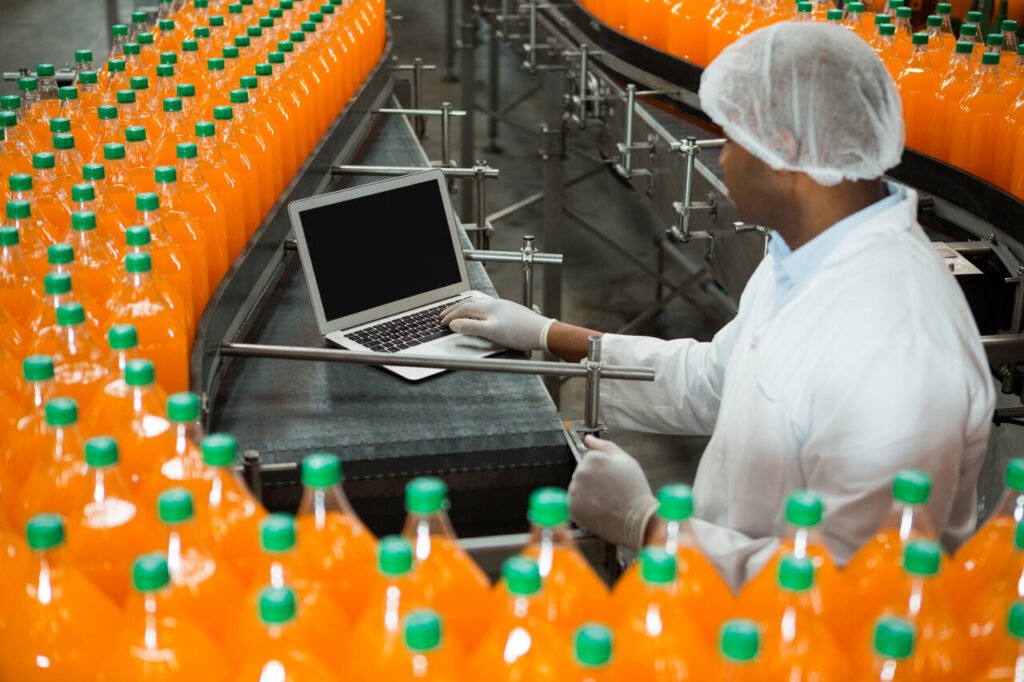
Filling is one of the most important stages in modern food and beverage manufacturing. Whether a facility produces sauces, dairy products, beverages, ready-to-eat meals or other packaged foods, accurate filling directly affects product quality, material usage and production efficiency.
As manufacturers increase production volumes and expand their product portfolios, traditional filling methods are increasingly being replaced or upgraded with automated technologies. Modern filling systems can deliver greater precision, faster production speeds and improved consistency while integrating with other stages of the manufacturing line.
For food manufacturers, the goal is not simply to fill more products per hour. It is to create a reliable process that reduces waste, maintains accurate quantities and works efficiently as part of a wider automated production environment.
Why Filling Accuracy Matters
Small variations in filling quantities can have a significant impact when they are repeated across thousands or millions of units.
Underfilling can create compliance and customer concerns, while overfilling can increase raw material costs. For high-volume manufacturers, even a small reduction in unnecessary product usage can translate into meaningful savings over time.
Modern filling machines are designed to deliver controlled and repeatable quantities across production runs. Automated systems can measure and dispense products according to defined parameters, helping manufacturers maintain greater consistency.
This accuracy becomes particularly important for products with higher-value ingredients or strict formulation requirements.
Increasing Production Throughput
Production speed is another important consideration.
As consumer demand increases, manufacturers need packaging lines capable of handling larger volumes without compromising quality. Filling operations can become a bottleneck if they cannot keep pace with upstream processing or downstream packaging.
Advanced filling machines can operate at high speeds while maintaining consistent dosing and product handling.
When integrated with conveyors, capping systems, labelling equipment and inspection technologies, filling systems can become part of a continuous production line.
This reduces unnecessary manual handling and allows products to move efficiently from one stage to another.
Supporting Different Product Formats
Food manufacturers increasingly produce products in multiple package sizes and formats. A single facility may need to handle different bottle sizes, containers or portion requirements depending on the market.
Flexibility is therefore becoming an important consideration when selecting filling technology.
Modern systems can be designed to accommodate different formats and product characteristics. Manufacturers can adjust filling parameters according to the requirements of specific products while maintaining consistent production standards.
This flexibility can be especially valuable for businesses that regularly introduce new products or operate across multiple markets.
Handling Different Product Characteristics
Not all food products behave in the same way during filling.
Liquid beverages, sauces, dairy products and viscous foods can have very different flow characteristics. Factors such as viscosity, temperature, particulate content and foam formation can influence how a product should be handled.
Manufacturers therefore need filling technologies that are appropriate for their specific applications.
Selecting suitable filling machines requires an understanding of both the product and the wider production process. The right technology should provide accurate dosing while protecting product quality and maintaining the desired production speed.
Reducing Product Waste
Waste reduction is becoming an increasingly important part of manufacturing strategy.
Inaccurate filling can lead to unnecessary product consumption, inconsistent pack weights and rejected products. Automated systems can reduce these variations by controlling the amount of product dispensed into each container.
Modern filling technology can also be integrated with inspection and quality control systems. If a package falls outside defined parameters, it can be identified and removed before reaching later stages of the production process.
This can help manufacturers improve material utilisation while maintaining consistent finished-product quality.
Integrating Filling With Packaging Automation
Filling does not operate in isolation. It is usually connected to several other packaging processes.
Containers may need to be positioned before filling, sealed immediately afterwards and then inspected and labelled before entering secondary packaging.
Modern food packaging machinery can integrate these processes into a coordinated production line. This reduces manual transfers between stages and allows manufacturers to maintain a more consistent production flow.
The integration of filling with other packaging technologies can also improve line visibility, allowing operators to monitor performance and identify bottlenecks.
Improving Hygiene and Product Handling
Hygiene is a critical consideration in food production.
Filling systems need to be designed and operated in ways that minimise contamination risks and support effective cleaning and maintenance procedures.
Equipment design, material selection, accessibility and automated cleaning capabilities can all influence hygienic performance.
Manufacturers must therefore consider more than filling speed when evaluating new systems. The equipment needs to fit the product, facility and applicable food safety requirements.
Data and Intelligent Filling Systems
Modern filling technology is becoming increasingly connected.
Sensors and control systems can provide information about filling accuracy, production speed, downtime and equipment performance.
When connected to wider manufacturing software, this information can help production teams identify inefficiencies and improve decision-making.
Manufacturers can monitor performance over time, compare production runs and investigate recurring issues.
This shift towards data-driven production is helping transform filling from a standalone operation into a connected part of the intelligent factory.
Preparing for Future Production Requirements
The food manufacturing industry is becoming increasingly focused on flexibility, automation and operational efficiency.
Manufacturers investing in new filling machines need to consider not only their current production requirements but also how their facilities may evolve in the future.
Scalability, integration capabilities, format flexibility and data connectivity can all influence the long-term value of an investment.
Industry events such as Gulfood Manufacturing bring together food producers, equipment manufacturers, packaging specialists and technology providers, giving businesses an opportunity to explore developments across the manufacturing ecosystem.
The Future of Filling Technology
Advanced filling technology is becoming an important part of modern food production. Accurate dosing, high-speed operation, flexible formats and improved connectivity can help manufacturers achieve greater control over their packaging processes.
The most effective approach is to view filling as part of the wider production system rather than as an isolated machine.
By combining efficient filling machines with integrated food packaging machinery, manufacturers can create packaging operations that are more accurate, scalable and responsive to changing production requirements.
As food manufacturing continues to become more automated and data-driven, filling technology will play an increasingly important role in improving efficiency while maintaining the quality and consistency expected by modern markets.