Choosing an after-school activity is not always easy for parents. You want your child to enjoy what they do, stay physically active and learn something valuable along the way, rather than simply adding another commitment to an already busy school week.
This is where Taekwondo classes for kids in Singapore are worth considering. Through structured martial arts training, children can practise movement, learn to follow instructions and work towards personal goals while developing skills that may complement their experiences at home and in school. For parents exploring suitable programmes, OP Academy is a starting point for finding out more about children’s Taekwondo training.
Why Taekwondo Can Be More Than Just a Martial Art
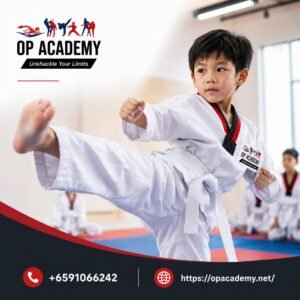
Taekwondo is a Korean martial art that combines kicking techniques, hand techniques, footwork and controlled body movements. Children learn these techniques progressively, with opportunities to practise balance, coordination and movement control under appropriate instruction.
The learning experience also involves routines, rules and interaction with others. These elements can help children practise patience, attention and respect, making Taekwondo an option for parents who want an extracurricular activity that combines physical exercise with structured learning.
Build Confidence Through Small Achievements
Confidence does not always come from being the best in a group. For many children, it begins with attempting something unfamiliar, learning from mistakes and discovering that consistent effort can help them improve.
During Taekwondo training, children may work towards maintaining a stance, performing a movement correctly or remembering a short sequence of techniques. Recognising these achievements can encourage them to appreciate their own progress without feeling pressured to compete with other children.
Encourage a Positive Attitude Towards Challenges
Some children become discouraged when a new activity feels difficult, especially when they cannot perform a movement immediately. Taekwondo provides opportunities to practise techniques repeatedly, receive feedback and make gradual improvements.
Parents can reinforce this learning experience by recognising persistence rather than expecting perfection. When children understand that mistakes are part of learning, they have opportunities to develop a more constructive approach to challenges, although each child’s response will vary.
What Children Can Gain from Regular Taekwondo Practice
The value of Taekwondo depends on the child’s needs, the programme’s suitability and the quality of instruction. With appropriate training, children can practise physical skills while learning how to participate in a structured activity and work towards achievable goals.
Parents should view these benefits as opportunities for development rather than guaranteed outcomes. A good decision starts with understanding the programme, asking relevant questions and determining whether the activity suits the child’s age, interests and abilities.
Improve Coordination and Physical Fitness
Taekwondo involves movements that require children to coordinate their legs, arms and body position while maintaining balance. Regular practice can support the development of coordination, flexibility, agility and general physical fitness when activities are suitable for the child’s abilities.
These skills can complement other forms of exercise and recreational play. Taekwondo does not need to replace swimming, cycling or team sports; it can become one part of a balanced routine that gives children different opportunities to move and stay active.
Practise Focus and Self-Control
Following instructions is an important part of Taekwondo training. Children need to observe demonstrations, understand the instructor’s directions and practise techniques with control rather than rushing through movements.
These activities offer opportunities to practise attention and self-regulation in a structured environment. Parents should not expect automatic improvements in academic performance or behaviour, but the experience may complement the habits children develop through everyday routines.
Learn Respect for Others
Taekwondo should teach children that martial arts skills come with responsibility. Following class rules, respecting instructors and treating training partners appropriately are important parts of participating safely.
Parents should look for a programme that reinforces self-control and discourages bullying or unnecessary physical confrontation. Children need to understand that techniques should be practised in appropriate settings and never used to intimidate classmates or resolve ordinary disagreements.
How to Choose Taekwondo Classes for Kids in Singapore
When comparing Taekwondo classes for children, look beyond promotional offers and consider the programme’s suitability. Important factors include minimum-age requirements, beginner instruction, instructor supervision, safety practices, class schedules, fees and the location of the training venue.
Ask how lessons are structured and how children with different abilities are supported. Understanding these details helps parents make an informed decision and choose a programme that fits the child’s needs rather than relying on general claims about martial arts.
Make Sure the Schedule Fits Your Family
Schoolwork, rest and family commitments should remain part of a child’s weekly routine. Before enrolling, check the available class timings, lesson frequency and travel arrangements to determine whether regular attendance would be practical.
A manageable schedule is more sustainable than one that leaves a child overwhelmed by too many activities. Choose an arrangement that allows your child to enjoy Taekwondo while maintaining enough time for school responsibilities, relaxation and other interests.
Why Explore OP Academy for Your Child?
Parents searching for Taekwondo classes for kids Singapore can contact OP Academy to learn more about its available Taekwondo programme. Ask about suitable age groups, beginner arrangements, training schedules, fees and enrolment requirements before deciding whether the programme meets your family’s needs.
Rather than assuming that every martial arts school offers the same experience, use your enquiry to understand the actual arrangements. Clear information helps you evaluate whether the programme is suitable for your child and whether the practical commitment works for your household.
Frequently Asked Questions
Is Taekwondo Suitable for Children Who Have Never Tried Martial Arts?
Children can explore a suitable beginner programme without necessarily having previous martial arts experience. Parents should confirm the school’s minimum age and ask how fundamental techniques are introduced.
Can Taekwondo Help Children Develop Confidence?
Taekwondo can provide opportunities to practise new skills, work towards goals and recognise personal progress. However, confidence develops differently for every child and cannot be guaranteed by attending classes alone.
How Often Should Children Attend Taekwondo Classes?
The appropriate frequency depends on the child’s age, schedule, abilities and the school’s programme. Parents should discuss the available options with OP Academy and choose a manageable routine.
What Should Parents Ask Before Enrolling?
Ask about safety procedures, instructor supervision, age requirements, fees, class schedules and what equipment children need. These details help you understand the programme before making a commitment.
Give Your Child a Meaningful Activity with OP Academy
Your child’s time outside school can be an opportunity to explore new interests, develop physical skills and practise positive habits in a structured environment. The right activity should match their needs and offer a realistic way to learn without creating unnecessary pressure.
Looking for Taekwondo classes for kids in Singapore? Contact OP Academy today to enquire about available classes, suitable age groups, training schedules and enrolment options. Take the next step towards finding a Taekwondo programme that fits your family’s routine and gives your child an opportunity to learn, practise and work towards personal goals with OP Academy