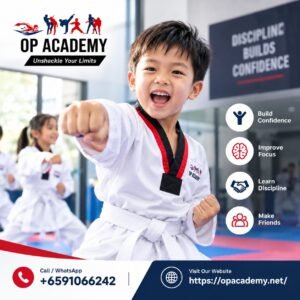
A child’s development involves much more than doing well in school. Parents also want their children to learn how to listen, manage frustration, respect others and keep trying when something does not come easily. These skills develop through everyday experiences, and the right extracurricular activity can provide additional opportunities for children to practise them.
Taekwondo classes for kids in Singapore offer a structured way for children to explore martial arts while developing physical skills and practising positive habits. For parents considering OP Academy, understanding how Taekwondo training works and what children can realistically gain from it is a useful first step towards choosing an activity that fits their family.
What Can Children Learn from Taekwondo Classes?
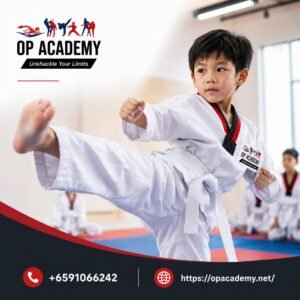
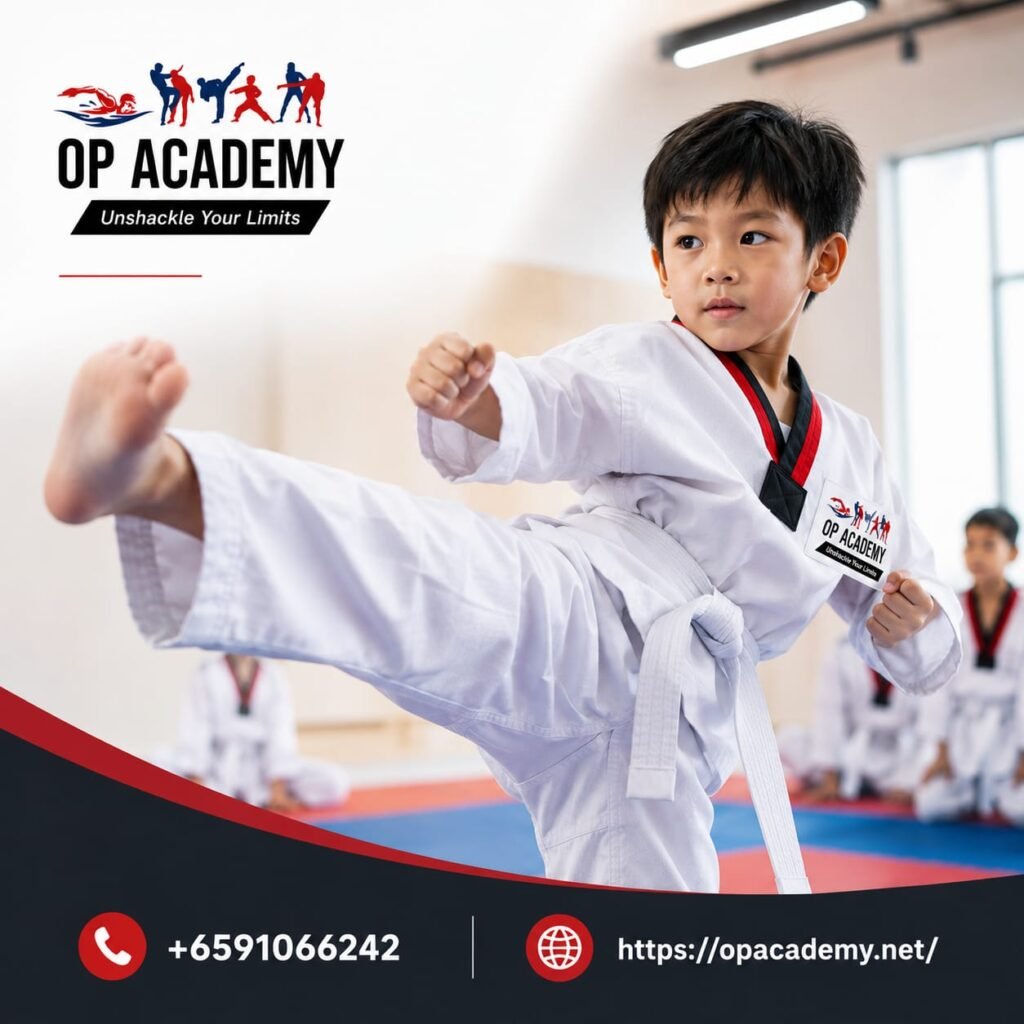
Taekwondo is a Korean martial art that combines controlled kicking techniques, hand techniques, footwork, balance and structured practice. Children learn movements progressively while following instructions, observing demonstrations and practising techniques appropriate to their age and abilities.
Beyond physical training, lessons can create opportunities to practise patience, concentration, responsibility and respect. These are not automatic outcomes of joining a class; they depend on the child’s experience, the quality of instruction and consistent participation in a suitable learning environment.
1. Confidence Through Learning New Skills
Confidence can develop when children discover that they are capable of learning something unfamiliar through practice. In Taekwondo, this may mean maintaining a balanced stance, remembering a sequence of movements or becoming more comfortable participating in a group lesson.
Small achievements can give children concrete examples of their progress without requiring them to outperform their classmates. Parents can reinforce this experience by recognising effort, encouraging questions and helping their children understand that everyone learns at a different pace.
2. Discipline Through Consistent Practice
Children often find routines easier to understand when expectations are clear and repeated consistently. Taekwondo lessons can introduce routines such as listening to the instructor, following training rules, taking turns and practising movements in the correct sequence.
These experiences may complement the routines children follow at home and in school. Rather than expecting a martial arts class to change a child’s behaviour immediately, parents can use what children learn during training as an opportunity to discuss responsibility, patience and respectful conduct in everyday situations.
3. Focus and Attention During Activities
Learning a new Taekwondo technique requires children to observe demonstrations, understand instructions and pay attention to their movements. Repetition gives them opportunities to concentrate on specific details, identify mistakes and make adjustments with guidance.
These activities can provide additional practice in paying attention to a task. However, parents should not assume that Taekwondo will automatically improve academic results or resolve attention difficulties, as each child’s learning needs and experiences are different.
4. Perseverance When Progress Takes Time
Some techniques may feel unfamiliar at first, and children may need several attempts before they become comfortable performing them. Learning to respond constructively to mistakes can help children understand that difficulty is a normal part of acquiring a new skill.
Instructors and parents can support this process by focusing on manageable goals and recognising improvements over time. This approach encourages children to value persistence rather than believing they must get everything right on their first attempt.
How Does Taekwondo Support Physical Development?
Taekwondo involves different movement patterns that require children to coordinate their legs, arms and body position. With appropriate instruction and regular practice, these activities can support balance, coordination, flexibility, agility and general physical fitness.
Physical development should remain age-appropriate, with children learning fundamental techniques before progressing to more demanding movements. Parents should ask how a programme accommodates different ability levels and what safety measures are used during training.
Coordination, Balance and Body Awareness
Controlled kicks and changes in stance require children to understand how their bodies move through space. Repeated practice can help them become more familiar with balance, timing and coordinated movement while learning to perform techniques with control.
These skills can complement participation in other physical activities, including swimming, cycling and recreational sports. Taekwondo does not need to replace other interests; it can be one component of a balanced routine that includes movement, rest and family time.
A Structured Alternative to Passive Entertainment
After a long school day, children may naturally prefer watching videos or playing games on digital devices. Introducing an enjoyable physical activity gives them another option for spending time, especially when they enjoy learning new movements and participating in guided sessions.
The goal is not to eliminate screen time completely or fill every afternoon with organised activities. Instead, parents can consider Taekwondo as one way to balance digital entertainment with physical movement and other meaningful experiences.
Is Taekwondo Suitable for Shy Children?
Taekwondo may be suitable for shy children when the programme matches their age, readiness and comfort level. Some children may prefer to observe during their first lesson, while others may need additional encouragement before participating confidently in a new group environment.
Parents should ask how beginners are introduced to the class and how instructors support children who need time to adjust. A suitable learning environment should provide clear instructions, appropriate supervision and opportunities for children to participate without being pressured to progress faster than they are ready for.
How Should Parents Choose Taekwondo Classes for Kids in Singapore?
When comparing Taekwondo classes for children, parents should consider more than location or promotional pricing. Important factors include age requirements, beginner instruction, instructor supervision, safety procedures, class schedules, fees and whether the programme fits the child’s interests and family commitments.
It is also worth asking how the school explains training expectations and communicates with parents. Clear information makes it easier to understand what children will practise, what equipment may be required and how the programme accommodates students with different levels of experience.
Questions Worth Asking Before Enrolment
Before signing up, ask about the minimum age, lesson duration, class frequency and whether introductory sessions are available. You should also confirm the school’s approach to warm-ups, physical contact, training equipment and maintaining a safe learning environment.
For parents considering OP Academy, a direct enquiry is the best way to obtain current programme information. Confirm the available schedules, fees, enrolment requirements and suitability of the classes before deciding whether to proceed.
Why Explore Taekwondo at OP Academy?
Choosing an extracurricular activity is about finding something that fits your child’s needs while providing opportunities to learn and develop over time. OP Academy is worth considering when researching Taekwondo options in Singapore, particularly if you want to explore how structured martial arts training could fit into your child’s weekly routine.
Rather than relying on general claims about martial arts, ask OP Academy about its actual programme, available age groups, beginner arrangements and training expectations. This gives you the information needed to assess suitability and make a more informed decision for your family.
Frequently Asked Questions About Taekwondo and Children’s Development
What Life Skills Can Children Practise Through Taekwondo?
Children can practise listening, patience, perseverance, respect and responsibility during structured Taekwondo lessons. The extent to which these habits carry into everyday life varies by child and depends on the wider learning environment.
Can Taekwondo Help Children Become More Confident?
Taekwondo can provide opportunities to build confidence through learning new movements, achieving personal goals and receiving constructive feedback. However, confidence develops differently for every child, and improvement cannot be guaranteed.
Is Taekwondo Suitable for Beginners?
Yes, children can explore a suitable beginner programme without necessarily having previous martial arts experience. Parents should confirm the school’s age requirements and how fundamental techniques are introduced.
How Can Parents Find Suitable Taekwondo Classes in Singapore?
Compare the programme’s teaching approach, safety procedures, schedules, fees and suitability for your child’s age and abilities. Contact OP Academy directly to enquire about its current classes and enrolment arrangements.
Give Your Child More Opportunities to Learn with OP Academy
Children deserve opportunities to explore their interests, develop physical skills and practise positive habits outside the classroom. With suitable guidance and regular participation, Taekwondo can become a meaningful activity that encourages children to work towards personal goals while learning the importance of effort, respect and self-control.
Looking for Taekwondo classes for kids in Singapore? Contact OP Academy today to enquire about available classes, age groups, training schedules and enrolment options. Take the next step towards finding a suitable martial arts programme for your child and discover whether OP Academy can become part of their journey towards learning new skills, staying active and growing through consistent practice.