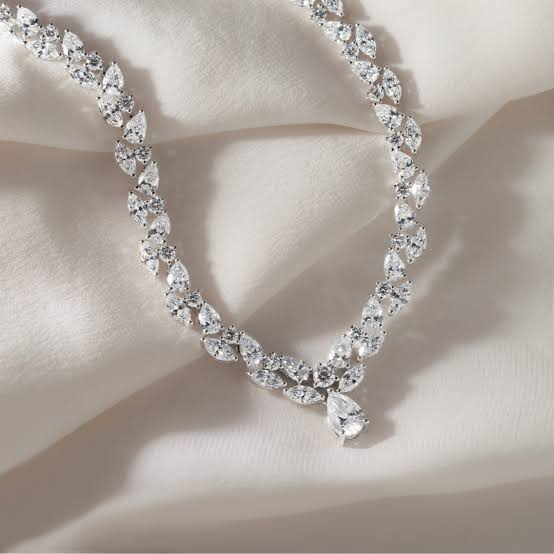
A solitaire diamond necklace combines three elements: a single diamond, its setting, and a fine chain. With so few parts, each choice carries more weight, and chain length is one of the most important. Length determines where the diamond rests, how it frames your face, and how well it works with the clothes you wear most often. A two-inch difference can change the overall look noticeably, so understanding options before you buy helps you choose a piece you will reach for again and again.
Common Chain Lengths and Where They Sit
Necklace lengths are measured end to end, including the clasp, and chains are usually sold in two-inch steps. On an average adult, they tend to fall in these positions:
- 14 inches: Sits close to the base of the neck, similar to a choker.
- 16 inches: Rests at or just above the collarbone.
- 18 inches: Falls slightly below the collarbone, near the hollow of the neck.
- 20 inches: Lands a few inches below the collarbone.
- 22 to 24 inches: Sits at or just above the neckline of most tops.
These positions vary with height and build, so they work best as starting points. Holding a soft tape measure or a piece of string around your neck at each length gives a quick preview of where a pendant will land.
Matching Length to Your Neckline
The clothes you wear most often are a helpful guide. Crew necks and high collars pair well with a 16-inch chain that sits above the fabric, or with a longer chain that falls below it. V-necks tend to suit 18- or 20-inch lengths, since the diamond follows the point of the neckline. Scoop necks and strapless styles leave plenty of open space, so most lengths look balanced. Shirts worn open at the collar often suit 18 inches, which keeps the diamond centered in the opening.
Considering Proportion and Comfort
Proportion plays a role alongside fashion. People with a longer neck often find shorter lengths flattering, since the stone sits higher and draws the eye upward. Those with a shorter neck may prefer 18 or 20 inches, which creates a gentle vertical line. Comfort matters too, and adding an inch to the standard length is a common adjustment for anyone who prefers a little more room.
Pairing Chain Length With Stone Size
The diamond size can also guide your choice. A smaller stone, under half a carat, tends to look best on a shorter chain, where it sits closer to eye level. Larger stones carry more presence and hold their own at longer lengths. The chain itself should suit the stone as well. A fine cable or box chain complements most solitaires, while a heavier chain may feel out of scale next to a small diamond.
Choosing the Metal
Metal color sets the overall tone of the piece. A white gold diamond necklace has a cool, bright look that matches the diamond’s color, giving the piece a clean and continuous appearance. Platinum offers a similar white tone with a heavier feel. Yellow and rose gold add warmth and create more contrast between the metal and the stone, which many people prefer for a softer look.
If you plan to wear the piece every day, a white gold diamond necklace on a cable chain is a practical option. Look for a spring-ring or lobster clasp that is easy to open and close, along with a bail, the small loop that holds the pendant, large enough to let the stone move freely along the chain.
Making Your Choice
The right length comes down to where you want the diamond to rest and what you wear most often. Measuring at home, considering your neckline and proportions, and choosing a chain that suits the stone will help you find a piece that feels effortless to wear. If you are buying the necklace as a gift, 18 inches is a practical default, since it sits comfortably on most people and works with most necklines.
For anyone searching for the right fit of a solitaire diamond necklace, Robinhood Diamonds in New York City designs and hand-crafts each piece in-house. With more than 30 years of experience, Robinhood Diamonds offers value, expert guidance, and timeless quality on every piece.