Choosing the right Quran education for a child is an important decision for parents. Families usually want a teacher who can explain lessons clearly, correct pronunciation, and make the learning experience comfortable for the student. At the same time, Quran lessons need to fit naturally around school, homework, family time, and other daily responsibilities.
An Online Quran Class can make Quran education easier to access from home. Children can learn without traveling to a local learning center, while parents can choose lesson times that fit their family’s routine. However, online programs can differ greatly in teaching quality, course structure, communication, and student support.
Before enrolling a child, parents should look beyond the convenience of online learning. A good program should match the child’s age, current Quran knowledge, learning pace, and long-term goals.
Start With Your Child’s Learning Needs
Every student begins Quran learning from a different level. Some children may already know how to read Arabic letters, while others may be starting from the basics. Some students may need help with pronunciation and Tajweed, while others may want to focus on memorization or regular recitation.
Parents should first identify what their child actually needs. Consider questions such as:
- Can the child already read the Quran?
- Does the child need basic Arabic or Qaida lessons?
- Is Tajweed a priority?
- Does the student need help with memorization?
- How much time can the child realistically spend learning each week?
Understanding these needs makes it easier to compare suitable programs instead of choosing one simply because it is popular.
The Teacher Matters Most
Technology can make online learning convenient, but the teacher remains one of the most important parts of the experience. A good Quran teacher should be patient, clear, encouraging, and able to explain mistakes in a way the student understands.
For younger children especially, teaching style can make a major difference. A teacher who constantly rushes through lessons may make the student lose interest. On the other hand, a teacher who understands the child’s learning pace can create a more positive experience.
Parents should also consider whether teachers have experience working with children of different ages and abilities.
Look for a Structured Learning Process
A well-organized program should have a clear learning process. Students should know what they are working toward rather than simply completing random lessons from one class to another.
A structured approach may include basic Quran reading, pronunciation, Tajweed rules, memorization, revision, and regular assessment.
Programs such as Al Tahoor Quran Institute can be considered by families looking for organized online Quran education, but parents should still review the course structure and make sure it matches their child’s needs.
The important point is not how many courses a program offers. What matters is whether those courses provide a logical path for the student’s development.
Individual Attention Can Improve Learning
Children do not all learn at the same speed. One student may understand a lesson quickly, while another may need several additional examples and practice sessions.
This is why individual attention can be valuable in Quran education. When a teacher has enough time to listen to the student carefully, mistakes in pronunciation or recitation can be identified and corrected earlier.
Parents should ask how much personal attention their child will receive during each lesson. If classes involve several students at the same time, they should also find out how the teacher manages individual correction.
Choose a Schedule You Can Maintain
Flexibility is one of the main benefits of online Quran education, but a flexible schedule only helps when the family can maintain it consistently.
Parents should choose a lesson time that works with the child’s school schedule, activities, sleep routine, and family commitments. A schedule that looks convenient at first may become difficult if it regularly conflicts with homework or other responsibilities.
Consistency is generally more useful than choosing long lessons that the child cannot attend regularly.
Before enrolling, ask about:
- Available lesson times
- Lesson duration
- Number of classes per week
- Rescheduling options
- Holiday arrangements
- Missed-class policies
A realistic schedule can make Quran learning easier to maintain over the long term.
Ask How Student Progress Is Measured
Parents should have some way to understand how their child is progressing. Simply attending classes does not always show whether the student is improving.
Progress may be evaluated through reading practice, memorization, Tajweed exercises, revision, or periodic assessments. Teachers can also provide feedback about areas that need additional attention.
Parents should ask how often progress is reviewed and whether they will receive updates about their child’s performance.
Clear progress tracking can also help identify problems early. If a student has been struggling with the same pronunciation issue for several weeks, the teacher and parent can work together on a different practice approach.
Pay Attention to Tajweed and Pronunciation
Correct Quran recitation involves more than recognizing Arabic letters. Students also need to develop proper pronunciation and understand relevant Tajweed rules as they progress.
In an Online Quran Class, teachers should have a practical method for listening to students recite and correcting mistakes. This is particularly important because online learning does not involve the teacher physically sitting beside the student.
Parents can ask whether the lessons include regular recitation practice and how pronunciation mistakes are corrected.
A patient teacher should correct mistakes without making the child feel embarrassed. Encouragement can be especially important for younger learners who are still developing confidence.
Create a Suitable Learning Environment at Home
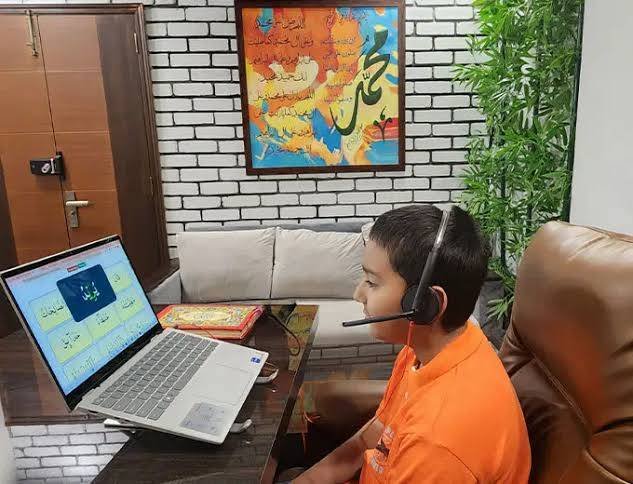
The learning environment can affect how well a child concentrates during an online lesson. A quiet room, reliable internet connection, suitable device, and comfortable seating can make classes easier.
Parents should try to reduce distractions during lesson time. Television, mobile phones, background conversations, and unnecessary interruptions can make it harder for a child to focus.
It can also help to keep the child’s Quran, notebook, headphones, and other learning materials in the same place. Having everything ready before class saves time and helps establish a consistent routine.
Encourage Practice Between Lessons
A Quran lesson should not be the only time a child engages with what they are learning. Short and regular practice between classes can help reinforce new material.
For example, a child learning a new Surah may benefit from reviewing a small section each day. Students working on Tajweed can also practice the rules they learned during their previous lesson.
Parents do not necessarily need to conduct the lesson themselves. Simple encouragement, reminders, and listening to the child recite can provide useful support.
The goal should be consistent practice without turning Quran learning into a stressful obligation.
Parents Should Communicate With the Teacher
Good communication between parents and teachers can make the learning process more effective.
Parents should feel comfortable asking questions about their child’s progress, difficulties, attendance, and future learning goals. Teachers can also provide useful suggestions when they understand what the child is struggling with at home.
This communication becomes especially important when a child starts losing interest or has difficulty keeping up with lessons. Rather than waiting for the problem to become serious, parents and teachers can discuss possible changes early.
Compare Programs Before Enrolling
Parents do not need to choose the first program they find. Comparing several options can reveal important differences in teaching methods, schedules, course structure, and communication.
| Factor | What Parents Should Check |
|---|---|
| Teacher | Experience, patience, communication, and teaching approach |
| Course Structure | Whether lessons follow a clear learning path |
| Tajweed | Whether pronunciation and recitation are properly taught |
| Schedule | Available times and flexibility |
| Student Attention | How much individual correction the child receives |
| Progress | How learning and improvement are evaluated |
| Communication | How parents receive updates and feedback |
| Technology | Video quality, audio clarity, and platform reliability |
Price can also be considered, but it should not be the only deciding factor. A cheaper program may not provide the teaching support a child needs, while a higher-priced option is not automatically better.
The overall value should be considered based on teaching quality, consistency, support, and suitability for the student.
Trial Lessons Can Help
If a program offers a trial lesson or introductory session, parents can use it to understand how the classes actually work.
Instead of focusing only on what the website says, observe how the teacher communicates with the child. Does the teacher listen carefully? Are mistakes explained clearly? Does the child seem comfortable asking questions?
A trial can also help parents determine whether the technology works properly and whether the lesson pace is suitable.
Even one introductory session can provide useful information before making a longer commitment.
Keep the Learning Experience Positive
Children are more likely to stay engaged when they feel that learning is achievable. Parents should avoid comparing one child with another or expecting immediate perfection.
Progress in Quran education can take time. Reading, pronunciation, Tajweed, and memorization all develop through regular practice.
Positive encouragement can help children build confidence. Simple recognition of improvement can be more effective than focusing constantly on mistakes.
If a child is struggling, parents should try to understand why. The issue may be lesson timing, teaching style, difficulty level, distractions, or simply the need for more practice.
Consider the Student’s Long-Term Goals
Parents should think about where they want Quran education to lead over time. A young child may begin with basic reading, while later goals could include fluent recitation, Tajweed, memorization, or deeper Quran study.
Choosing a program that can support changing needs may prevent the family from having to start the search again after a few months.
For example, Al Tahoor Quran Institute may be one option parents consider when looking at online Quran learning, but the right choice ultimately depends on whether the program’s teaching approach and courses fit the individual student.
The most useful program is one that can grow with the learner rather than treating every student in exactly the same way.
When Should Parents Reconsider a Program?
Sometimes a program may seem suitable initially but become less effective over time. Parents should pay attention if their child repeatedly struggles without receiving useful feedback, loses interest because lessons are poorly organized, or receives very little individual attention.
Frequent technical problems, unclear communication, inconsistent scheduling, or a lack of progress updates can also be signs that the arrangement needs to be reviewed.
Reconsidering a program does not necessarily mean the child is the problem. The teaching method or class structure may simply not match the student’s needs.
Parents should discuss concerns with the teacher first. If the situation does not improve, exploring another option may be reasonable.
Final Thoughts
Finding the right Online Quran Class is about more than choosing a convenient time or signing up for lessons. Parents should consider the teacher, course structure, Tajweed instruction, student attention, schedule, progress tracking, and overall learning environment.
The best choice is one that supports consistent learning while keeping the child comfortable and motivated. Families should take time to compare programs and understand how lessons are delivered before making a long-term decision.
Al Tahoor Quran Institute is one option families can explore, but parents should always evaluate any Quran education program according to their child’s specific needs and learning goals. With the right approach, online learning can become a practical and meaningful part of a child’s Quran education.