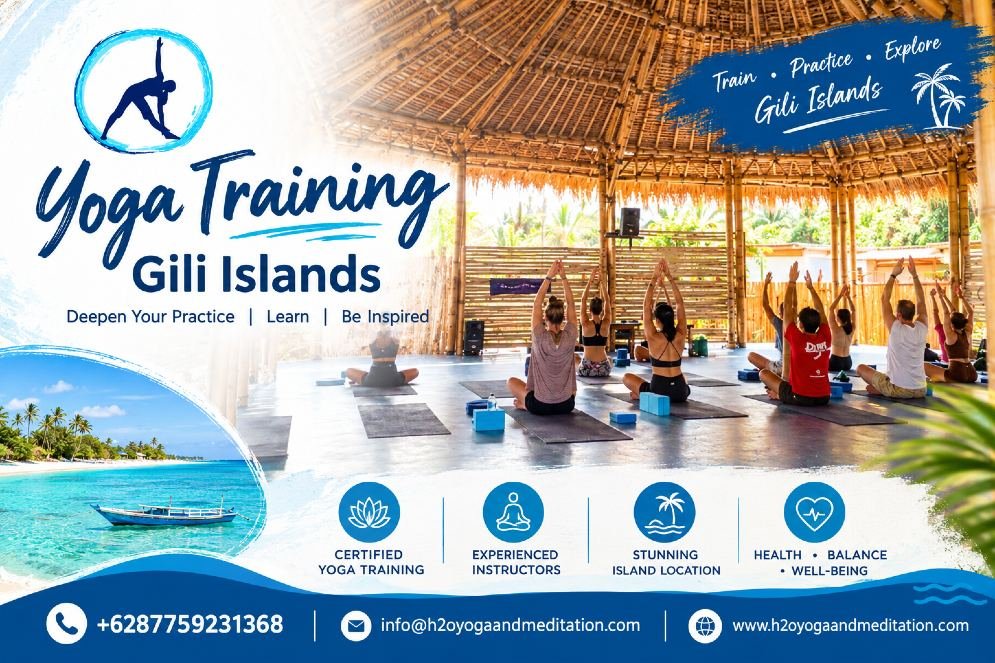
Choosing the right Yoga Training Gili Islands program involves more than finding a beautiful island location. You need to consider your experience level, learning goals, teaching qualifications, accommodation, and the quality of instruction. The Gili Islands, near Lombok and Bali in Indonesia, offer a peaceful setting for yoga practice, meditation, and personal development.
Whether you want to deepen your practice or work toward becoming a yoga teacher, understanding what each program offers will help you make an informed decision. H2O Yoga and Meditation Center, located on Gili Air, provides a starting point for exploring yoga opportunities in the region, including teacher training on neighboring Lombok.
1. Define Your Yoga Training Goals
Before comparing programs, decide what you want to achieve. Some people want to develop a consistent personal practice, while others aim to gain the skills needed to teach yoga professionally.
Consider these common options:
- Yoga retreats: Suitable for people who want to combine yoga, meditation, relaxation, and island exploration.
- Yoga workshops: Helpful for improving specific skills, such as alignment, breathing techniques, or meditation.
- Yoga teacher training: Designed for students who want structured instruction in yoga philosophy, anatomy, teaching methods, and practical teaching experience.
If you plan to teach, look for a comprehensive course that includes supervised teaching practice and a recognized certification pathway. If your goal is personal development, a shorter retreat or workshop may better suit your schedule.
2. Compare the Curriculum and Teaching Methods
A strong training program should offer more than daily yoga classes. Review the curriculum to understand how the course balances physical practice with the traditional and practical aspects of yoga.
For a 200-hour teacher training, look for instruction in:
- Hatha and Vinyasa yoga techniques
- Functional anatomy, biomechanics, and safe alignment
- Pranayama, meditation, and mantra
- Yoga philosophy, ethics, and history
- Class sequencing, verbal cueing, and teaching skills
- Practice teaching, assessment, and constructive feedback
Ask how much time students spend teaching and receiving feedback. Programs that introduce practice teaching early can help students build confidence gradually instead of waiting until the final days.
3. Check the Teachers’ Qualifications and Experience
Your teacher plays an important role in shaping your learning experience. Research the lead trainer’s qualifications, teaching background, areas of expertise, and approach to supporting students.
For a teacher training course, consider whether the instructor has relevant experience in yoga education, anatomy, alignment, and working with students at different levels. Small-group instruction may also provide more opportunities to ask questions and receive individual guidance.
For example, H2O Yoga and Meditation Center recommends Maddy Jones, an E-RYT 500 teacher trainer with more than 11 years of teaching experience and over 4,000 teaching hours. Her background includes a degree in Kinesiology, advanced biomechanics training, and experience in Hatha, Vinyasa, pranayama, and meditation.
Review the trainer’s profile and teaching philosophy before enrolling to determine whether the approach aligns with your goals.
4. Understand the Difference Between Gili Air and Lombok
Location matters when choosing Yoga Training Gili Islands programs. Gili Air offers a relaxed island atmosphere, beaches, wellness activities, and opportunities to balance yoga with snorkeling, swimming, and quiet reflection.
However, not every training program takes place directly on the Gili Islands. Some operate on neighboring Lombok, where students can experience a different environment, including tropical landscapes and quieter retreat settings.
H2O Yoga and Meditation Center is located on Gili Air, while the 200-hour Hatha-Vinyasa Yoga Teacher Training it recommends through Samastha Yoga Shala takes place in Kuta, Lombok, Indonesia.
Check the exact training location before booking flights or accommodation. Also consider transportation, access to meals, local facilities, and the amount of free time available during the course.
5. Evaluate Accommodation, Meals, and Daily Schedule
An intensive yoga course requires time, energy, and rest. Before enrolling, review the accommodation options and daily schedule to understand what your experience will look like.
Ask these questions:
- Is accommodation included in the course fee?
- Are private and shared rooms available?
- How many meals are provided each day?
- Can the provider accommodate vegetarian or vegan diets?
- How many hours are devoted to practice, study, and teaching?
- Does the schedule allow sufficient time for rest and personal reflection?
For example, the 200-hour training at Samastha Yoga Shala offers 27 nights of accommodation in a jungle retreat setting in Kuta, Lombok, daily yoga and meditation, training materials, mentorship, and two meals per day with omnivore, vegetarian, and vegan options.
Comparing these details helps you understand the overall value of a program rather than judging it by the course price alone.
6. Verify Certification and Course Recognition
If you intend to teach yoga after graduation, confirm what certification the program awards and what it means for your professional goals.
Samastha Yoga Shala offers a 200-hour teacher training through a Yoga Alliance-accredited Registered Yoga School. Successful graduates can receive a 200-hour certification upon meeting the program’s completion requirements.
Before enrolling, confirm the school’s current registration status, attendance requirements, assessment process, and any additional steps needed to register individually with a professional organization.
Remember that completing a course does not automatically guarantee employment or teaching opportunities. Your practical skills, communication, continued education, and teaching experience will also influence your development.
7. Compare Prices, Inclusions, and Student Support
Course fees can vary according to accommodation, group size, location, and the amount of instruction provided. Compare the total cost, including flights, transfers, meals not covered by the program, travel insurance, and personal expenses.
Ask about group size and individual mentorship. A smaller group may allow more direct feedback, while a longer course can provide additional time to absorb the material.
H2O’s community members can receive a 10% discount on the recommended Samastha Yoga Shala teacher training by using code H2O10 at checkout. Review the provider’s current dates, prices, and booking conditions before making a reservation.
Find the Right Yoga Training Experience
The best program depends on your goals, preferred learning environment, budget, and available time. By checking the curriculum, instructor qualifications, accommodation, certification, and practical teaching opportunities, you can choose a course that supports your development both on and off the mat.
If you are exploring Yoga Training Gili Islands options, H2O Yoga and Meditation Center can help you discover yoga and meditation experiences on Gili Air and learn about the recommended 200-hour teacher training on neighboring Lombok.
Explore the H2O Yoga and Meditation Center website and visit Samastha Yoga Shala for detailed information about the teacher training program.