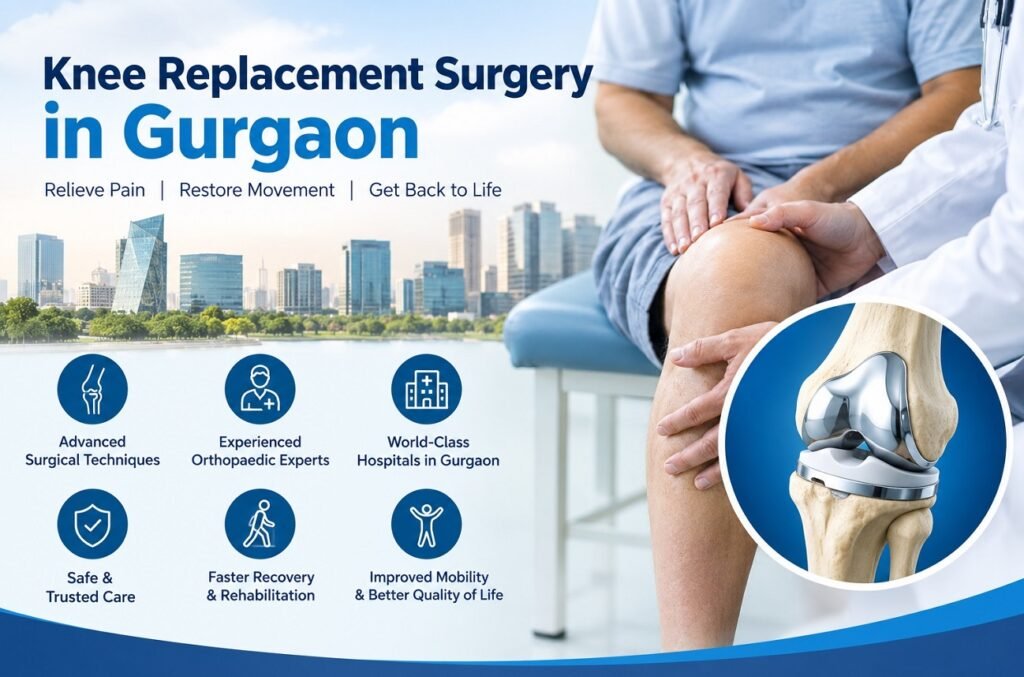
Knee Replacement Surgery in Gurgaon
Knee pain can make everyday activities such as walking, climbing stairs, standing for long periods, and getting up from a chair increasingly difficult. When medications, physiotherapy, and other non-surgical treatments no longer provide sufficient relief, knee replacement surgery may be an effective treatment option for people with severe knee joint damage. At Knee Replacement Surgery, patients can explore treatment options for knee pain and arthritis under the guidance of Dr. Nitin Rawal, Consultant Orthopaedic Surgeon.
What Is Knee Replacement Surgery?
Knee replacement surgery, also known as knee arthroplasty, is a surgical procedure in which damaged portions of the knee joint are replaced with artificial components made from medical-grade metal and plastic.
The procedure is commonly recommended for patients with advanced osteoarthritis, rheumatoid arthritis, or significant knee damage that causes persistent pain and limits mobility.
The main goals of knee replacement surgery are to reduce pain, improve joint function, and help patients return to everyday activities with greater comfort.
When Is Knee Replacement Surgery Needed?
Not every person with knee pain requires surgery. Many patients benefit from weight management, exercise, physiotherapy, medications, or other conservative treatments.
However, an orthopaedic consultation may be appropriate when knee symptoms become persistent or severe.
Common signs that knee replacement surgery may be considered include:
- Persistent knee pain that affects daily activities.
- Severe stiffness or reduced knee movement.
- Difficulty walking, standing, or climbing stairs.
- Swelling and discomfort that keep returning.
- Knee pain that interferes with sleep or rest.
- Limited improvement despite appropriate non-surgical treatment.
- Significant joint damage visible on X-rays or other investigations.
The decision depends on symptoms, physical examination, imaging findings, overall health, and the patient’s goals.
Common Types of Knee Replacement Surgery
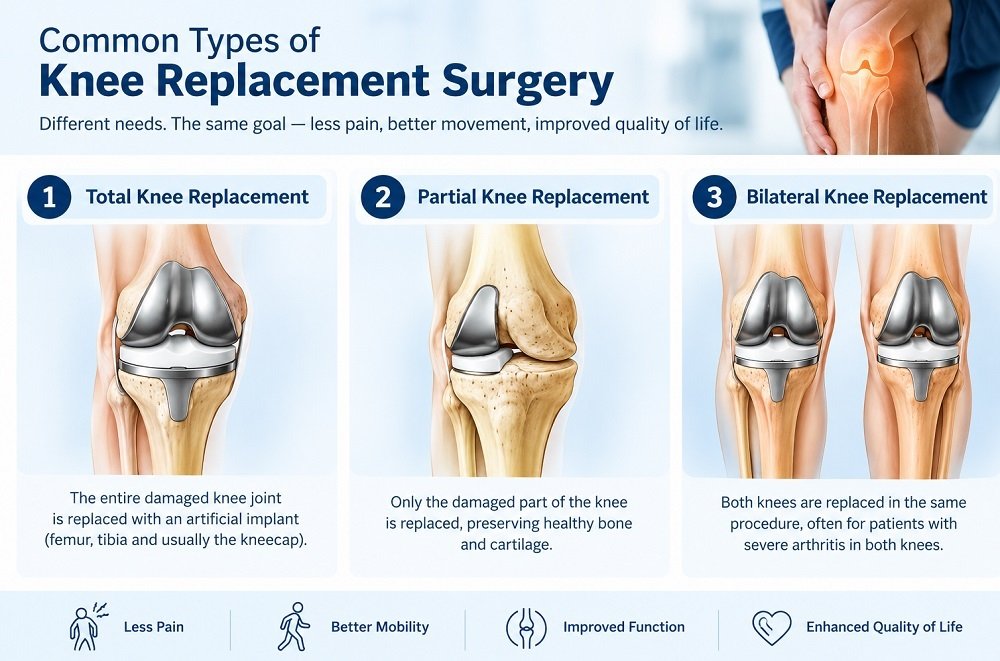
The type of surgery recommended depends on the extent and location of joint damage.
1. Total Knee Replacement
Total knee replacement involves replacing the damaged joint surfaces of the thighbone and shinbone with artificial components. The procedure is commonly used for advanced arthritis affecting multiple areas of the knee.
It may be recommended when pain and joint damage significantly interfere with daily activities.
2. Partial Knee Replacement
Partial knee replacement involves replacing only the damaged compartment of the knee while preserving healthy bone, cartilage, and ligaments where appropriate.
It may be suitable for selected patients whose arthritis is limited to one part of the knee and whose remaining joint structures meet the necessary criteria.
3. Bilateral Knee Replacement
Bilateral knee replacement refers to replacing both knees. Depending on the patient’s health, mobility, and surgical risk, the procedures may be performed during the same operation or as separate surgeries.
An orthopaedic surgeon evaluates each patient’s condition before recommending the most appropriate approach.
What Causes Knee Joint Damage?
Several conditions can damage the knee joint and lead to chronic pain.
Osteoarthritis: This is one of the most common reasons for knee replacement. The protective cartilage gradually wears down, causing pain, stiffness, and reduced movement.
Rheumatoid arthritis: This inflammatory condition can damage joint tissues and lead to persistent swelling, pain, and deformity.
Previous knee injuries: Certain fractures, ligament injuries, or other traumatic conditions may increase the risk of developing arthritis later in life.
Age-related changes: The risk of knee arthritis generally increases with age, although age alone does not determine whether surgery is necessary.
Joint deformity: Advanced joint damage may cause the knees to become bowed inward or outward, affecting alignment and walking ability.
Benefits of Knee Replacement Surgery
For appropriately selected patients, knee replacement surgery can provide meaningful improvements in comfort and mobility.
Potential benefits include:
- Reduction in chronic knee pain.
- Improved ability to walk and perform daily activities.
- Better knee function and range of movement.
- Improved sleep when pain previously disturbed rest.
- Greater independence in routine activities.
- Improved quality of life.
Results vary from person to person. Recovery depends on factors such as general health, muscle strength, the severity of joint damage, and participation in rehabilitation.
How Is Knee Replacement Surgery Performed?
The surgical process typically involves several stages.
1. Preoperative Assessment
The surgeon reviews the patient’s medical history, examines the knee, and evaluates X-rays. Additional investigations may be required to assess overall health and plan the procedure.
2. Anaesthesia
The operation is performed under an appropriate anaesthesia plan. The anaesthesiologist discusses the available options based on the patient’s health and surgical requirements.
3. Replacing the Damaged Joint Surfaces
The surgeon removes the damaged cartilage and a small amount of underlying bone from the affected joint surfaces. Artificial components are then positioned to restore the joint surfaces and alignment.
4. Initial Movement
When medically appropriate, patients are encouraged to begin standing and walking with assistance, often on the day of surgery or soon afterwards.
5. Rehabilitation
Physiotherapy helps improve knee movement, strengthen surrounding muscles, and restore walking ability. Following the prescribed rehabilitation plan is an important part of recovery.
Recovery After Knee Replacement Surgery
Recovery is gradual, and every patient progresses at a different rate.
First few days: Patients generally begin assisted walking and simple knee exercises when medically appropriate. Pain management and wound care are important during this period.
First two weeks: Patients continue mobility exercises and follow instructions regarding walking aids, medication, and wound care. Follow-up appointments help monitor progress.
Weeks three to six: Many patients gradually improve their walking ability, strength, and independence. Physiotherapy continues according to individual needs.
Six weeks and beyond: Functional improvements often continue over the following months. Some patients need longer to regain strength, confidence, and comfortable movement.
The timeline is not the same for everyone. Patients should follow their surgeon’s advice rather than compare their progress with another person’s recovery.
Tips for a Better Recovery
Following the recommended recovery plan can support healing and improve mobility.
- Attend physiotherapy sessions and perform prescribed exercises.
- Use a walker, cane, or other walking aid as advised.
- Take prescribed medicines according to medical instructions.
- Keep the surgical wound clean and follow wound-care guidance.
- Maintain a balanced diet and adequate hydration.
- Avoid strenuous activities until your surgeon approves them.
- Attend scheduled follow-up appointments.
- Contact your medical team if you develop concerning symptoms.
Seek urgent medical assessment for symptoms such as sudden shortness of breath, chest pain, significant calf swelling, or new severe pain. Fever, increasing wound redness, or wound discharge should also be reported promptly.
What Are the Risks of Knee Replacement Surgery?
Like any major operation, knee replacement surgery carries potential risks. These may include infection, blood clots, bleeding, stiffness, persistent pain, nerve or blood vessel injury, and complications related to anaesthesia.
Over time, artificial components may wear out or loosen, and some patients may require further surgery.
A thorough preoperative assessment, appropriate surgical planning, preventive measures, and structured rehabilitation help manage these risks. Patients should discuss their individual risk factors with their surgeon before making a decision.
How to Choose a Knee Replacement Surgeon in Gurgaon
Choosing an orthopaedic surgeon is an important part of planning treatment. Patients should consider the surgeon’s relevant training, experience with knee replacement procedures, approach to patient assessment, and arrangements for postoperative care.
It is also helpful to understand the proposed surgical technique, rehabilitation plan, expected recovery, and potential complications before proceeding.
At AOSC Advance Ortho, Gurgaon, patients can consult Dr. Nitin Rawal, Consultant Orthopaedic Surgeon, to discuss knee pain, arthritis, available treatment options, and whether knee replacement surgery may be appropriate for their condition.
Frequently Asked Questions
Is knee replacement surgery very painful?
Some pain and discomfort are expected after surgery, but pain-management strategies help control symptoms. Discomfort generally improves as healing and rehabilitation progress.
How long does a knee replacement last?
Many modern knee replacements function well for 15–20 years or longer. Longevity varies with implant type, activity levels, health factors, and other individual circumstances.
Can I walk normally after knee replacement surgery?
Many patients experience improved walking ability after recovery. The extent of improvement depends on preoperative mobility, muscle strength, joint condition, and rehabilitation.
What is the best age for knee replacement surgery?
There is no single best age. The decision is based on the severity of symptoms, joint damage, overall health, and the impact of knee problems on quality of life rather than age alone.
How long does recovery take?
Initial mobility usually begins soon after surgery. Many patients make substantial progress over six to twelve weeks, while strength and functional improvements may continue for several months.
Is knee replacement surgery always necessary for arthritis?
No. Many people manage arthritis with non-surgical treatment. Knee replacement is generally considered when significant symptoms persist despite appropriate conservative care and joint damage supports surgery.
Conclusion
Best Knee Replacement Surgeon in Gurgaon can be an effective option for people living with severe knee arthritis and persistent pain that limits everyday activities. Understanding the available procedures, potential benefits, risks, and recovery process helps patients make informed treatment decisions. If knee pain is affecting your mobility or quality of life, consult an experienced orthopaedic professional to discuss your options.