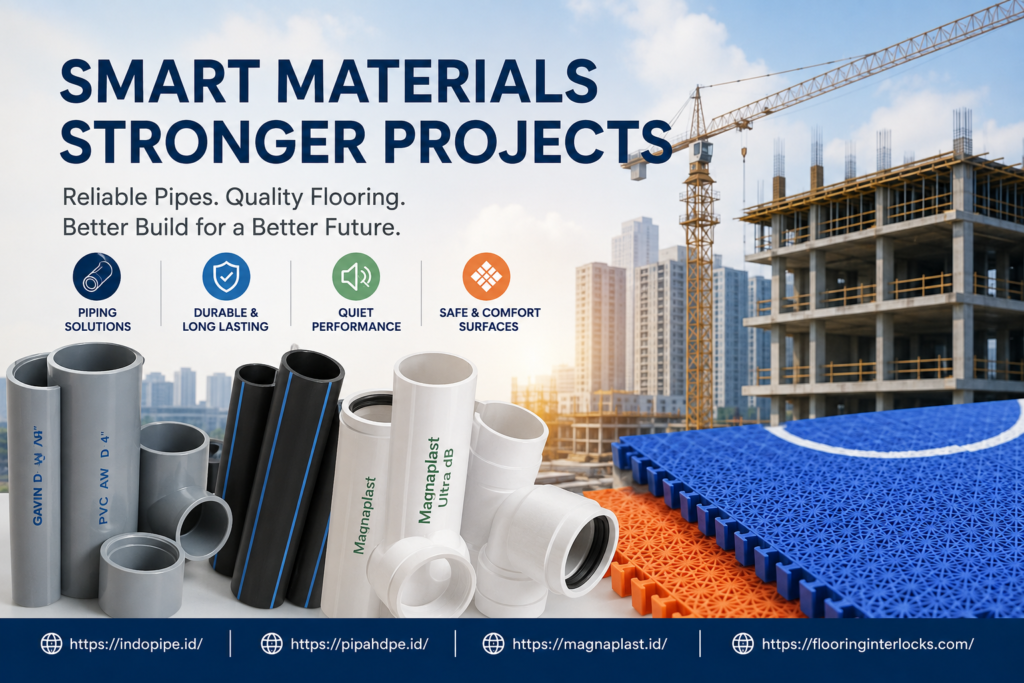
How the Right Materials Improve Construction and Facility Projects – Choosing the right materials is one of the most important decisions in any construction or facility development project. Whether the project involves residential buildings, commercial properties, infrastructure, industrial facilities, or sports areas, the materials used can influence durability, maintenance, safety, and overall operating costs.
Construction materials are no longer selected simply based on their initial purchase price. Contractors, developers, architects, and property owners increasingly consider factors such as product specifications, installation methods, environmental conditions, expected service life, and long-term maintenance.
Among the many products used in construction, piping systems and specialized flooring are particularly important. Pipes support essential water distribution, drainage, sanitation, and utility systems, while flooring can determine the safety and usability of sports and working areas.
Understanding how different materials work and where they are best applied can help project managers make better purchasing decisions.
Why Material Selection Matters in Construction
Every construction project has different requirements. A residential house does not necessarily need the same materials as a hotel, factory, apartment building, or infrastructure project.
For example, a water distribution system needs pipes capable of handling the expected pressure and operating conditions. A drainage system may require different characteristics because it has to transport wastewater continuously. Meanwhile, a building located in a busy urban environment may need additional consideration for noise control.
The wrong material can create problems that become expensive to solve later. Leaks, cracks, corrosion, excessive noise, difficult maintenance, and premature replacement are examples of issues that may result from inappropriate material selection.
For this reason, project teams should evaluate materials based on their intended application rather than choosing products solely because they have the lowest price.
Important considerations can include:
- Material composition
- Pipe or product dimensions
- Pressure requirements
- Chemical resistance
- Temperature resistance
- Installation conditions
- Expected service life
- Maintenance requirements
- Availability of replacement components
- Project budget
A balanced approach allows contractors to find materials that offer practical value throughout the entire life of a project.
PVC Pipes for Plumbing and Utility Systems
PVC is one of the most commonly used materials in plumbing and utility installations. Its popularity is associated with characteristics such as corrosion resistance, relatively low weight, and ease of handling during installation.
PVC pipes can be found in various applications, including clean water distribution, sanitation, drainage, and electrical cable protection. Different pipe classifications are available depending on pressure and application requirements.
One important consideration when selecting PVC is wall thickness. A pipe intended for pressurized water systems may require a different specification from a pipe used for drainage or cable protection.
Diameter is another important factor. A properly designed plumbing system needs sufficient capacity to transport water or wastewater according to the requirements of the building.
For construction professionals, comparing different PVC products can help determine which option is appropriate for a particular project. More information about PVC, HDPE, PPR, acoustic, and other piping solutions can be found at https://indopipe.id/.
The selection process should still begin with project specifications. A product should be evaluated according to its intended application, installation environment, and technical requirements.
HDPE Pipes for Infrastructure Applications
HDPE, or High-Density Polyethylene, is another widely used piping material. Unlike conventional rigid piping systems, HDPE is known for its flexibility and resistance to corrosion.
These characteristics make HDPE suitable for various infrastructure and utility applications. Common uses include water distribution, irrigation, drainage, industrial systems, and other projects where flexibility and durability are important.
One of the advantages of HDPE is its ability to accommodate certain site conditions more easily because of its flexible nature. This can be useful when pipelines need to follow a particular route or when installation conditions are challenging.
HDPE pipes can also be joined using specialized techniques, creating continuous pipeline systems with reliable connections when installed correctly.
However, product selection should always consider factors such as pressure rating, diameter, wall thickness, joining method, and installation environment.
For example, a pipeline intended for high-pressure water distribution should not be selected using the same criteria as a low-pressure drainage application.
The availability of different sizes and specifications is therefore important for contractors who work on projects with varying technical requirements.
Acoustic Considerations in Building Plumbing
Plumbing systems perform an essential function, but they can also generate unwanted noise. Water flowing through drainage pipes can produce sound and vibration that may become noticeable inside residential or commercial spaces.
This issue is particularly relevant in apartment buildings, hotels, hospitals, offices, and other properties where multiple rooms are located close to plumbing systems.
Acoustic drainage pipes are designed to address this particular concern. Instead of focusing only on water transportation, these systems incorporate characteristics intended to reduce the transmission of plumbing noise.
A specialized acoustic pipe system may use multilayer construction and specific materials to help reduce sound generated by water flow. Proper installation is also important because pipe supports, connections, walls, ceilings, and structural components can influence the final acoustic performance.
One example of a specialized acoustic piping solution available for building applications is discussed at https://magnaplast.id/.
Acoustic plumbing can be particularly useful when occupant comfort is an important design objective. In a hotel, for example, guests may expect a quiet environment even when other rooms are using bathrooms or drainage systems.
Similarly, in apartment buildings, reducing plumbing noise can contribute to a more comfortable living environment.
Installation Quality Is Just as Important as Material Quality
Choosing a good material is only part of the process. Proper installation can have an equally significant impact on long-term performance.
A high-quality pipe may still develop problems if it is installed incorrectly. Improper alignment, inadequate support, unsuitable joining methods, or poor preparation can compromise a piping system.
For PVC installations, installers need to use appropriate joining techniques and ensure that pipes are properly supported. Systems carrying pressurized water may also require testing before being placed into regular operation.
HDPE installations require careful attention to joining procedures. Depending on the project and product specification, techniques such as butt fusion or electrofusion may be used.
Acoustic drainage systems require additional attention to installation details. If vibration is transferred directly to structural elements, the acoustic benefits of the pipe system may not be fully achieved.
This demonstrates why contractors should consider installation requirements before selecting a material. A product that looks suitable on paper may not be the best choice if the project team cannot install it according to the required specifications.
Flooring Materials for Sports Facilities
Construction projects extend beyond buildings and infrastructure. Sports facilities also depend on specialized materials to provide a safe and functional environment.
Futsal courts are a good example. The playing surface must accommodate frequent running, acceleration, sudden stops, changes of direction, and physical activity.
Traditional flooring materials may not always provide the characteristics required for a specialized sports environment. Modular interlocking flooring is one alternative that has been developed for sports applications.
Interlocking flooring consists of individual modules that connect together to form a playing surface. This construction method can offer practical advantages during installation and maintenance.
The material used for sports flooring is also important. A suitable surface should provide an appropriate balance between durability, traction, comfort, and resistance to repeated use.
For projects involving futsal courts and sports facilities, https://flooringinterlocks.com/ provides information about interlocking flooring systems designed for sports applications.
The concept of modular flooring can also extend beyond sports. Certain interlocking floor products can be used in workshops and other working environments where a more practical surface is required.
Balancing Cost and Long-Term Value
Price is naturally an important factor in construction procurement. However, the lowest initial price does not always represent the lowest overall cost.
A cheaper product may require more frequent replacement or maintenance. Conversely, a product with a higher initial cost may provide better durability or easier maintenance, potentially reducing expenses over its service life.
This is why contractors and developers should consider total value rather than purchase price alone.
For piping systems, total cost may include:
- Product purchase
- Transportation
- Installation
- Fittings and accessories
- Testing
- Maintenance
- Repairs
- Replacement
The same principle applies to sports flooring and other construction materials.
A flooring system that is easy to install and maintain may provide greater practical value than a cheaper alternative that requires more extensive maintenance.
Choosing Materials According to the Project
There is no universal material that is ideal for every construction project. Each application has different technical and operational requirements.
PVC may be suitable for many plumbing and utility applications because of its practical characteristics and wide availability. HDPE can be considered when flexibility and resistance to corrosion are important.
Acoustic piping becomes relevant when controlling plumbing noise is part of the building’s design objectives. Specialized interlocking flooring, meanwhile, can be considered for sports facilities where safety and performance are key considerations.
Project managers should therefore begin the selection process by identifying the actual requirements of the installation.
Questions worth considering include:
- What will the material be used for?
- What environmental conditions will it face?
- What pressure or load will it experience?
- How frequently will it be used?
- How will it be installed?
- What maintenance will be required?
- How easily can replacement components be obtained?
- What is the expected service life?
Answering these questions makes it easier to narrow down suitable products.
The Importance of Working With Reliable Suppliers
Material availability can also affect project schedules. Construction projects often involve strict deadlines, and delays in obtaining essential components can affect multiple stages of work.
Reliable suppliers can help contractors by providing product information, technical specifications, availability, and logistical support.
This is particularly important for projects requiring large quantities of pipes or specialized materials. Contractors need to ensure that the products supplied match the specifications stated in the project documents.
Communication between suppliers, engineers, contractors, and project owners can reduce the risk of ordering unsuitable materials.
It is also useful to request product specifications before making large purchases. Reviewing dimensions, pressure ratings, material composition, applicable standards, and installation requirements can prevent misunderstandings later in the project.
Building Better Projects Through Better Decisions
Construction quality is influenced by many individual decisions. Material selection is one of them, but it should not be viewed separately from design, installation, maintenance, and procurement.
A well-designed project uses materials according to their intended purpose. PVC, HDPE, acoustic piping, and specialized flooring each have their own applications and characteristics.
The key is understanding the difference between them and selecting products based on actual project requirements.
For contractors and developers, taking additional time to evaluate specifications before purchasing can help reduce installation problems and unnecessary replacement costs. It can also make maintenance easier throughout the life of the facility.
Ultimately, successful construction is not simply about using expensive materials. It is about using appropriate materials, installing them correctly, and maintaining them properly.
Whether the project involves a residential plumbing system, a large infrastructure network, a commercial building, or a sports facility, thoughtful material selection can contribute significantly to the project’s long-term performance.
By combining technical evaluation, practical installation planning, reliable sourcing, and consideration of lifecycle costs, construction professionals can create facilities that are safer, more efficient, and better prepared for years of use.