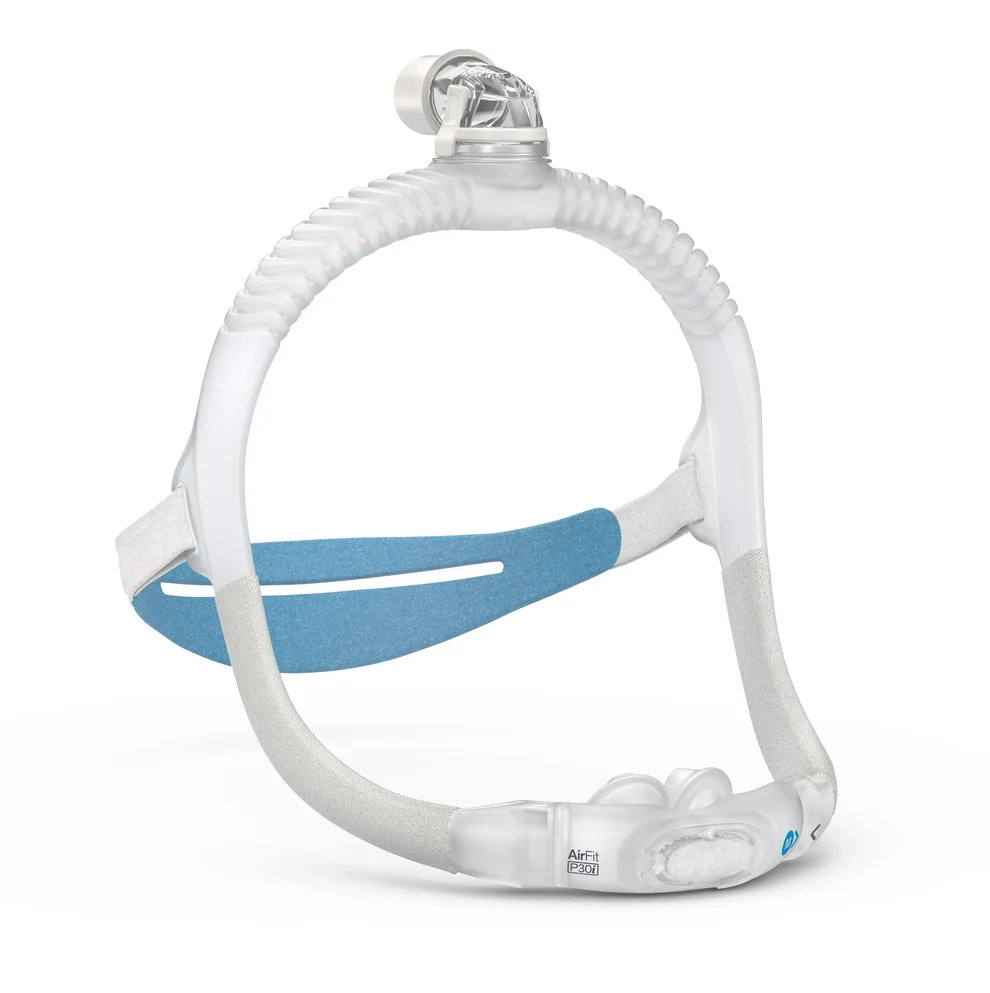
If you rely on the ResMed AirFit P30i nasal pillow mask for your CPAP therapy, you already know how much a fresh, well-fitted seal matters for a good night’s sleep. But even the best mask needs regular care. Below is a simple breakdown of how often to replace your AirFit P30i nasal pillows, plus a daily and weekly cleaning routine to keep your therapy hygienic and effective.
How Often Should You Replace AirFit P30i Nasal Pillows?
ResMed’s general guidance for the AirFit P30i replacement schedule looks like this:
- Nasal pillows (cushions): every 2 weeks. These are the part in direct contact with your nostrils, so they wear out fastest. Silicone breaks down with repeated cleaning, oils from your skin, and nightly pressure, which weakens the seal and can cause air leaks.
- Frame system: every 3 months. The frame holds the pillows and headgear together. Over time it can lose its shape or develop small cracks that affect fit.
- Headgear: every 6 months. The straps stretch out with regular washing and wear, which reduces how securely the mask sits on your head.
Signs You Need to Replace Your Pillows Sooner
Don’t wait for the two-week mark if you notice:
- Visible cracks, tears, or discoloration beyond normal light staining
- A weakened seal or new air leaks around your nose
- Reduced flexibility or the silicone feeling stiff or brittle
- Skin irritation or marks that weren’t there before
- A noticeable rise in machine noise, which can signal a vent or seal issue
Replacing pillows on schedule (or sooner if damaged) isn’t just about comfort — a poor seal can undercut your prescribed therapy pressure, which affects how well your CPAP treats your sleep apnea.
AirFit P30i Cleaning Guide: Daily and Weekly Maintenance
Daily Cleaning (Every Morning)
- Disassemble the mask. Remove the nasal pillows, elbow, and headgear connection points as needed.
- Wash the nasal pillows and frame in warm water with a mild, fragrance-free soap. Avoid antibacterial soaps, alcohol, or bleach — these can degrade the silicone faster than normal wear.
- Rinse thoroughly to remove all soap residue, since leftover soap can irritate your skin or affect the seal.
- Air dry away from direct sunlight before your next use. Sunlight and high heat can break down silicone over time.
- Wipe down the tubing connection point with a damp cloth if needed — you don’t need to fully wash the air tubing every day, but a quick wipe helps prevent buildup.
Weekly Cleaning (Once a Week)
- Wash the headgear by hand in warm, soapy water. Gently squeeze rather than scrub to protect the fabric and elastic.
- Rinse well and lay flat to air dry, away from direct heat, which can cause the straps to lose elasticity faster.
- Inspect the QuietAir vent on the frame for any blockages, dust, or buildup, since a blocked vent can make the mask louder and affect exhaled air venting.
- Check the full air tubing (if not disposable) and wash separately with mild soap and water, then hang to dry completely before reconnecting.
- Do a full inspection of all mask parts for early signs of wear — this is a good time to note whether your pillows are approaching their two-week replacement point.
What to Avoid
- Bleach, alcohol-based cleaners, or scented detergents
- Dishwashers, washing machines, or direct sunlight for drying
- CPAP cleaning devices that use ozone, since ResMed does not recommend these for its mask components
Keeping Your Therapy Consistent
A predictable cleaning routine paired with timely replacements is the simplest way to protect your seal, avoid skin irritation, and get consistent results from your CPAP therapy. If your current pillows are past their two-week mark or showing wear, you can find genuine ResMed AirFit P30i nasal pillow mask replacement parts to keep your setup running the way it’s meant to.
This guide is for general maintenance reference. Always follow the instructions included with your specific mask and check with your CPAP provider or insurer about replacement coverage.