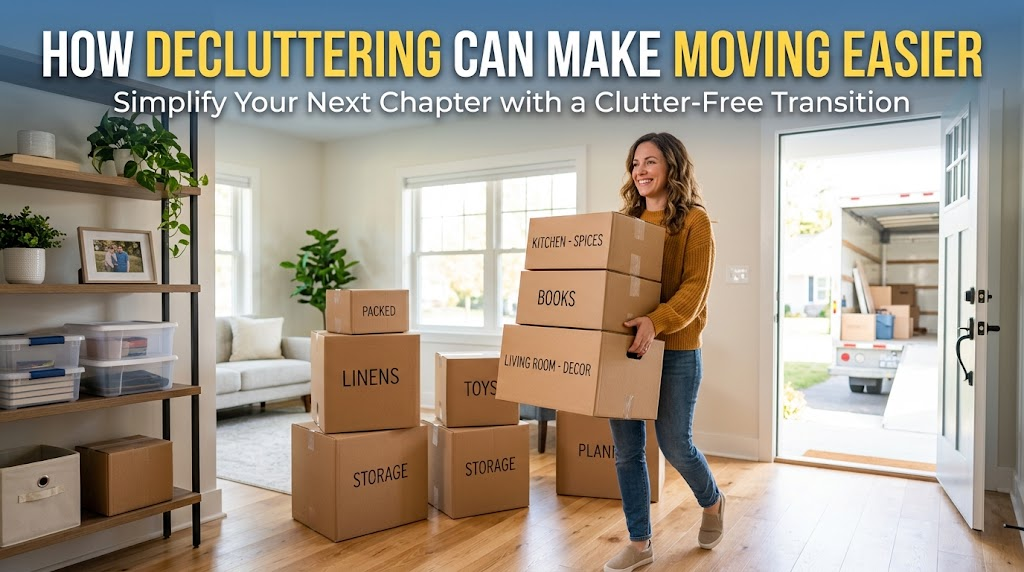
Moving to a new home is an opportunity for a fresh start, but packing every item you own can quickly make the process overwhelming. One of the most effective ways to simplify a move is to declutter before you begin packing. By deciding what you actually need, use, and value, you can reduce the number of boxes, make packing more organized, and create less work on moving day.
For homeowners planning a relocation, decluttering can also make it easier to coordinate with Movers in Boston and other moving professionals because there are fewer belongings to sort, pack, load, transport, and unload. Whether you are moving across town or relocating to another state, removing unnecessary items before moving day can make the entire process more manageable.
Why Decluttering Should Happen Before Packing
A common moving mistake is packing everything first and deciding what to keep after arriving at the new home. This approach often means spending time and money transporting belongings that you no longer want. It also creates additional work because unwanted items eventually have to be unpacked, sorted, donated, sold, recycled, or discarded.
Decluttering reverses that process. Instead of asking, “Where should I put this in my new home?” you can first ask, “Do I really need to take this with me?” That simple question can prevent unnecessary belongings from making the journey.
Decluttering before packing can also give you a clearer understanding of what you own. When items are grouped and reviewed before they go into boxes, it becomes easier to identify duplicates, unused household goods, outdated clothing, damaged possessions, and things that no longer fit your lifestyle.
How Decluttering Can Make Moving Easier
1. You Have Fewer Items to Pack
Packing is one of the most time-consuming parts of a move. Every item that stays behind is one less item that needs to be wrapped, boxed, labeled, carried, and unpacked.
For example, consider a kitchen cabinet containing several sets of dishes, old appliances, unused utensils, and duplicate cookware. If some of those items have not been used in years, keeping them simply increases the amount of packing required.
Reducing the number of possessions before packing allows you to focus your time on the things that genuinely belong in your new home.
2. Decluttering Can Reduce Moving Expenses
Moving costs vary depending on factors such as distance, labor, services, timing, and the amount of property being transported. While decluttering does not guarantee a specific cost reduction, having fewer belongings can potentially reduce the amount of labor, packing materials, vehicle space, or time required for a move.
The principle is straightforward: transporting fewer unnecessary possessions means you are not paying to move things you have already decided you do not need.
Before requesting moving estimates, it can therefore be useful to complete a reasonable amount of decluttering. A more accurate inventory can help you communicate your moving needs more clearly.
3. It Makes Packing More Organized
Decluttering and organization work together. Once unnecessary items have been removed, you can divide the remaining belongings by room and category.
For example, books can be grouped together, kitchenware can be sorted by type, and clothing can be separated by season. This makes it easier to label boxes accurately and locate important belongings later.
A well-labeled box such as “Kitchen – Everyday Items” is much more useful than a box containing a random mixture of kitchenware, office supplies, and miscellaneous household items.
4. It Makes Unpacking Easier
The benefits of decluttering continue after the moving truck arrives. If you only move items that you intend to use, unpacking becomes more purposeful.
Instead of opening dozens of boxes filled with things you are unsure about, you can focus on putting useful belongings in their intended locations. This can help you establish your new home more efficiently.
Decluttering can also prevent the common situation where unopened boxes remain in storage for months simply because their contents were not particularly important.
What Should You Declutter Before Moving?
There is no universal rule for what should be discarded or kept. Personal value, condition, usefulness, replacement cost, and available space all matter. However, certain categories deserve careful attention.
Clothing
Start with clothing you no longer wear, items that do not fit, damaged garments that you are unlikely to repair, and duplicates you rarely use. Seasonal clothing can be particularly useful to review because storage habits often allow unused pieces to accumulate.
Instead of automatically throwing clothing away, consider whether it can be donated, recycled, sold, or given to someone who can use it.
Kitchen Items
Kitchens often contain more duplicates than people realize. Review cookware, utensils, dishes, glasses, mugs, food storage containers, and small appliances.
Check for containers without matching lids, damaged cookware, duplicate gadgets, and appliances that have not been used in a long time. Keep the items that suit your actual cooking habits rather than packing everything simply because it is already in the cabinet.
Books, Papers, and Documents
Books can be heavy, making them particularly important to evaluate before a move. Keep books that you genuinely value or expect to read again, while considering donation or resale for others.
Paperwork also deserves attention, but important documents should never be discarded casually. Keep records that are legally, financially, medically, or personally important, and securely dispose of documents containing sensitive information when they are no longer needed.
Furniture
Furniture requires more planning because large pieces take up significant space and may require additional labor to move. Before moving a sofa, table, shelving unit, or other large item, consider whether it will fit the new home’s layout.
Measure both the furniture and relevant doorways, stairways, elevators, and rooms when necessary. A piece that worked well in one home may not be practical in another.
Garage, Basement, and Storage Areas
Storage areas are often where forgotten belongings accumulate. Tools, old decorations, unused sports equipment, broken appliances, and miscellaneous household items can sit untouched for years.
These areas should not be left until the last few days before moving. Give yourself enough time to sort through them carefully and determine what can be kept, donated, recycled, sold, or responsibly disposed of.
Use a Simple Decluttering System
A practical approach is to create four categories: keep, donate, sell, and dispose. Every item you review should have a clear destination.
The “keep” category contains things that will move with you. “Donate” is for useful items you no longer need but someone else may appreciate. “Sell” is appropriate for items with enough value to justify the time and effort involved. “Dispose” should be reserved for items that are damaged, unusable, or unsuitable for donation or resale.
Avoid creating a vague “maybe” pile for everything. If you need additional time to decide about certain sentimental belongings, place them in a clearly defined temporary category and set a deadline for making the final decision.
Start Decluttering Early
Waiting until the week before moving day can make decluttering stressful. Instead, begin several weeks ahead and work through the home one area at a time.
You might start with a spare bedroom, storage closet, or garage before moving to everyday areas such as the kitchen and bedroom. This allows you to make decisions gradually without disrupting your daily routine.
Starting early also gives you time to donate items, arrange pickups, sell selected possessions, recycle materials, or properly dispose of items that cannot move with you.
Be Careful With Sentimental Items
Decluttering does not mean getting rid of everything that is not frequently used. Some possessions have emotional or family significance, and their value cannot be measured by how often they are used.
Photographs, letters, heirlooms, children’s artwork, and gifts may deserve a place in your new home even if they are not practical. The goal is not to create an empty house; it is to make thoughtful decisions about what deserves space in your next chapter.
If sentimental belongings are difficult to evaluate, consider whether you can preserve the memory in another way. For example, photographs of bulky childhood projects or memorabilia can sometimes preserve the experience without requiring you to store every physical item.
Decluttering and Moving Day Preparation
Once decluttering is complete, packing becomes much more straightforward. You can create a more accurate inventory, estimate the number of boxes you need, organize belongings by room, and identify items that require special handling.
Keep essential documents, medications, valuables, chargers, basic toiletries, a change of clothes, and other immediate necessities separate from the main household shipment. An essentials box or overnight bag can make the first day and night in the new home considerably easier.
It is also wise to distinguish items that should not be packed with ordinary household goods. Certain hazardous, flammable, or otherwise restricted materials may have special transportation requirements, so check with your moving company and relevant authorities when necessary rather than assuming everything can go into a moving box.
What to Do With Items You Do Not Want to Move
Once you have finished sorting, deal with unwanted belongings promptly. Leaving everything until the final day can cause unnecessary pressure.
Useful items may be donated to local charitable organizations, sold through appropriate marketplaces, or given to friends and family. Electronics and certain household materials may require specialized recycling or disposal. For large or unusual items, check local disposal rules rather than placing them in ordinary household trash.
The key is to give every unwanted item a destination. A decluttering project is not truly finished if unwanted belongings are simply moved from one room to another.
A More Comfortable Start in Your New Home
The biggest advantage of decluttering is not simply having fewer boxes. It is starting life in your new home with belongings that are useful, meaningful, and appropriate for your space.
When you remove items you no longer need, you can spend more time organizing the things that matter. Your new home may feel easier to arrange because you are not trying to find storage space for possessions that no longer serve a purpose.
Decluttering can also encourage more intentional purchasing after the move. Once you have experienced how much effort is involved in transporting and organizing unused possessions, you may become more selective about what you bring into your home in the future.
Conclusion
Decluttering can make moving easier by reducing the number of belongings you need to pack, transport, organize, and unpack. Start early, work through one area at a time, and make thoughtful decisions about what to keep, donate, sell, recycle, or discard. The goal is not to eliminate everything you own but to move forward with possessions that genuinely fit your needs and lifestyle. Whether you handle the relocation yourself or work with East Coast Boston Movers, a well-planned decluttering process can help you approach moving day with less clutter, better organization, and greater confidence. A lighter move can ultimately give you a smoother and more comfortable start in your new home.