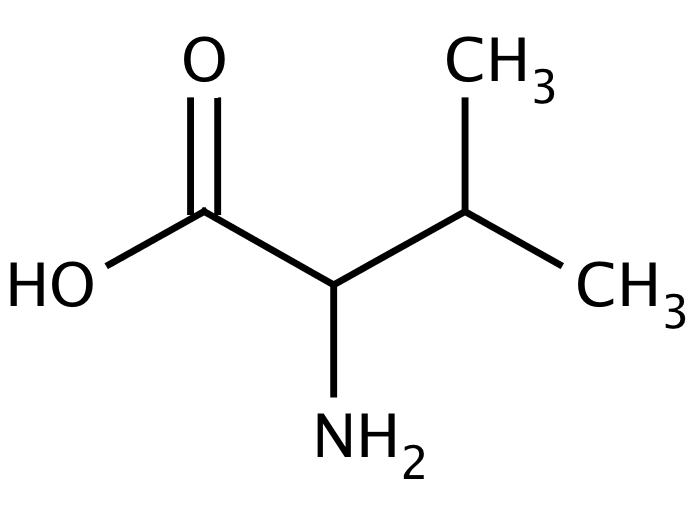
Turning Stereochemical Intent into Reproducible Chemical Processes
Developing a stereoselective process requires more than choosing a molecule with the correct three-dimensional arrangement. Chiral Compounds must fit the intended reaction, analytical strategy, handling conditions and production scale. A material that performs well in a small discovery experiment may behave differently during larger reactions, isolation or storage. Treating stereochemistry as a controlled process attribute helps research teams reduce uncertainty from initial screening through final product evaluation.
Where Does Chiral Process Development Begin?
The first step is defining the stereochemical objective. A project may require one specific enantiomer, a known diastereomer, an enriched mixture or a racemic reference. This decision affects starting-material selection, route design and the method used to confirm results. The target should be written with an unambiguous descriptor such as R, S, D or L, where applicable, alongside the complete chemical name.
Researchers should also establish the required level of stereochemical control before experimentation. An exploratory study may tolerate a broader range than a validated process. Setting acceptance criteria early prevents a team from developing a reaction that delivers good chemical yield but unsuitable stereochemical composition.
How Should a Chiral Starting Material Be Selected?
Selection should consider the location and stability of every stereogenic centre. A stereocentre positioned near an acidic proton, reactive carbonyl group or strained ring may be vulnerable to racemisation or epimerisation. Functional groups elsewhere in the molecule can also determine solvent compatibility, catalyst choice and purification behaviour.
A practical evaluation should cover:
- Correct stereochemical designation
- Chemical assay and impurity profile
- Enantiomeric or diastereomeric composition
- Water and residual solvent limits
- Physical form and particle behaviour
- Solubility in proposed process media
- Sensitivity to heat, light, air or moisture
- Batch documentation and traceability
These factors should be reviewed together. High assay alone does not confirm that a material has the correct stereochemical identity or will remain stable under the planned conditions.
Why Is Reaction Mapping Important?
Before running a broad screen, chemists should map the stages at which stereochemistry might change. Risk can arise during deprotonation, heating, pH adjustment, catalyst exposure, aqueous work-up, crystallisation or prolonged storage in solution. Even a reaction that does not create a new stereocentre may alter an existing one if the surrounding structure is sensitive.
This mapping supports a more efficient experimental plan. Samples can be taken before and after the highest-risk steps, allowing researchers to identify when stereochemical loss occurs. Without stage-specific sampling, a final out-of-specification result may reveal a problem without showing its source.
Which Variables Deserve Early Screening?
Stereochemical performance can depend on several interacting conditions. A focused screening programme should assess temperature, reaction time, concentration, addition rate, solvent, water content, pH and catalyst loading. Mixing quality may also matter when a reaction contains multiple phases or a rapidly dosed reagent.
Rather than changing every variable simultaneously, teams can use a structured matrix that compares a limited number of meaningful conditions. The evaluation should record conversion, isolated yield, impurity formation and stereochemical outcome. A condition producing the highest conversion is not necessarily the best choice if it reduces selectivity or creates a difficult work-up.
How Can Scale-Up Affect Stereochemical Results?
Larger equipment changes heat transfer, mixing and dosing behaviour. A reagent added within seconds at bench scale may require several minutes in a production vessel, creating local concentration differences. Cooling may also become slower, increasing the time a sensitive compound spends at an elevated temperature. These changes can influence both reaction selectivity and stereochemical stability.
Scale-up planning should define:
- Safe addition temperature and dosing window
- Mixing requirements before and during addition
- Maximum permitted hold time
- Sampling points for stereochemical analysis
- Acceptable temperature variation across the vessel
- Quench timing and work-up sequence
- Conditions for storing intermediates
A staged approach using laboratory, intermediate and larger batches allows process behaviour to be compared before full implementation.
What Role Does Isolation Play in Chiral Quality?
Isolation is often treated as a physical operation, yet it can influence stereochemical quality. Crystallisation may enrich one stereoisomer, separate diastereomers or produce variable results when cooling rate and solvent composition change. Conversely, extended exposure to unsuitable mother liquor may allow racemisation or degradation.
Drying also requires control. Excessive temperature, vacuum or drying time can affect sensitive materials. A defined endpoint based on residual solvent or water content is more reliable than appearance alone. The isolated solid should then be tested to confirm that chemical and stereochemical specifications have both been maintained.
How Should Analytical Results Be Interpreted?
Chemical purity and stereochemical purity answer different questions. A conventional assay may show that the desired molecular formula dominates the sample, while failing to distinguish its mirror-image form. The analytical procedure must therefore demonstrate selectivity for the stereoisomers relevant to the project.
System suitability, peak identification, resolution and reference-material quality should be established before results are used for decisions. Researchers should also check whether sample preparation changes the analyte. Strong diluents, extended waiting periods or unsuitable temperatures can distort the measured composition before analysis begins.
What Should Buyers Confirm Before Ordering?
Procurement teams should verify the exact name, CAS number, stereochemical descriptor, assay, enantiomeric composition, pack size and storage requirements. The certificate of analysis should match the supplied batch, and the safety data sheet should reflect the same substance. When stereochemical purity is critical, buyers should confirm how it was measured rather than assuming that a general purity value includes it.
Building Consistency into Chiral Chemistry
Chiral Compounds deliver their greatest value when stereochemistry is controlled across the complete process, not checked only at the end. Clear target definition, risk-based reaction mapping, disciplined scale-up and suitable analytical methods help protect molecular configuration. By connecting purchasing specifications with reaction, isolation and storage controls, laboratories can create more reliable routes and make better-informed development decisions.