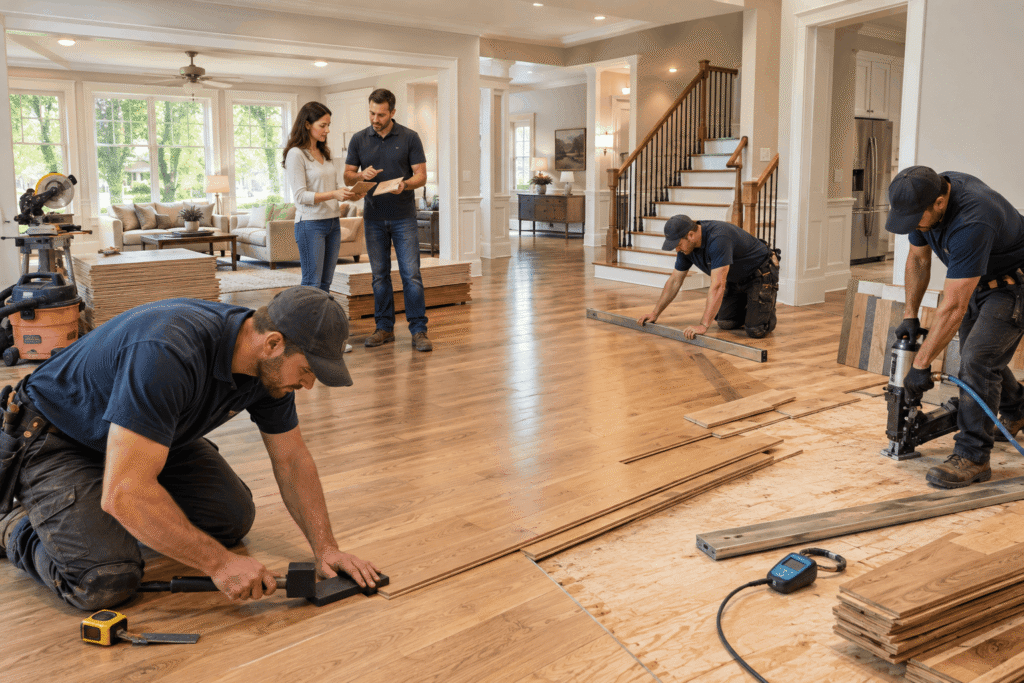
A homeowner in North Fulton pulls up the worn carpet in her living room and finds bare plywood underneath. She has always pictured warm oak floors running through the main level. Then the questions start piling up: which wood, which installation method, and how long the whole project will take.
That moment is common. Hardwood flooring installation in Alpharetta GA has become one of the most popular home upgrades in the area. Many of the region’s homes were built in the 1980s, ’90s, and early 2000s, and their original carpet or builder-grade flooring is now due for replacement.
Knowing how the process works makes it easier to plan, budget, and end up with floors that last for decades.
Why Installation Matters as Much as the Wood
People often spend weeks comparing wood species and stain colors. Those choices matter, but the installation itself often decides whether a floor still looks good in 20 years or starts cupping after two summers.
Georgia’s climate is the main reason. Humid summers and drier winters make wood expand and contract throughout the year. A floor installed without room for that movement can gap, buckle, or squeak.
Experienced installers usually start with the subfloor, not the planks. They check moisture levels, look for soft spots, and make sure the surface is flat. A floor that seems fine to walk on can still have dips that later show up as uneven boards.
Acclimation and Moisture Testing
Wood needs time to adjust to the home it will live in. Many manufacturers recommend letting planks sit in the house for several days before installation, though the exact timeframe depends on the product.
Moisture testing matters just as much. Installers compare readings from the subfloor with readings from the wood. If the gap between them is too wide, the project waits. That pause can feel frustrating, but it prevents expensive problems later.
Choosing the Right Installation Method
There’s no single “correct” way to install hardwood. The best method depends on the subfloor, the type of flooring, and the room.
Nail-down installation is the traditional choice for solid hardwood over wood subfloors. It’s common on main levels and upper floors in many Alpharetta homes.
Glue-down installation is often used for engineered hardwood over concrete, such as in finished basements or slab-built homes.
Floating floors aren’t attached to the subfloor at all. The boards lock together and rest on an underlayment. This approach is popular for certain engineered products and can speed up the project.
Solid vs. Engineered Hardwood
This is one of the biggest decisions homeowners face. Solid hardwood is milled from a single piece of wood. It can be sanded and refinished many times, which is why some floors in older homes are still in service after a century.
Engineered hardwood has a real wood top layer bonded to a stable plywood or composite core. It handles humidity changes better and works well below grade, where solid wood generally isn’t recommended.
Neither option is automatically better. A family with a finished basement might choose engineered planks downstairs and solid oak on the main floor. The goal is matching the material to the space.
Popular Wood Species and Finishes
White oak has been a favorite for several years. Its tight grain takes stain well, and it fits both modern and traditional styles. Red oak remains a dependable, budget-friendly classic with a slightly warmer tone.
Hickory appeals to busy households because it’s very hard and its strong grain hides wear. Maple offers a smooth, clean look, though it can be harder to stain evenly.
Finish matters too. Prefinished boards arrive ready to walk on, so there’s less dust and no fumes from on-site coatings. Site-finished floors are sanded and sealed after installation, which creates a seamless surface and allows for custom stain colors.
The Real Benefits of Hardwood Floors
Durability tops the list. A well-installed hardwood floor can last for generations, especially solid wood that can be refinished when it gets scratched or dull.
Hardwood is also easier to keep clean than carpet. It doesn’t trap dust, pet dander, or allergens deep in its fibers. Regular sweeping and an occasional damp mop with a wood-safe cleaner keep it in good shape.
Then there’s resale value. Real estate agents often point to hardwood as a feature buyers notice right away. In competitive suburban markets, it can help a listing stand out.
Finally, hardwood ages well. It develops character over time instead of simply wearing out. A few scuffs on an oak floor tend to look lived-in rather than damaged.
Real-World Scenarios Homeowners Face
Consider a young family moving into a 1990s two-story home. They want to replace the carpet on the main level but have a toddler and a large dog. In cases like this, installers often suggest a harder species like hickory or white oak with a matte finish that hides scratches.
Another common case involves a couple renovating their kitchen. They want hardwood to flow continuously from the family room into the cooking area. The challenge is blending new boards with existing floors, which usually means careful color matching or refinishing the whole space at once.
Then there are homeowners weighing hardwood against other materials. Some compare it with luxury vinyl plank flooring in Watkinsville, GA and other parts of the state, especially for rental properties or homes with frequent water exposure. Vinyl handles spills and moisture well, while hardwood offers long-term value and the warmth of natural wood.
Many households end up mixing both. They might use hardwood in living areas and bedrooms, then choose vinyl or tile for laundry rooms and bathrooms.
Working With Local Professionals
Local experience makes a real difference with flooring. Installers who know North Georgia’s humidity swings, common subfloor types, and typical home layouts tend to anticipate problems before they start.
Regional specialists such as Lica Hardwood Floors LLC often note that many flooring failures come from rushed prep rather than poor-quality wood. That insight applies across the industry. Asking any contractor about their moisture testing, acclimation process, and subfloor prep says a lot about their standards.
It also helps to request references, confirm licensing and insurance, and get written estimates that list materials, labor, and any subfloor repairs. Clear expectations upfront lead to fewer surprises later.
Planning Ahead for a Smooth Project
Timing can affect results. Some homeowners prefer scheduling installation during milder months, when indoor humidity is easier to control. With good climate control, though, projects can be done year-round.
Furniture removal, baseboard work, and transitions between rooms should all be discussed before work begins. Small details like stair nosing or thresholds can affect both the look and the final cost.
Whether someone is tackling a single room or a whole-house renovation, careful planning makes hardwood flooring installation in Alpharetta GA much more predictable. Good preparation, the right material, and skilled installation together create floors that stay beautiful for decades.
Frequently Asked Questions
How long does hardwood floor installation take?
Most single-room or main-level projects take two to five days once installation begins. Acclimation time, subfloor repairs, and site finishing can add several more days to the overall timeline.
How much does hardwood flooring installation cost?
Costs depend on the wood species, plank width, installation method, and subfloor condition. Solid hardwood generally costs more than engineered options, and site-finished floors often add labor costs compared with prefinished boards.
Can hardwood be installed over concrete?
Solid hardwood generally isn’t recommended directly over concrete because of moisture concerns. Engineered hardwood is the usual choice and is typically glued down or floated over a moisture barrier.
Is hardwood or luxury vinyl plank better for homes with pets?
Both can work. Vinyl resists scratches and water better, while harder wood species with matte finishes hide wear well. Many pet owners compare hardwood with luxury vinyl plank flooring in Watkinsville, GA, and other markets before deciding which fits their lifestyle.
How often should hardwood floors be refinished?
Many floors need refinishing every 7 to 10 years, depending on foot traffic and care. Lighter “screen and recoat” treatments can refresh the finish in between without full sanding.