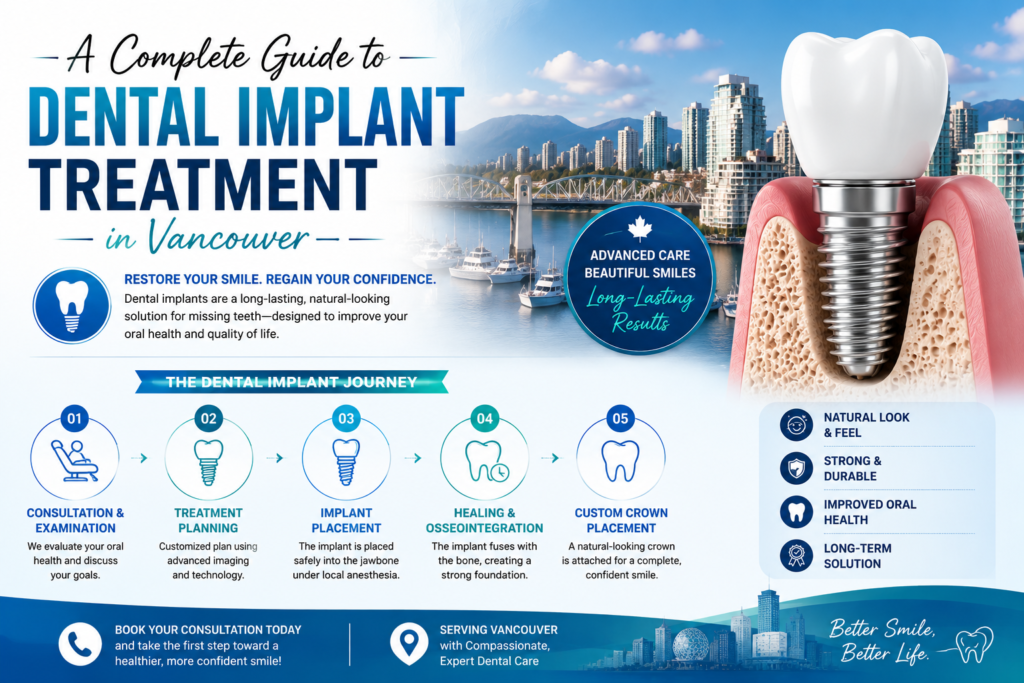
Losing a tooth can affect much more than your smile. It may make eating uncomfortable, change the way you speak, or leave you feeling self-conscious in everyday situations. For people exploring implant dentistry Vancouver BC, dental implants can be an option for replacing missing teeth while restoring both function and appearance. But before deciding on treatment, it helps to understand what the process involves, who may be a suitable candidate, how long treatment can take, and what recovery is really like.
This guide walks through the dental implant journey so you can approach a consultation with realistic expectations and better questions.
What Are Dental Implants?
A dental implant is a tooth-replacement solution designed to replace the root portion of a missing tooth. It typically consists of an implant fixture placed in the jawbone, an abutment that connects the implant to the restoration, and a dental crown, bridge, or denture depending on the patient’s needs.
Unlike a traditional removable denture, an implant is anchored in the jaw. Over time, the implant can integrate with the surrounding bone through a process called osseointegration.
The goal isn’t simply to fill a gap. A well-planned implant restoration is intended to work with your bite, surrounding teeth, gums, and overall oral health.
Who May Be a Candidate for Dental Implants?
Dental implants aren’t automatically the right choice for everyone. A dentist or implant specialist needs to assess your individual circumstances before recommending treatment.
Factors that may be considered include:
- The number and location of missing teeth
- Jawbone volume and density
- Gum and periodontal health
- Overall health and healing capacity
- Oral hygiene habits
- Smoking or tobacco use
- Existing dental conditions
- Your expectations and treatment goals
If there isn’t enough healthy bone to support an implant, additional procedures such as bone grafting may sometimes be recommended. This doesn’t necessarily mean implants are impossible; it simply means treatment may require additional planning.
A thorough examination and appropriate imaging are important because the best treatment plan is based on your anatomy—not a one-size-fits-all approach.
What Does the Dental Implant Process Involve?
Dental implant treatment is usually completed in stages rather than during one simple appointment. The exact timeline varies depending on your oral health and the type of restoration required.
1. Initial Consultation and Assessment
The process generally begins with a consultation. Your dental professional will discuss your dental history, examine your mouth, assess your gums and teeth, and determine whether implants may be appropriate.
Diagnostic imaging may also be used to evaluate the jawbone and identify important anatomical structures.
This appointment is a good opportunity to ask questions about treatment alternatives, expected timelines, potential risks, costs, and maintenance.
2. Treatment Planning
Once your oral health and implant needs have been assessed, a customized treatment plan can be developed.
For some patients, a straightforward implant may be possible. Others may need preliminary treatment, such as periodontal care, tooth extraction, or bone grafting, before implant placement.
The planning stage is particularly important because implant positioning can influence the appearance, function, and long-term maintenance of the final restoration.
3. Implant Placement
During implant surgery, the implant fixture is placed into the jawbone at the planned location.
The procedure is performed using appropriate anesthesia, with the specific approach depending on the patient’s circumstances and the complexity of treatment.
After placement, the implant needs time to heal and integrate with the bone before the final restoration is attached.
4. Healing and Osseointegration
Healing is an important part of implant treatment. During this period, the implant gradually integrates with the surrounding bone.
The length of this stage varies from person to person. Factors such as bone quality, implant location, overall health, and whether additional procedures were performed can influence the timeline.
Following your dental professional’s post-operative instructions is essential during recovery.
5. Attaching the Restoration
Once healing has progressed sufficiently, the implant can be restored with an abutment and replacement tooth.
For a single missing tooth, this is commonly a dental crown. Patients missing several teeth may require an implant-supported bridge or another restoration. In cases of extensive tooth loss, implant-supported dentures may be considered.
Your dentist will determine the appropriate restoration based on your specific needs.
How Long Does Dental Implant Treatment Take?
One of the most common questions patients ask is how quickly they can complete treatment.
The honest answer is: it depends.
Some patients may have relatively straightforward treatment, while others require additional procedures before or during implant placement. Healing and bone integration also take time.
Rather than choosing a provider based solely on who promises the fastest treatment, consider whether the proposed timeline is appropriate for your oral health and treatment goals.
A good consultation should give you a clearer idea of what your individual timeline may look like.
Are Dental Implants Painful?
It’s natural to feel nervous about dental implant surgery, especially if you’ve never had an oral surgical procedure before.
During implant placement, anesthesia is used to keep you comfortable. Afterward, some patients experience temporary soreness, swelling, bruising, or sensitivity.
Your dental professional should provide specific aftercare instructions and explain what symptoms are expected during recovery.
If discomfort becomes severe, persists unexpectedly, or is accompanied by other concerning symptoms, contact your dental provider rather than trying to diagnose the problem yourself.
How Much Do Dental Implants Cost in Vancouver?
There isn’t one universal price for dental implant treatment in Vancouver. The total cost can depend on several factors, including:
- Number of implants required
- Type of restoration
- Diagnostic imaging and planning
- Tooth extraction, if necessary
- Bone grafting or other preparatory procedures
- Materials used for the restoration
- Complexity of the case
- Follow-up and maintenance requirements
When comparing treatment estimates, look beyond the headline price. Ask what is included, whether the quote covers the restoration as well as the implant, and whether additional procedures could affect the final cost.
If you have dental insurance or a health spending account, ask your provider what portion of the treatment may be eligible for coverage.
Dental Implants vs. Other Tooth Replacement Options
Dental implants are one of several ways to replace missing teeth.
Depending on your circumstances, alternatives may include traditional bridges or removable dentures. Each option has different advantages, limitations, costs, and maintenance requirements.
For example, a traditional bridge may replace a missing tooth without placing an implant, while dentures can offer a removable solution for multiple missing teeth.
The right choice depends on factors such as your oral health, bone structure, budget, lifestyle, and personal preferences. A dental professional can help you compare the options rather than assuming an implant is automatically the best solution.
How to Care for Dental Implants
Implants don’t mean you can stop paying attention to oral hygiene.
Daily brushing, cleaning between the teeth, regular dental examinations, and professional cleanings can help maintain the health of the tissues surrounding your implant.
It’s also important to follow any personalized maintenance recommendations from your dental team. Healthy gums and good oral hygiene remain important even after a missing tooth has been replaced.
Questions to Ask Before Choosing Implant Treatment
Before committing to treatment, consider asking:
- Am I a suitable candidate for dental implants?
- Are there alternatives that may work for me?
- Will I need bone grafting or other preliminary treatment?
- How long is my expected treatment timeline?
- What type of restoration will I receive?
- What is included in the estimated cost?
- What should I expect during recovery?
- How will my implant be maintained after treatment?
- What risks or complications should I understand?
- What experience does the dental professional have with cases similar to mine?
These questions can turn a short consultation into a much more informative conversation.
Choosing an Implant Dentist in Vancouver
Choosing an implant provider is an important decision. Look for a dental professional who takes the time to evaluate your individual needs, clearly explains your treatment options, discusses potential risks, and provides transparent information about costs and timelines.
Relevant education, professional credentials, experience, appropriate diagnostic technology, and a strong focus on patient communication can all be useful factors to consider.
Be cautious of guarantees that make treatment sound identical for every patient. Implant dentistry is highly individualized, and a responsible provider should be willing to explain both the benefits and limitations of treatment.
Final Thoughts
Dental implant treatment can be a significant step toward replacing missing teeth, but making an informed decision starts with understanding the process. From the initial assessment and treatment planning to implant placement, healing, restoration, and long-term maintenance, every stage plays a role in the overall outcome.
If you’re considering dental implants in Vancouver, start with a comprehensive consultation. Discuss your oral health, treatment goals, alternatives, expected timeline, and costs with a qualified dental professional. The more you understand before treatment begins, the better prepared you’ll be to make a decision that fits your needs.