Generators are widely used to supply electricity to construction sites, industrial facilities, commercial premises and outdoor events. However, producing electricity is only one part of a temporary power system. The electricity must also be transferred safely from the generator to the equipment and distribution points that need it.
This is where the correct generator power cable becomes important. Suitable cables help connect generators to distribution panels, electrical equipment and temporary installations. Choosing the wrong cable can create problems with electrical performance, overheating and installation safety.
Whether you are arranging temporary power for a construction project or a large event, understanding cable types, ratings and connection requirements can help create a more suitable electrical setup.
What Is a Generator Power Cable?
A generator power cable is used to transfer electrical power from a generator to connected equipment or a distribution system.
The type of cable required depends on several factors, including:
- Generator output and electrical rating.
- Single-phase or three-phase supply.
- Expected electrical current.
- Cable length and installation conditions.
- Environmental exposure.
- Connector and termination requirements.
- Applicable electrical standards.
A cable must be selected according to the intended application. Its conductor size, insulation, current rating and connector arrangement should be appropriate for the electrical load and operating environment.
For larger temporary installations, cable selection should be carried out by competent electrical professionals.
Why Correct Cable Selection Matters
A cable that is too small for the electrical load may overheat. Excessive voltage drop can also affect the performance of connected equipment, particularly when long cable runs are involved.
Choosing a suitable cable helps address several important considerations.
- Current capacity: The cable must be rated for the expected electrical current under the actual installation conditions.
- Voltage drop: Long cable runs can cause voltage drop. Conductor size and cable length should be considered during the electrical design.
- Environmental protection: Cables used outdoors may need protection against moisture, mechanical damage and other site conditions.
- Connection compatibility: Connectors and terminations must match the generator and distribution equipment.
- Mechanical protection: Cable routes should reduce the risk of damage from vehicles, equipment and pedestrian movement.
These considerations are especially important on busy construction sites and temporary event installations.
Understanding Different Generator Cable Types
Temporary power systems can use different types of cables depending on the application and electrical requirements.
LV Multicore Cables
Low-voltage multicore cables contain multiple conductors within a single outer sheath. They may be used for single-phase or three-phase temporary power distribution, depending on their design and rating.
Gen-Rent UK’s cable and distribution range includes LV single-phase and three-phase multicore cables up to 125A.
LV Single-Core Cables
Single-core cables contain one conductor and are commonly used in larger temporary power installations where individual conductors are required.
Their selection depends on current capacity, conductor size, installation method and environmental conditions.
Gen-Rent UK offers LV single-core cables up to 240mm.
MV Single-Core Cables
Medium-voltage installations require cables specifically designed and rated for the relevant voltage and application.
Gen-Rent UK’s range includes MV single-core cables up to 240mm. These cables should only be selected, installed and handled by appropriately qualified personnel.
Power Distribution Equipment
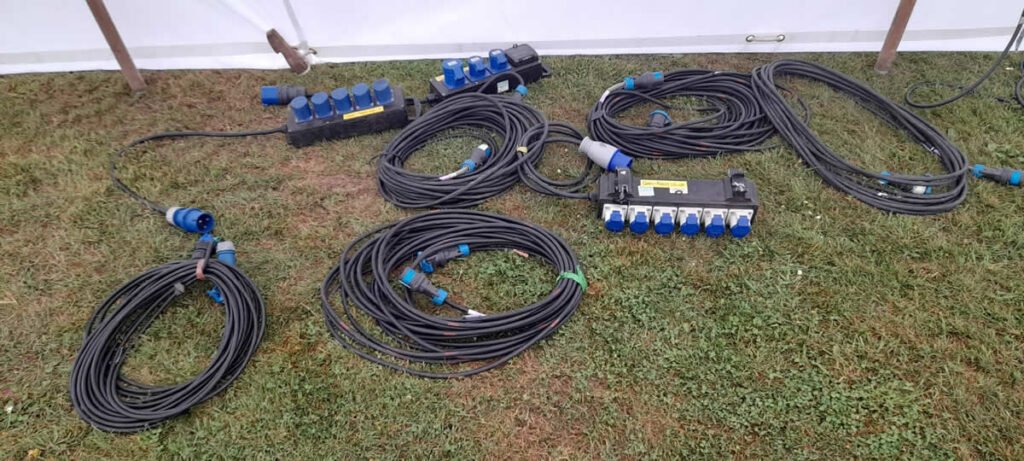
Cables are often used alongside distribution panels, junction boxes and specialist connectors. These components help distribute electricity from the generator to different parts of a site.
The ratings of all connected equipment must be compatible with the electrical installation.
Generator Power Pre-Wired Leads Cable: What Does It Mean?
The phrase generator power pre wired leads cable is sometimes used when searching for ready-made cable assemblies.
Pre-wired leads are cable assemblies supplied with connectors or terminations already fitted. They can help simplify connections where the assembly is correctly specified for the equipment and application.
However, a pre-wired cable should never be selected based only on appearance or connector shape. Buyers and users should check:
- Voltage and current ratings.
- Cable conductor size.
- Connector type and compatibility.
- Cable length.
- Phase configuration.
- Environmental suitability.
- Inspection and testing information.
The phrase generator power pre wired leads cables may also appear in online searches, but the important consideration is whether the cable assembly is suitable for the intended electrical installation.
Pre-wired assemblies should be checked by competent personnel before use.
Cable Ratings and Electrical Safety
Cable ratings are not determined by conductor size alone. Installation conditions can affect how much current a cable can safely carry.
For example, a cable installed in a hot environment or grouped with other loaded cables may have a different effective current capacity from one installed in more favourable conditions.
Voltage drop should also be considered, especially where a generator is positioned some distance from the equipment it supplies.
Before using a generator power cable, confirm that:
- The cable is suitable for the supply voltage.
- Its current rating matches the expected load.
- The conductor size is appropriate for the cable length.
- Connectors are compatible and correctly rated.
- The insulation and outer sheath are in suitable condition.
- The cable route is protected from mechanical damage.
- The installation has been checked by competent personnel.
Damaged cables, unsuitable connectors and improvised connections should not be used.
Cable Distribution for Construction and Industrial Sites
Construction and industrial environments often require temporary electricity across several work areas. A generator may supply a distribution panel, which then provides power to different equipment and locations.
Gen-Rent UK’s cable and distribution range includes:
- LV single-phase and three-phase multicore cables up to 125A.
- LV single-core cables up to 240mm.
- MV single-core cables up to 240mm.
- LV distribution panels.
- LV junction boxes up to 3000A.
- Luggit cable joints.
- Litton Power-Lock converters up to 240mm cable.
- MV junction boxes up to 600A.
The correct combination depends on the generator, electrical load and site requirements. Gen-Rent UK also states that its cables are electrically tested before customers receive them.
This testing forms part of preparing the equipment for supply, but the complete installation must still be checked and connected correctly before operation.
Planning Cable Routes for Events
Temporary event power systems often involve long cable runs between generators, distribution points, stages, catering facilities and production areas.
Poorly planned routes can create trip hazards and expose cables to damage from vehicles or equipment.
Organisers should plan cable routes before installation and consider pedestrian access, emergency routes, vehicle movements and weather exposure.
Where cables cross walkways or vehicle routes, suitable protection should be used. Connections should be kept secure and protected from unauthorised access.
The cable distribution plan should be developed alongside the generator capacity and event layout.
Industrial Generator Cables Versus Smart Speaker Power Cables
Online searches for generator power cables can sometimes return consumer-device accessories, including Alexa 3rd generation power cable, Echo Dot 3rd generation power cable and Echo Dot 4th generation power cable.
These are different products from industrial generator cables. Smart speaker power adapters are designed for specific consumer devices and should not be confused with high-current temporary power cables used for generators and distribution systems.
If you are sourcing cables for a generator, focus on the electrical ratings, conductor size, connector compatibility and installation requirements. Consumer-device power leads are not substitutes for industrial generator connections.
Finding Generator Cables and Distribution Equipment
Choosing the correct cable and distribution equipment is important for creating a suitable temporary power system. Businesses should consider the generator output, connected loads, cable lengths and site conditions before selecting components.
Gen-Rent UK provides generator cables and distribution equipment for temporary power applications. Its range includes low-voltage and medium-voltage cables, distribution panels, junction boxes and specialist connection equipment.
Final Thoughts
A generator power system depends on more than the generator itself. Cables, connectors and distribution equipment must all be suitable for the electrical load and installation environment.
By checking cable ratings, planning routes and using appropriate distribution equipment, businesses can support safer and more organised temporary power installations.
Whether you need LV multicore cables, single-core cables or distribution equipment, discuss the electrical requirements with a competent supplier before selecting the components.