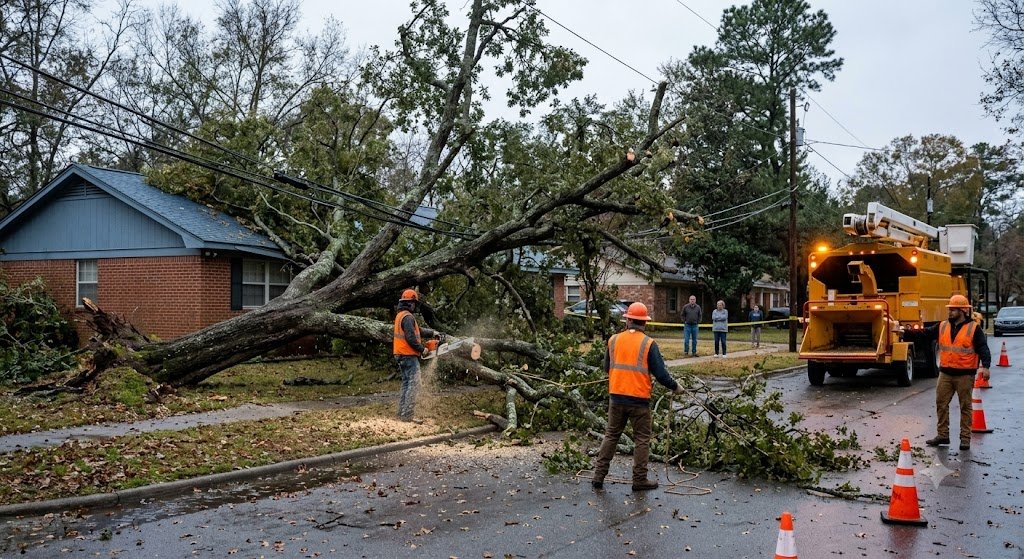
Storms, high winds, heavy rain, and aging trees can quickly create dangerous situations around your home or business. A damaged tree may seem stable at first, but hidden structural issues can cause branches or the entire tree to fall without warning. Knowing when immediate action is necessary helps reduce the risk of property damage, injuries, and costly repairs. If you notice visible damage after severe weather, acting promptly can make a significant difference in protecting your surroundings.
Trees can become hazardous for many reasons, including disease, root failure, lightning strikes, or storm-related damage. Understanding when emergency tree removal in Haines City, FL, is necessary allows you to respond before the situation becomes more serious. Waiting too long may increase the chance of damage to your roof, vehicles, utility lines, or neighboring properties, making quick assessment an important part of responsible property maintenance.
Signs That a Tree Requires Immediate Removal
Some tree problems develop slowly, while others become dangerous within hours. Recognizing warning signs helps you decide when immediate attention is needed.
Leaning Suddenly
A tree that begins leaning after a storm may have suffered root damage. Even if it remains standing, the weakened foundation can fail unexpectedly.
Large Cracks in the Trunk
Deep vertical or horizontal cracks often indicate structural weakness. These cracks reduce the tree’s ability to support its own weight.
Hanging or Broken Branches
Large branches suspended in the canopy are unpredictable and can fall without warning, especially during windy conditions.
Exposed or Damaged Roots
When roots become exposed due to flooding or soil erosion, the tree may lose stability and require professional evaluation.
Common Causes of Emergency Tree Problems
Several conditions can create situations where fast action is necessary.
- Severe thunderstorms and hurricanes
- Lightning strikes
- Heavy rainfall causing unstable soil
- Strong wind damage
- Pest infestations weakening the trunk
- Internal decay and fungal diseases
- Vehicle impact or construction damage
These issues often reduce structural strength long before visible collapse occurs.
Why Immediate Removal Matters
Delaying action can create greater safety risks and higher repair expenses. A compromised tree may damage fences, roofs, driveways, outdoor structures, or power lines.
Timely emergency tree removal in Haines City, FL, helps reduce potential hazards by:
- Protecting family members and visitors
- Preventing additional property damage
- Reducing liability risks
- Preserving nearby healthy trees
- Improving overall landscape safety
Fast response also helps minimize cleanup costs after severe weather.
Who Pays for Emergency Tree Removal?
One of the first questions homeowners have after a tree emergency is whether insurance will pay for removal. In general, homeowners insurance may cover tree removal when a covered tree falls and damages an insured structure, while removal of a tree that simply falls in the yard may not be covered. Coverage can also vary depending on the cause of the loss, the policy language, deductibles, and whether hurricane coverage applies.
Florida homeowners should pay particular attention to hurricane deductibles. When covered wind damage results from a declared hurricane, a separate hurricane deductible may apply. Florida’s Department of Financial Services explains that the deductible can be based on a percentage of the dwelling coverage and that specific rules determine when it applies.
After storm damage, photograph the tree and affected property from a safe location before cleanup when possible. Keep estimates, invoices, and receipts, and contact your insurance company promptly. Because policies differ, homeowners should review their policy and speak with their insurer or agent before assuming that emergency tree removal will be reimbursed.
What You Should Do Before Professionals Arrive
If you suspect a tree poses an immediate threat, safety should remain your first priority.
Stay Away From the Tree
Avoid standing underneath damaged limbs or attempting to inspect unstable sections up close.
Keep Others at a Safe Distance
Children, pets, and visitors should remain away from the affected area until the danger has been addressed.
Watch for Utility Hazards
Never approach trees touching electrical lines. Contact your local utility provider immediately if power lines are involved.
Avoid DIY Tree Removal
Even experienced homeowners should avoid removing damaged trees using ladders or chainsaws. Unstable trees behave unpredictably and require specialized equipment and safety procedures.
How Professional Tree Assessment Helps
A professional evaluation should go beyond simply looking for visible damage. A certified arborist can examine the trunk, branches, root system, and surrounding conditions to determine whether the tree can be safely retained or requires removal.
A hazard tree assessment can identify structural defects and conditions that may increase the likelihood of failure. For storm-damaged trees, professionals should also look for root plate failure, which occurs when the soil and root system supporting the tree are lifted or displaced. ISA also offers the Tree Risk Assessment Qualification (TRAQ), a specialized qualification focused on systematic tree risk assessment.
When selecting a contractor, ask whether the person evaluating your trees is an ISA Certified Arborist and whether the company has the appropriate insurance, equipment, and experience for emergency removals. ISA credentials are designed to help consumers identify qualified tree care professionals.
Emergency Response and Availability Matter
An emergency tree problem does not always happen during normal business hours. A tree may fall overnight, block a driveway after a storm, or become unstable while hurricane conditions are approaching.
Before hiring a tree service, ask whether emergency calls are answered after hours, whether storm response is available on weekends and holidays, and how calls are prioritized during widespread weather events. Also ask whether the company provides same-day assessment when conditions are safe for crews to travel and work.
Do not rely on an advertised response time without confirming the service area’s actual availability. During major hurricanes and severe storms, demand can increase rapidly, and safe working conditions may delay crews even when emergency services are offered.
Hurricane Preparedness for Haines City Properties
Hurricane preparedness should begin before the next storm develops. Pre-season inspection by a certified arborist can identify decay, structural defects, weak attachments, and other conditions that may become dangerous during high winds. Structural pruning can also help improve tree form and reduce avoidable storm risks when performed correctly.
Florida tree species also differ in their resistance to hurricane winds. UF/IFAS research identifies species such as live oak, sand live oak, southern magnolia, and gumbo limbo among trees with relatively strong wind resistance, while species including water oak, laurel oak, sand pine, queen palm, and other trees have demonstrated lower resistance under certain conditions. No species is completely windproof, however, because soil, root conditions, tree health, age, pruning, and storm intensity all affect failure risk.
Pre-season inspection and structural pruning can therefore be valuable preventive services for Haines City property owners, particularly before periods of increased hurricane activity.
Preventing Future Tree Emergencies
While not every emergency can be prevented, routine tree care significantly lowers the risk.
Helpful maintenance practices include:
- Schedule regular tree inspections.
- Remove dead or diseased branches.
- Trim limbs growing over roofs.
- Monitor trees after major storms.
- Improve soil conditions around root systems.
- Address pest or disease problems early.
Preventive maintenance supports healthier trees and reduces the likelihood of unexpected failures.
Choosing the Right Time to Act
Many homeowners hesitate because a damaged tree appears stable. Unfortunately, visible appearance rarely reflects internal condition. Trees weakened by decay or storm damage may remain standing for days before collapsing unexpectedly.
After severe weather, inspect your property carefully from a safe distance. If you notice leaning, splitting, broken limbs, or exposed roots, arranging emergency tree removal in Haines City, FL, promptly helps reduce unnecessary risks and protects both your property and the people around it.
Taking early action is often the safest and most cost-effective approach when dealing with hazardous trees. Proper evaluation, timely removal, and ongoing maintenance all contribute to a safer landscape throughout every season.
Need Help With a Hazardous Tree?
If a storm-damaged, leaning, uprooted, or broken tree is threatening your Haines City property, do not wait for the situation to become worse. Contact a qualified tree care professional for a hazard tree assessment and ask about emergency response availability, insurance documentation, and safe removal options. Acting quickly can help protect your home, family, vehicles, and landscape from further damage.