Dental practices in the United States handle insurance verification every day. Before a patient arrives for an appointment, the front desk often needs to confirm whether coverage is active, what benefits are available, whether a deductible has been met, and whether a procedure requires prior authorization.
This is where dental insurance eligibility verification becomes important. A reliable verification process helps dental teams understand a patient’s coverage before treatment, reduce unexpected billing issues, and improve the overall patient experience.
With modern technology, practices can move beyond manual phone calls and repetitive data entry. Dental Shield helps dental practices streamline insurance verification and other administrative workflows through an integrated platform.
What Is Dental Insurance Eligibility Verification?
Dental insurance eligibility verification is the process of checking a patient’s dental insurance coverage before an appointment or treatment.
The goal is to confirm that the patient’s insurance is active and understand what the plan covers. Verification may include information such as:
- Insurance plan and member details
- Coverage status
- Deductible amount and remaining balance
- Annual maximum
- Preventive, basic, and major service coverage
- Co-pay or co-insurance requirements
- Frequency limitations
- Waiting periods
- Coordination of benefits
- Prior authorization requirements
For example, if a patient is scheduled for a crown, the dental office may want to know whether the procedure is covered, what percentage the plan pays, and whether any authorization is required.
Why Should Dental Practices Verify Insurance Before an Appointment?
Insurance verification helps practices identify potential coverage issues before treatment begins.
Without verification, a patient may assume a procedure is covered when it is not. This can lead to unexpected out-of-pocket costs, billing disputes, delayed claims, and additional administrative work for the dental office.
Early verification allows the front desk team to communicate more clearly with patients about their estimated financial responsibility.
It also helps the practice prepare for the appointment instead of discovering insurance problems after treatment has already been completed.
What Information Should a Dental Office Verify?
A complete verification process should go beyond checking whether a policy is active.
Dental teams should review the patient’s eligibility and benefits to understand the details that could affect treatment and billing.
Important information may include:
Eligibility status: Is the patient’s coverage currently active?
Deductible: How much has the patient already paid toward the deductible?
Annual maximum: How much insurance coverage remains for the plan year?
Coverage percentages: What does the plan pay for preventive, basic, and major services?
Frequency limitations: How often does the plan cover services such as exams, cleanings, or X-rays?
Waiting periods: Are certain procedures excluded until the patient has been covered for a specific period?
Prior authorization: Does the planned procedure require approval before treatment?
Reviewing these details gives the dental team a clearer picture of the patient’s benefits.
How Does Dental Benefits Verification Improve the Patient Experience?
Patients generally want to know what they may owe before receiving treatment. However, insurance benefits can be difficult to understand, especially when plan documents contain technical terms and limitations.
Effective dental benefits verification gives the practice information that can be explained to the patient in simpler language.
For example, instead of simply telling a patient that their insurance is active, the team can explain that a cleaning is covered at a certain percentage and that the patient has a specific remaining deductible or annual maximum.
Clear communication can help patients make informed decisions and reduce surprises when they receive their final bill.
How Does Automated Insurance Verification Save Time?
Traditional verification may involve calling insurance carriers, navigating automated phone systems, waiting for representatives, and manually recording information.
For a busy dental office, repeating this process throughout the day can consume a significant amount of staff time.
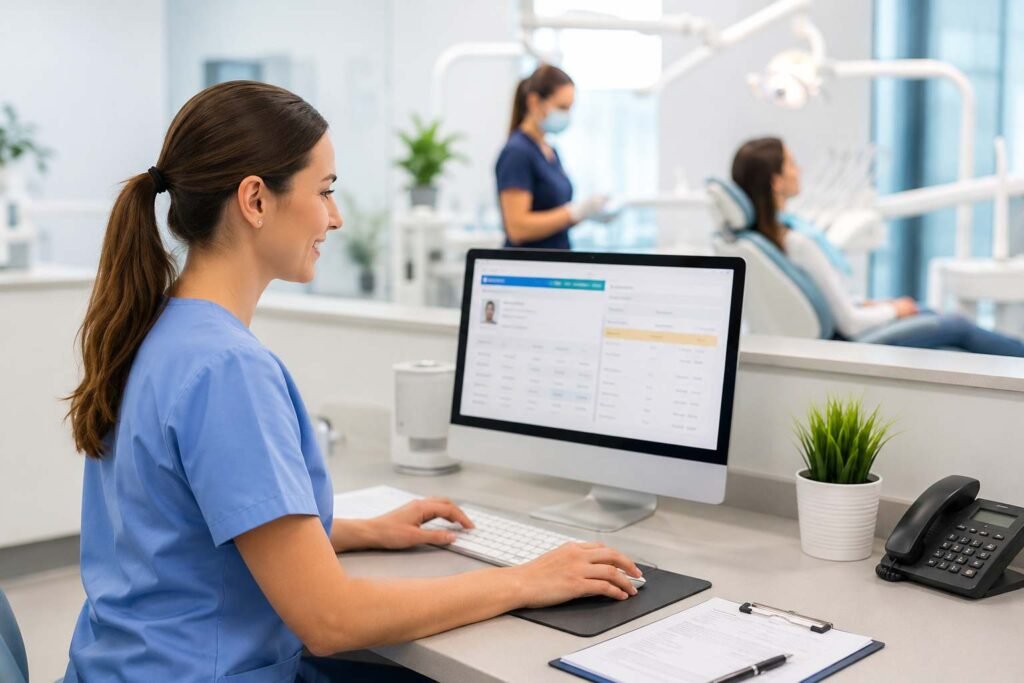
Automated verification can reduce many of these manual steps. Depending on the available integrations, a system can retrieve eligibility information electronically and organize benefits into a readable summary.
An AI-powered workflow can also highlight important details such as terminated coverage, missing authorization, frequency limitations, or coordination of benefits issues.
This allows staff to focus on patients instead of spending large portions of the day on repetitive verification tasks.
Can Dental Insurance Eligibility Verification Reduce Claim Problems?
Yes, accurate verification can help reduce some claim-related problems, although it cannot guarantee that every claim will be paid.
When a practice verifies coverage before treatment, the team has an opportunity to identify potential issues early. For example, a procedure may exceed a frequency limitation or require prior authorization.
Finding these issues before treatment gives the practice time to investigate the benefits or obtain the required documentation.
Accurate information also helps the billing team prepare claims with greater confidence and can reduce avoidable administrative follow-up.
How Does Insurance Verification Work With Dental Practice Software?
Modern dental practices often use practice management software to organize patient information, appointments, insurance details, and billing.
A connected verification solution can work alongside the existing workflow rather than requiring staff to repeatedly switch between systems.
For example, a browser extension can detect patient information within a supported practice management system and use that information to initiate an eligibility check.
The resulting benefits summary can then be presented to the team so they can review the information before the patient’s appointment.
This type of integration can make verification faster while reducing copy-and-paste errors.
What Should Practices Look for in an Eligibility Verification Solution?
Choosing the right solution depends on the practice’s size, workflow, insurance volume, and existing technology.
Dental practices should consider several factors before selecting a verification platform.
Real-Time Eligibility Checks
Look for a solution capable of retrieving current eligibility information through supported clearinghouses or payer connections.
Detailed Benefits Information
The system should provide more than an active or inactive status. Deductibles, annual maximums, co-pays, frequency limitations, and authorization requirements can all be important.
PMS Integration
A solution that works with the practice’s existing software can reduce duplicate data entry and simplify adoption.
Automated Alerts
Alerts can help staff identify unusual coverage information that needs attention before the patient’s visit.
Security and Compliance
Dental offices handle sensitive patient information. Practices should evaluate security controls, encryption, access management, audit logging, and HIPAA-related requirements.
Easy-to-Understand Results
A clear benefits summary can help front desk teams understand insurance information without spending unnecessary time interpreting complex plan details.
Can Dental Practices Combine Insurance Verification With Other Operations?
Yes. Insurance verification is only one part of running a dental practice.
Modern platforms can connect verification with staffing, recruiting, billing, patient communication, and reporting.
For example, when an unexpected staff absence creates an open shift, a connected platform can help practices find qualified professionals. Practices can also use online platforms when searching for dental hygienist jobs near me or when looking to hire hygienists for permanent positions.
Combining these workflows can reduce the need for separate tools and disconnected processes.
Dental Shield brings insurance verification, dental staffing, claims recovery, recruiting, and practice management workflows into one platform designed for dental practices.
What Are the Main Benefits of Better Insurance Verification?
A structured verification process can provide several practical benefits:
- Faster eligibility checks
- Better visibility into patient benefits
- Fewer avoidable insurance surprises
- Less manual administrative work
- Improved patient communication
- Better preparation for treatment
- More organized billing workflows
- Easier identification of authorization requirements
- Reduced dependence on manual phone calls
The biggest benefit is often better preparation. When the dental team knows what to expect before the appointment, both staff and patients can have a clearer understanding of the financial and insurance side of treatment.
Frequently Asked Questions About Dental Insurance Eligibility Verification
How often should dental insurance eligibility be verified?
Dental practices should verify insurance before scheduled appointments, particularly when coverage information may have changed or when a patient has not visited the practice recently. Practices should follow their own verification policies and payer requirements.
What is the difference between eligibility and benefits verification?
Eligibility verification generally confirms whether a patient’s insurance coverage is active. Benefits verification goes further by reviewing coverage details such as deductibles, annual maximums, co-pays, coverage percentages, and frequency limitations.
Can insurance verification guarantee that a claim will be paid?
No. Eligibility and benefits information is not a guarantee of payment. Final payment can depend on the patient’s plan, submitted claim information, treatment documentation, payer policies, and other factors.
Can dental insurance verification be automated?
Yes. Many modern systems can automate electronic eligibility checks and organize returned information into a benefits summary. Automation can reduce repetitive manual work while allowing staff to review important details.
Why is accurate insurance verification important for dental practices?
Accurate verification helps dental teams identify coverage limitations before treatment, communicate potential patient costs, prepare claims more effectively, and reduce avoidable administrative issues.
Make Insurance Verification Easier for Your Dental Practice
Dental insurance eligibility verification plays an important role in both patient communication and dental practice operations. By confirming coverage details before treatment, practices can identify potential issues earlier and provide patients with clearer information about their benefits.
Automation can make this process even more efficient by reducing manual data entry and bringing eligibility information into the team’s existing workflow.
For practices looking to simplify verification while also managing staffing, billing, recruiting, and other operational needs, Dental Shield offers an integrated approach built around modern dental workflows.