A real estate agency in Pune ran a festive campaign a couple of years back. Three weeks, over 600 inquiries. Good numbers on paper. Then someone actually checked what happened to those leads afterward, and the picture wasn’t pretty. Barely 180 got a callback. The rest? Sitting in WhatsApp threads, a notebook on someone’s desk, and an Excel sheet three people were editing at once, often overwriting each other’s updates.
This happens more than people admit. It’s close to the default state for a lot of property businesses in India right now. Nobody notices the money slipping away until someone sits down and actually counts it. Firms like Arobit, who work with real estate and construction clients on technology problems day to day, say this pattern shows up almost every quarter with a new client.
Call it lead leakage. Sounds minor. It isn’t.
Why Leads Go Missing
Real estate sales cycles drag on. A buyer inquires today, disappears for six weeks, then calls out of nowhere wanting a site visit. If that first inquiry was never logged right, the agent has nothing to go on. The buyer feels forgotten and quietly moves to whoever seems more on top of things.
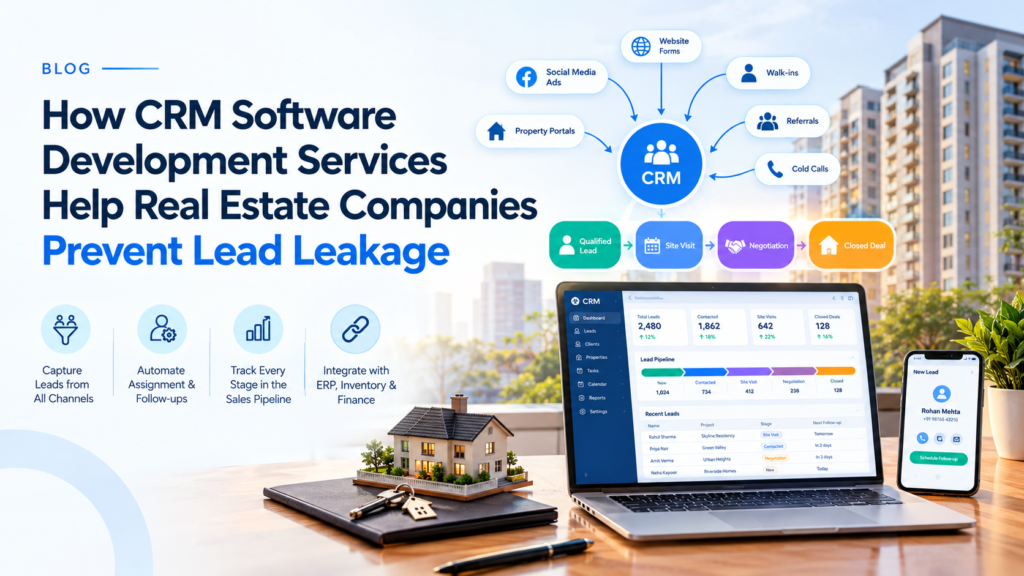
Then there’s the channel mess. Leads show up from everywhere:
- Facebook and Google campaigns
- Portals like 99acres or MagicBricks
- Walk-ins
- Referrals
- Cold call lists
Each one lives in its own dashboard, its own login. Sales teams end up flipping through five or six tabs just to figure out who to call next. Something always slips, usually the lead that needed the fastest response.
Manual handoffs don’t help either. A telecaller qualifies someone, passes it on to a field agent through a quick call or text, and that’s it. No record of the handoff anywhere. If the agent gets busy, the lead just sits there. A few days pass. It’s cold. Nobody’s being careless on purpose here; spreadsheets and chat apps were never built for pipelines with this many moving parts. This is usually the gap that custom CRM software development solutions are built to close, since they’re designed around how property sales teams actually work instead of forcing teams to adapt to generic tools.
What This Actually Costs
Easy to write this off as a normal cost of doing business. The math says otherwise.
Say a developer spends ₹15 lakh on a project launch campaign and pulls in 2,000 leads. Even at a 25% leakage rate, that’s 500 people who never got a real follow-up. Real estate conversion sits around 2-3% on average. Do the math and that’s 10-15 lost sales from one campaign alone. For a mid-sized project, that’s crores walking away. This is exactly the kind of loss that proper CRM software development for real estate is meant to prevent, by making sure no inquiry sits idle long enough to go cold.
There’s a trust angle too, one that’s easy to miss. People are making one of the biggest purchases of their life. They notice when follow-ups are patchy. It makes the whole operation look disorganized, even if the construction and the after-sales service are genuinely solid.
Where a CRM Actually Helps
A real estate CRM does one simple thing well. Every lead lives in one place, from the first form fill to the day the sale deed gets signed. Sounds basic. The effect on day-to-day sales work is bigger than it sounds.
A few things change once it’s in place:
- Leads land automatically. Someone fills a form at 11pm on a Sunday, and it’s logged right then, not three days later when someone remembers to check the portal.
- Assignment happens on its own. Leads route to the right person based on project, location, or score. No arguments about whose lead it was.
- Reminders actually fire. A telecaller notes “call back in 3 days,” and the system nudges someone on day three. It doesn’t depend on anyone remembering, which is usually where things fall apart.
- Managers can finally see the gaps. Which leads sat untouched for a day. Which agents are holding onto warm leads too long. Where people are dropping out of the funnel.
A developer in Ahmedabad put a CRM in place and found something odd within two months. Close to 30% of their “lost” leads weren’t lost at all. Nobody had just gotten around to calling them back. Once those got reassigned, the team closed eleven extra units that quarter. No additional marketing spend.
The Bigger Picture: Connected Systems
A CRM fixes the tracking problem. But bigger developers run into something else after that: the CRM doesn’t talk to the accounting system, or the inventory tracker, or whatever’s managing construction timelines.
A salesperson promises a unit that’s already allocated somewhere in the ERP. Not because anyone lied. The two systems just don’t sync.
This is where a connected system comes in, linking CRM data with finance, inventory, and project schedules so the whole company works off the same numbers. A booking should flow straight into payment schedules and unit availability without someone manually updating four spreadsheets and hoping nothing gets lost along the way.
Companies that invest in this kind of integration tend to see fewer of those awkward internal arguments too, the “but I was told this unit was free” kind. Systems that actually talk to each other make that conversation rare.
Where Things Are Headed
Real estate has lagged behind retail and fintech on tech adoption for years. That’s shifting now, partly because of RERA requirements, partly because buyers expect the same speed they get from online shopping.
A few trends worth watching:
- AI-based lead scoring, helping teams figure out who’s actually serious versus who’s just browsing
- WhatsApp Business API integration, so conversations don’t lose context every time a thread gets buried
- Mobile CRM dashboards, letting field agents update records on-site instead of waiting till evening
None of this is about swapping out salespeople for software. It’s about giving the people doing the selling what they need, when they need it, instead of making them dig through six tools for one answer. More developers are now turning to dedicated CRM software development services to build this kind of workflow from the ground up, rather than stitching together off-the-shelf tools that don’t quite fit how Indian real estate sales actually operate. Arobit, among others building these systems for property businesses, keeps coming back to this point: the tech should cut friction, not add one more dashboard to check.
Companies that sort this out now aren’t just patching a leak. They’re building something that compounds, where every rupee spent on marketing actually gets followed through properly.
FAQs
- How is lead leakage different from low conversion rates?
Low conversion usually points to pricing or market fit. It’s a sales quality issue. Lead leakage means a lead was never worked in the first place, regardless of whether it would’ve converted. One’s a process failure. The other isn’t. That’s why better systems fix it.
- Is a CRM enough, or does a real estate company need an ERP too?
Smaller agencies handling resale or rentals usually get by fine with just a CRM. Developers juggling inventory, payments, and construction timelines need more. Connecting CRM with a broader ERP keeps sales, finance, and operations from working off different numbers.
- How long before a real estate CRM shows results?
Most teams see a difference within 60-90 days, once agents get into the habit of logging activity properly. The bigger gains around attribution and funnel visibility usually take a full sales cycle or two to show up clearly.