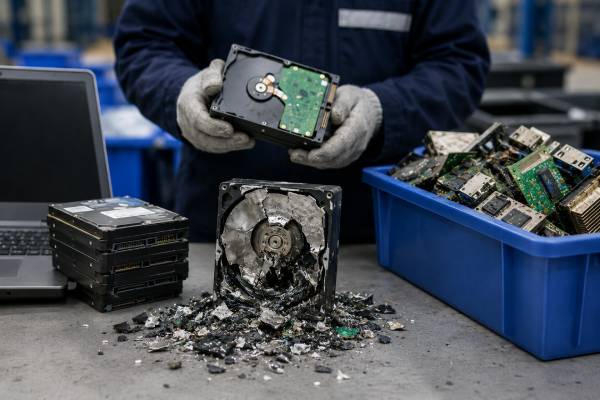
Every computer, laptop, hard drive, and storage device eventually reaches the end of its life. While replacing old equipment is common, many people overlook one important step—secure computer data destruction.
Simply deleting files or formatting a drive does not permanently remove information. Sensitive business records, customer details, financial documents, passwords, and personal files can often be recovered using data recovery software if storage devices are not properly destroyed.
Whether you’re an individual, a small business, or a large organisation, choosing a trusted data destruction company helps protect confidential information while ensuring old electronic equipment is disposed of responsibly. If you’re also looking for an e waste collection centre Delhi, many authorised facilities provide secure recycling and certified disposal services for electronic waste.
In this guide, we’ll explain how secure data destruction works, why it matters, and how to dispose of old electronics safely.
What Is Computer Data Destruction?
Computer data destruction is the process of permanently removing information stored on digital devices so it cannot be recovered.
Unlike deleting files or emptying the recycle bin, professional data destruction ensures sensitive information is completely destroyed using approved methods.
Devices commonly destroyed include:
- Desktop computers
- Laptops
- Hard disk drives (HDDs)
- Solid State Drives (SSDs)
- USB flash drives
- External hard drives
- Memory cards
- Servers
- Backup tapes
- Mobile devices
The objective is simple—ensure no confidential data remains accessible.
Why Simply Deleting Files Isn’t Enough
Many people believe formatting a hard drive permanently erases everything. In reality, formatting mainly removes file references rather than the actual stored data.
Specialised recovery software can often restore:
- Personal photos
- Financial records
- Emails
- Company documents
- Customer databases
- Login credentials
- Business contracts
Professional destruction methods eliminate this risk by making data unrecoverable.
Why Businesses Need Secure Data Destruction
Every organisation stores valuable information.
Examples include:
- Employee records
- Payroll information
- Tax documents
- Customer databases
- Medical records
- Legal files
- Financial reports
- Internal communications
Improper disposal of old computers may expose confidential information, resulting in financial loss, reputational damage, or legal issues.
Working with a professional data destruction company helps minimise these risks.
Common Data Destruction Methods
Professional service providers use different techniques depending on the storage device.
Hard Drive Shredding
Industrial shredders physically destroy hard drives into small pieces, making recovery impossible.
This method is commonly used for:
- Business computers
- Data centres
- Government equipment
- Financial institutions
Degaussing
Degaussing uses a powerful magnetic field to erase data stored on magnetic media.
Suitable for:
- Hard drives
- Backup tapes
It permanently disrupts stored information before the device is recycled.
Data Wiping
Secure data wiping overwrites existing information several times using specialised software.
Suitable when devices will be reused or resold.
This method works well for:
- Company laptops
- Desktop computers
- Business workstations
Physical Destruction
Some storage devices require complete destruction using:
- Crushing
- Drilling
- Shredding
- Disintegration
This provides maximum protection for highly confidential information.
Benefits of Hiring a Data Destruction Company
Professional providers offer much more than simple disposal.
Benefits include:
Complete Security
Certified destruction prevents unauthorised access to confidential information.
Regulatory Compliance
Many industries must follow strict privacy and data protection requirements.
Professional destruction helps organisations meet these obligations.
Certificate of Destruction
Most reputable providers issue documentation confirming secure destruction of storage devices.
This creates an audit trail for businesses.
Safe Electronics Recycling
After destruction, remaining materials are often separated for recycling, reducing environmental impact.
Time Savings
Large organisations may have hundreds of old devices.
Professional services handle collection, transport, destruction, and recycling efficiently.
Signs It’s Time to Destroy Old Computers
You should consider computer data destruction if your equipment is:
- No longer operational
- Being replaced
- Upgraded
- Sold
- Donated
- Returned after leasing
- Stored unused for years
Keeping outdated devices without proper disposal increases security risks.
Choosing the Right Data Destruction Company
Not all service providers offer the same level of security.
Before hiring, consider:
Experience
Choose a company with experience handling business and personal data securely.
Certified Processes
Ask whether they follow recognised industry standards for data destruction.
On-Site or Off-Site Services
Some companies destroy equipment at your premises, while others transport devices to secure facilities.
Choose the option that best fits your security requirements.
Recycling Practices
Responsible providers recycle electronic components after data destruction whenever possible.
Documentation
Always request a Certificate of Destruction for your records.
What Happens After Data Destruction?
Once storage devices are securely destroyed, remaining materials can often be recycled.
Recoverable materials include:
- Steel
- Aluminium
- Copper
- Plastic
- Circuit boards
- Glass
Recycling reduces landfill waste while conserving valuable natural resources.
Finding an E Waste Collection Centre Delhi
With electronic waste increasing every year, responsible disposal has become more important than ever.
An authorised e waste collection centre Delhi accepts unwanted electronic devices for safe recycling and disposal.
Items commonly accepted include:
- Desktop computers
- Laptops
- Monitors
- Keyboards
- Printers
- Hard drives
- Mobile phones
- Chargers
- UPS systems
- Networking equipment
Using authorised collection centres ensures hazardous materials are handled safely and recyclable components are recovered responsibly.
Why E-Waste Recycling Matters
Electronic devices contain valuable materials that can often be recovered.
They may also contain substances requiring careful handling.
Responsible recycling helps:
- Reduce landfill waste
- Recover reusable materials
- Prevent environmental contamination
- Support sustainable manufacturing
- Reduce demand for raw materials
Combining secure data destruction with proper recycling offers both security and environmental benefits.
Businesses Can Schedule Bulk Collection
Many organisations replace computers in large numbers.
Instead of disposing of equipment individually, businesses can arrange bulk collection services.
Typical organisations include:
- Schools
- Colleges
- Hospitals
- Government offices
- Banks
- IT companies
- Manufacturing businesses
Bulk collection simplifies the entire disposal process.
Preparing Computers Before Collection
Before handing over old equipment:
- Identify devices requiring destruction.
- Remove company asset labels if required.
- Record serial numbers for inventory.
- Back up important files.
- Confirm destruction requirements with the service provider.
Professional technicians usually handle the remaining process.
Common Mistakes to Avoid
Avoid these common errors:
- Throwing computers into general waste
- Selling devices without wiping data
- Donating computers without secure erasure
- Storing unused equipment indefinitely
- Using uncertified disposal services
Each of these increases the risk of data exposure.
Frequently Asked Questions
Is formatting a hard drive enough?
No. Formatted drives can often be recovered using specialised software.
Can SSDs be securely destroyed?
Yes. SSDs require specialised destruction methods designed for solid-state storage.
Why should businesses use professional services?
Professional providers offer secure handling, certified destruction, and environmentally responsible recycling.
What devices require data destruction?
Any device storing digital information, including computers, laptops, hard drives, servers, USB drives, and mobile devices.
What happens to destroyed electronics?
After secure data destruction, recyclable materials are separated and processed through authorised recycling facilities.
Final Thoughts
Secure computer data destruction is an essential step whenever electronic devices reach the end of their useful life. Simply deleting files or formatting a drive is not enough to protect sensitive information. Professional destruction methods ensure confidential data cannot be recovered while supporting responsible recycling practices.
Choosing an experienced data destruction company provides peace of mind through secure handling, certified destruction, and proper documentation. If you’re also looking for an e waste collection centre Delhi, selecting an authorised facility ensures electronic waste is recycled safely while protecting both your data and the environment.
Whether you’re disposing of a single laptop or managing hundreds of business computers, combining secure data destruction with responsible e-waste recycling is the safest approach for individuals and organisations alike.