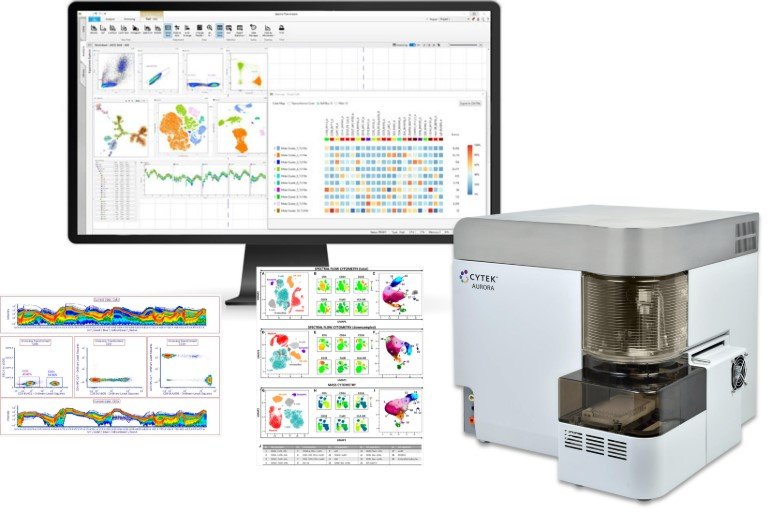
Cell therapies contain living cells with diverse biological characteristics, making product characterization more challenging than testing conventional pharmaceutical formulations. Researchers must identify relevant cell populations, understand their functional properties, and determine whether manufacturing processes consistently produce cells with the intended characteristics. Immunophenotyping helps address these needs, but complex products can introduce analytical challenges that require careful planning.
Potency assay development plays an important role in this process because identifying a cell population does not necessarily prove that it performs its intended biological function. By combining immunophenotyping with appropriate functional assays, developers can build a more complete understanding of cell therapy quality.
Understanding the relationship between cellular identity, population variability, and biological activity helps biotechnology teams design more informative analytical strategies throughout product development.
Understanding Immunophenotyping in Complex Cell Products
Immunophenotyping identifies and characterizes cells by measuring specific markers on their surfaces or within their structures. Flow cytometry commonly supports this analysis by using fluorescently labeled antibodies to distinguish cell populations and quantify marker expression.
In cell therapy development, immunophenotyping can help characterize T cells, natural killer cells, stem cells, and other therapeutic populations. Researchers may examine cell identity, differentiation status, activation, or the presence of unintended populations.
However, complex cell products rarely behave as perfectly uniform biological materials. Different cells may express the same marker at different levels, while distinct populations may share overlapping marker profiles. These characteristics can complicate interpretation and make a single-marker approach insufficient.
Major Immunophenotyping Challenges in Cell Therapy
1. Cellular Heterogeneity
Cellular heterogeneity is one of the most common challenges in complex cell products. A manufactured product may contain multiple subpopulations with different phenotypes, maturation states, and functional capabilities.
For example, a T-cell product may contain several subsets that differ in activation status, memory phenotype, proliferation capacity, and biological activity. Even when most cells display the expected identity markers, variations within the population may influence product performance.
Developers can address this challenge by selecting marker panels that distinguish biologically relevant subsets. Multiparameter flow cytometry allows researchers to evaluate several characteristics simultaneously, providing a more detailed view of product composition.
Nevertheless, phenotype alone cannot establish functional effectiveness. Additional biological testing may be necessary to determine how observed cellular differences relate to the intended therapeutic mechanism.
2. Marker Expression Variability
Marker expression can change throughout cell collection, activation, expansion, genetic modification, and storage. Manufacturing conditions may influence the intensity of fluorescent signals and the proportion of cells expressing particular proteins.
This variability creates difficulties when laboratories establish gating strategies and acceptance criteria. A marker threshold that works well for one sample may not separate populations clearly in another.
Researchers should evaluate marker behavior across representative samples and manufacturing stages. Appropriate positive, negative, and fluorescence-minus-one controls can help analysts interpret signal distribution and distinguish meaningful expression from background fluorescence.
Where necessary, laboratories should also assess whether antibody specificity, reagent quality, or sample handling contributes to unexpected results. Standardized staining procedures and documented analysis criteria improve comparability across runs.
3. Overlapping Cell Populations
Different cell types may share several surface markers, making accurate identification difficult. This issue becomes more pronounced when products contain rare populations or cells with transitional phenotypes.
For example, activated cells may change their marker profiles and become harder to distinguish from neighboring populations. Reliance on one marker can therefore lead to incorrect classification.
Developers should use combinations of markers supported by biological evidence rather than assuming that a single protein uniquely identifies a population. Careful panel design, appropriate controls, and consistent gating hierarchies help improve population discrimination.
When immunophenotyping results remain ambiguous, researchers may need complementary analytical techniques to confirm cell identity or investigate the underlying biology.
Connecting Immunophenotyping with Potency Assay Development
Immunophenotyping describes cellular characteristics, while potency testing evaluates biological activity relevant to the product’s intended function. Both contribute to cell therapy characterization, but they answer different questions.
Distinguishing Phenotype from Function
A cell may express the expected markers without demonstrating the required biological activity. Conversely, a functionally active population may show variations in marker expression that do not necessarily indicate reduced potency.
This distinction makes potency assay development essential for products whose therapeutic effects depend on complex cellular mechanisms. Developers should identify the biological activity most closely related to the intended mechanism of action and design an assay that measures it appropriately.
For example, an engineered immune cell product may require a functional assay that measures target-cell killing or another relevant response. Immunophenotyping can complement that assay by describing the composition and characteristics of the tested cells.
Together, these methods provide more useful information than either approach alone.
Selecting Relevant Potency Assay Endpoints
Potency assays should reflect the biological function the product is intended to deliver. Depending on the therapy, relevant endpoints may include target-cell killing, cytokine production, cell activation, or another mechanism-related response.
Developers should justify their endpoint selection using available biological evidence and product knowledge. They should also determine whether a single assay adequately represents the relevant activity or whether complementary assays are necessary.
A well-designed testing strategy considers biological relevance, assay performance, sample requirements, and practical suitability for the development stage. These factors help teams generate meaningful data without introducing unnecessary analytical complexity.
Improving Analytical Method Reliability
Standardizing Sample Preparation and Instrument Performance
Sample preparation can significantly affect immunophenotyping results. Differences in collection, processing time, storage, staining conditions, or cell recovery may alter viability and marker detection.
Laboratories should establish consistent procedures and define acceptable sample-handling conditions. They should also maintain appropriate instrument performance through routine quality control, maintenance, and documented operating procedures.
For potency assays, similar attention is needed to cell preparation, assay timing, controls, and test conditions. Standardization reduces avoidable variability and makes it easier to identify genuine biological differences.
Establishing Appropriate Assay Performance
Analytical methods should be qualified or validated according to their intended use and applicable requirements. Relevant characteristics may include precision, specificity, sensitivity, robustness, and the ability to distinguish samples with different biological properties.
Researchers should evaluate method performance using representative materials and consider the range of variation expected during manufacturing. Acceptance criteria should reflect product knowledge and supporting data rather than arbitrary thresholds.
For complex cell products, analytical development teams can benefit from integrating flow cytometry expertise with functional assay design. This approach helps ensure that characterization methods and potency measurements provide complementary evidence about product quality.
Using Immunophenotyping to Support Manufacturing Consistency
Immunophenotyping can help manufacturers monitor changes in cell populations across production stages. Comparing data from multiple batches may reveal trends associated with culture conditions, activation procedures, expansion, or other process variables.
When teams observe unexpected shifts, they can investigate whether those changes affect relevant quality attributes or biological activity. Linking phenotypic measurements with potency results may also improve understanding of how cellular composition relates to product performance.
Specialized analytical development support can help biotechnology organizations refine marker panels, establish reproducible testing procedures, and develop functional assays suited to their therapeutic products. Early planning is particularly valuable when methods must transition from exploratory research to more controlled manufacturing environments.
Importantly, changes in phenotype should be interpreted within the broader context of process knowledge, functional evidence, and predefined product specifications.
Conclusion
Immunophenotyping provides valuable insight into the identity, composition, and characteristics of complex cell products. However, cellular heterogeneity, variable marker expression, overlapping populations, and sample-handling effects can complicate interpretation.
Addressing these challenges requires carefully designed marker panels, standardized analytical procedures, suitable controls, and consistent data analysis. Potency assay development adds another essential dimension by evaluating whether cells demonstrate the biological activity relevant to their intended function.
By integrating immunophenotyping with functional testing and process monitoring, developers can strengthen product characterization and improve their understanding of manufacturing variability. This combined approach supports more informed quality assessments and helps biotechnology teams build reliable analytical strategies as cell therapies progress through development.