excavation services DFW TX
Heavy equipment plays a major role in the efficiency, safety, and quality of an excavation project. From preparing residential building sites to handling large commercial earthwork, the machinery selected must match the property’s terrain, soil conditions, access limitations, and project requirements. Using the wrong machine can increase operating costs, slow production, and create unnecessary challenges for workers. A properly planned equipment strategy helps crews complete excavation tasks with greater control and consistency. For this reason, property owners should understand how different machines contribute to professional excavation services DFW TX.
Why Equipment Selection Matters
Excavation equipment is designed for specific types of earthmoving and site preparation work. An excavator that performs well on a large open property may not be appropriate for a confined residential site with limited access. Similarly, compact machinery may be convenient for smaller projects but inefficient for moving large quantities of soil. Contractors need to consider the project’s size, excavation services DFW TX material type, required production rate, and working environment before selecting machinery.
Equipment selection can also influence the overall project schedule. If machinery is too small for the scope, crews may spend additional time completing tasks that could have been handled more efficiently with larger equipment. On the other hand, oversized machinery can increase mobilization costs and create access or ground-pressure concerns. Professional contractors generally evaluate the entire work plan before deciding which machines and attachments are appropriate for each stage.
Excavators for Digging and Earth Removal
Excavators are among the most versatile machines used on construction sites. They can dig trenches, foundations, drainage areas, utility routes, and larger sections of soil while allowing operators to work with considerable precision. Different excavator sizes provide different combinations of digging depth, lifting capacity, reach, and maneuverability. The right size depends on the property’s physical limitations and the volume and depth of material that needs to be moved.
Attachments can further expand an excavator’s capabilities. Buckets are commonly selected according to the type of digging or material handling required, while specialized attachments may be used for grading, breaking, or processing certain materials. The contractor should match attachments to the actual scope rather than using a one-size-fits-all approach. Proper machine and attachment selection can improve productivity while helping operators maintain control around existing structures and utilities.
Skid Steers for Compact Work Areas
Skid steers are valuable when a project requires maneuverability in relatively confined areas. Their compact footprint and ability to work with multiple attachments make them useful for grading, soil movement, cleanup, and other site preparation tasks. They can often operate in spaces where larger equipment would have difficulty maneuvering. This makes them particularly practical for residential properties and smaller construction sites.
Skid steers can also complement larger excavation machinery. For example, an excavator may perform the primary digging while a skid steer moves loose soil, cleans work areas, or handles final preparation. The combination can reduce unnecessary movement by larger equipment. When choosing excavation services DFW TX, property owners should ask how the contractor plans to coordinate different machines rather than focusing solely on individual equipment types.
Bulldozers for Large-Scale Grading
Bulldozers are designed for pushing and spreading substantial amounts of soil and other materials. They can be useful on larger properties where significant grading, rough site preparation, or earth movement is required. Their blades allow operators to move material across relatively large areas and establish preliminary grades. Bulldozers are generally more effective when the project provides enough space for efficient machine movement.
Although powerful, a bulldozer is not automatically the best choice for every excavation project. Tight residential lots, narrow access routes, or projects requiring highly detailed excavation may call for smaller or more specialized equipment. Contractors should determine whether the machine’s size and capabilities match the site’s physical conditions. A properly selected dozer can make large-scale earthwork much more efficient when used in the right environment.
Loaders for Moving Excavated Materials
Wheel loaders and similar material-handling machines are often used to move soil, aggregate, demolition debris, and other materials around a construction site. Their primary strength is efficient loading and transportation over relatively short distances. They can keep excavation operations moving by transferring material into trucks or repositioning stockpiles. Loader selection depends on the volume of material, site layout, ground conditions, and required lifting capacity.
Loaders can be particularly useful when excavation generates large quantities of material that must be managed quickly. However, site access and ground conditions still need to be evaluated before choosing a machine. On smaller properties, a compact loader may be more practical than a full-size wheel loader. Coordinating loaders with excavators and hauling equipment can create a more efficient workflow and reduce unnecessary equipment idle time.
Compact Equipment for Residential Projects
Residential excavation projects often involve tighter working areas, existing landscaping, neighboring structures, driveways, fences, and utility lines. Compact excavators and skid steers can provide useful maneuverability where larger machines cannot operate comfortably. Their smaller size can help crews access backyard areas, narrow side yards, and other restricted spaces. However, compact equipment still needs sufficient room for safe operation and material movement.
The contractor should inspect access conditions before mobilizing equipment. Gates, overhead obstructions, slopes, soft ground, and nearby structures can all influence which machine can safely reach the work area. In some cases, equipment may need to enter through a temporary access route or be brought onto the property using specialized transportation. Careful planning prevents situations where machinery arrives at the jobsite only to discover that it cannot reach the excavation area.
Specialized Equipment for Difficult Materials
Not all excavation involves ordinary soil. Construction sites can contain compacted fill, rock, concrete, buried debris, tree roots, or other difficult materials that require specialized tools. Hydraulic breakers, rippers, grapples, specialty buckets, and other attachments can improve a contractor’s ability to address challenging conditions. The appropriate choice depends on the material and the scope of work.
Unexpected materials can affect both the schedule and the equipment plan. A project originally expected to involve standard soil may become more complicated if large rocks or buried concrete are encountered. Experienced contractors should explain how unforeseen site conditions could affect production and pricing. Having access to suitable attachments and replacement equipment can help reduce delays when conditions differ from the original expectations.
Equipment for Land Clearing and Site Preparation
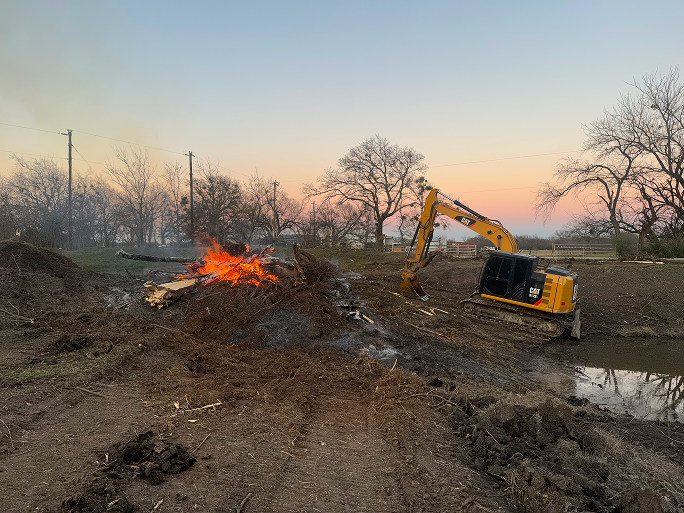
Excavation is sometimes preceded by vegetation removal, especially on undeveloped or neglected properties. Trees, brush, stumps, and other vegetation can interfere with equipment access and prevent crews from establishing efficient excavation routes. Land clearing services Wise County TX may involve equipment such as excavators, skid steers, forestry-oriented attachments, mulching equipment, or other machinery depending on the property’s conditions and clearing objectives.
Equipment selection for clearing should account for vegetation density, tree size, terrain, access, and the intended use of the property afterward. Removing every tree or vegetation feature is not always necessary or desirable. A thoughtful clearing plan can distinguish between material that needs to be removed and vegetation that can remain. Coordinating land clearing with excavation can also reduce repeated mobilization and create a more logical sequence for overall site preparation.
Consider Soil Conditions and Ground Pressure
Soil conditions can have a significant influence on equipment selection. Soft or saturated ground may not support heavy machinery as effectively as stable, compacted surfaces. Excessive equipment weight can create deep ruts or make site access more difficult. Contractors should evaluate current ground conditions and choose machinery that can perform the work without unnecessarily damaging areas that need to remain intact.
Terrain also matters when operating heavy equipment. Slopes, uneven ground, drainage channels, and restricted areas can affect machine stability and maneuverability. Equipment operators need appropriate training and experience to work safely under site-specific conditions. Choosing machinery based on the actual terrain rather than simply selecting the largest available machine can improve both safety and productivity.
Match Equipment to the Project Scope
Before equipment is selected, the contractor should understand the complete scope of work. A foundation excavation requires different capabilities from mass grading, utility trenching, demolition cleanup, or drainage construction. The required digging depth, soil volume, material type, access conditions, and production schedule all contribute to the equipment decision. A detailed project assessment allows the contractor to build an equipment plan around the actual work rather than assumptions.
Projects may also require several types of equipment working together. An excavator can dig and load material, a loader can move it, and trucks can transport excess soil away from the site. Smaller equipment may then perform cleanup or finish grading. Coordinating machinery in this way can create a continuous workflow and minimize downtime. The goal is not to use the most powerful equipment available but to use the right combination for the project’s specific requirements.
Equipment Planning When Demolition Is Involved
Some excavation projects begin after an existing structure has been removed. In these situations, DFW demolition services and excavation may need to be carefully coordinated. Demolition can leave foundations, slabs, concrete, buried debris, and other materials that require additional equipment to remove. Excavators equipped with appropriate attachments may be able to handle several stages of this work, while loaders can assist with debris management.
The sequence should be established before heavy equipment begins operating on the property. The contractor should know which areas need to remain accessible, where debris will be stockpiled, and how trucks will enter and exit. Poor coordination can result in equipment congestion or unnecessary handling of materials. Planning demolition and excavation together can make the transition from an existing structure to a construction-ready site more efficient.
Questions to Ask an Excavation Contractor
Property owners should ask potential contractors which equipment they expect to use and why. A reputable contractor should be able to connect each machine to a specific task within the project scope. It is also reasonable to ask how the company handles unexpected soil conditions, restricted access, equipment breakdowns, and weather-related interruptions. These questions can reveal whether the contractor has thought through the practical challenges of the job.
It is equally important to discuss the complete scope rather than equipment alone. Ask whether the estimate includes mobilization, excavation, grading, hauling, cleanup, material disposal, or other necessary services. If the project involves land clearing services Wise County TX, clarify how clearing will be coordinated with subsequent earthwork. A detailed conversation before work begins can help eliminate misunderstandings and provide a clearer picture of the project’s expected process.
Making the Right Equipment Decision
Choosing heavy equipment for excavation is a technical decision that should be based on the property’s conditions and the project’s objectives. Excavators, skid steers, loaders, bulldozers, compact machinery, and specialized attachments each have specific strengths. The right equipment combination can improve productivity, reduce unnecessary site disturbance, and help crews maintain better control of the work. Equipment should always be selected as part of a broader project plan rather than based on machine size alone.
For homeowners, developers, and commercial property owners, professional excavation services DFW TX can provide the equipment knowledge and site preparation expertise needed for successful earthwork. When vegetation or unwanted growth must be addressed, land clearing services Wise County TX can be coordinated with excavation to improve access and streamline the project sequence. If an existing structure must first be removed, DFW demolition services may also need to be integrated into the schedule. Careful equipment planning ultimately helps turn a complex excavation scope into a more organized, efficient, and construction-ready operation.