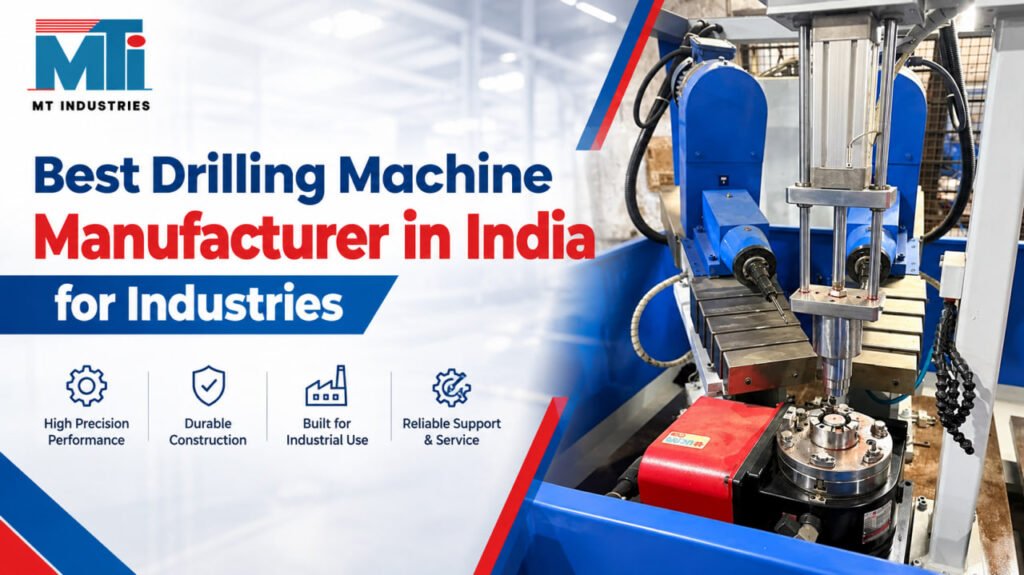
Industrial drilling machines play an important role in manufacturing, fabrication, construction, automotive production, and metalworking. Businesses depend on these machines to create accurate holes, maintain consistent production quality, and improve operational efficiency. Choosing the right equipment is therefore an important decision for any industrial buyer.
Finding the Best Drilling Machine Manufacturer in India requires more than comparing prices. Buyers should evaluate machine performance, build quality, application suitability, technical support, maintenance requirements, and long-term operating costs. A reliable manufacturer helps businesses select equipment that meets their production needs while supporting consistent and efficient operations.
This guide explains how to evaluate industrial drilling machines, which features matter most, and what businesses should consider before choosing a Drilling Machine Manufacturer in India.
What Is an Industrial Drilling Machine?
An industrial drilling machine is equipment designed to create holes in materials such as metal, wood, plastic, and other workpieces, depending on the machine’s design and tooling. Unlike equipment intended primarily for occasional use, industrial drilling machines are selected for their ability to support regular production, repeatable results, and specific manufacturing requirements.
Common types include:
- Bench drilling machines: Suitable for smaller components, workshops, and light-duty drilling applications.
- Pillar drilling machines: Used for general-purpose drilling where stability and consistent operation are important.
- Radial drilling machines: Designed to drill holes at different positions on large or heavy workpieces.
- CNC drilling machines: Used for automated operations requiring programmed movements and repeatable accuracy.
- Magnetic drilling machines: Suitable for drilling ferrous metal structures and steel components where portability is required.
The right choice depends on material type, hole diameter, drilling depth, production volume, and the accuracy required for the finished component.
How to Choose the Best Drilling Machine Manufacturer in India
Selecting a suitable manufacturer can influence productivity, maintenance costs, and the quality of finished products. Industrial buyers should assess the following factors before making a purchase.
1. Evaluate Manufacturing Quality and Machine Construction
Machine construction directly affects stability, vibration, durability, and drilling accuracy. Buyers should examine the machine frame, spindle assembly, worktable, motor, bearings, and other critical components.
A well-designed machine should provide adequate rigidity for its intended workload. Excessive vibration or poor alignment may result in inaccurate holes, faster tool wear, and inconsistent production.
When evaluating the Best Drilling Machine Manufacturer in India, ask about manufacturing processes, component specifications, inspection procedures, and quality-control practices. Request technical documentation to verify whether the machine meets your operating requirements.
2. Match Machine Specifications to Your Application
Not every drilling machine is suitable for every industrial process. Selecting equipment based only on price or motor power can lead to performance limitations.
Before purchasing, consider:
- Material type and hardness.
- Required drilling diameter and depth.
- Spindle speed and available speed ranges.
- Motor power and duty cycle.
- Workpiece dimensions and weight.
- Required positioning accuracy.
- Daily production volume.
- Available floor space and power supply.
For example, a fabrication unit processing large steel plates may require a different machine configuration from a workshop producing small precision components. A qualified Drilling Machine Manufacturer in India should help buyers compare machine capabilities with actual production requirements.
3. Check Accuracy, Repeatability, and Performance
In industrial production, consistent results are often as important as drilling speed. Hole alignment, diameter consistency, surface finish, and repeatability can affect component assembly and downstream manufacturing operations.
Ask the manufacturer about spindle runout, machine rigidity, permissible tolerances, and recommended operating conditions. Where precision is critical, request suitable inspection records or a machine demonstration.
It is also important to consider tooling quality, workpiece clamping, and operator practices because these factors influence the final result alongside machine specifications.
4. Compare Total Cost of Ownership
The purchase price is only one part of the cost of industrial equipment. Businesses should also consider installation, tooling, energy consumption, preventive maintenance, spare parts, downtime, and operator training.
A machine with a lower initial cost may become more expensive over time if it requires frequent repairs or cannot maintain the required production rate.
Before finalising a supplier, request a detailed quotation covering machine specifications, included accessories, warranty terms, installation requirements, and after-sales support. Comparing quotations on the same technical basis makes purchasing decisions more practical.
Industries That Use Industrial Drilling Machines
Industrial drilling machines support a wide range of manufacturing and engineering activities. Their applications vary according to machine design, tooling, and workpiece requirements.
Automotive and Auto Component Manufacturing
Automotive manufacturers and component suppliers use drilling machines to produce holes in metal parts, brackets, housings, and other components. Consistent hole positioning helps support accurate assembly and dependable product quality.
Metal Fabrication and Engineering
Fabrication workshops use drilling machines to process plates, frames, structural components, and metal assemblies. Machine stability and suitable workholding are particularly important when handling larger workpieces.
Construction and Infrastructure
Construction-related manufacturing often involves drilling structural steel components, support brackets, and fabricated parts. The required machine depends on component size, material thickness, and the production environment.
General Manufacturing and Industrial Workshops
Small and medium-sized manufacturers use drilling machines for component production, repair work, and routine machining operations. Choosing equipment suited to the actual workload helps improve productivity without unnecessary investment.
For each application, businesses should confirm that the selected machine is designed for the intended materials, dimensions, and operating conditions.
Why Technical Support and After-Sales Service Matter
Reliable after-sales service helps keep industrial equipment operating safely and efficiently. Even a well-built machine requires routine inspection, lubrication, appropriate tooling, and periodic maintenance.
Before selecting a Drilling Machine Manufacturer in India, clarify the availability of replacement parts, service assistance, warranty coverage, operating manuals, and maintenance guidance. Businesses with continuous production schedules should also understand the expected response time for technical support.
Preventive maintenance can help identify wear, alignment issues, loose components, and lubrication problems before they cause significant downtime. Operators should follow the manufacturer’s instructions and applicable workplace safety procedures.
MT Industries is one company industrial buyers can evaluate during their supplier research. As with any prospective supplier, businesses should review its available machine specifications, product suitability, service arrangements, and commercial terms before placing an order.
Questions to Ask Before Buying an Industrial Drilling Machine
A structured evaluation helps buyers avoid selecting equipment that does not match their requirements.
Consider asking these questions before making a purchase:
- Is the machine suitable for my material? Confirm compatibility with the metals or other materials used in production.
- What drilling capacity does it offer? Check the specified drilling diameter, depth, spindle speed, and duty cycle.
- Can it support my production volume? Assess whether the machine can handle the expected workload without exceeding its rated capabilities.
- What is included in the quotation? Clarify accessories, tooling, installation, transportation, and other potential costs.
- What support is available after purchase? Confirm warranty conditions, spare-part availability, and service arrangements.
- Can the manufacturer provide technical documentation? Review operating instructions, specifications, maintenance requirements, and applicable compliance information.
These questions create a practical basis for comparing suppliers and evaluating long-term value.
Common Mistakes to Avoid When Selecting a Manufacturer
Industrial buyers can reduce purchasing risks by avoiding several common mistakes.
Choosing the lowest-priced machine without comparing specifications may lead to inadequate capacity or higher maintenance costs.
Ignoring application requirements can result in poor performance when drilling harder materials, larger components, or holes requiring tighter tolerances.
Overlooking maintenance and spare parts may increase downtime if essential components are difficult to obtain.
Accepting unsupported performance claims can create unrealistic expectations. Buyers should request verifiable specifications and relevant technical documentation.
Neglecting operator safety can expose workers to avoidable risks. Proper guarding, workpiece clamping, personal protective equipment, and training are essential, following the machine manufacturer’s instructions and applicable safety regulations.
A careful assessment of these factors helps businesses make more informed purchasing decisions.
How to Find the Right Drilling Machine Manufacturer in India
The process starts with clearly defining the application, production volume, material specifications, and quality requirements. Once these details are established, buyers can shortlist manufacturers offering suitable machine configurations.
Compare technical specifications, construction quality, service support, delivery timelines, and overall cost rather than relying on marketing claims alone. Where possible, review a machine demonstration, inspect relevant documentation, and confirm all commercial terms in writing.
MT Industries can be included in the evaluation process when researching industrial drilling equipment. Prospective buyers should contact the company directly to verify current product availability, machine specifications, and suitability for their applications.
The goal is to identify a supplier that can meet present production requirements while providing appropriate support throughout the equipment’s working life. This approach is more useful than choosing a manufacturer solely because it appears prominently in search results for Best Drilling Machine Manufacturer in India.
Frequently Asked Questions
1. How do I choose the Best Drilling Machine Manufacturer in India?
Compare manufacturing quality, machine specifications, drilling capacity, application suitability, warranty conditions, spare-part availability, and after-sales service. Request technical documentation and compare quotations based on equivalent specifications before making a decision.
2. Which type of drilling machine is best for industrial use?
The best machine depends on the workpiece and production requirements. Bench and pillar machines suit many general-purpose applications, radial machines accommodate larger workpieces, CNC machines support programmed operations, and magnetic drilling machines are useful for suitable steel structures.
3. What factors affect industrial drilling machine prices in India?
Prices depend on machine type, drilling capacity, motor power, construction, accuracy requirements, automation, included accessories, and service arrangements. Buyers should request itemised quotations to compare the total cost accurately.
4. What should I check before purchasing from a Drilling Machine Manufacturer in India?
Verify machine specifications, material compatibility, drilling capacity, quality-control documentation, warranty terms, delivery schedules, spare-part availability, and technical support. Confirm that the machine can handle the intended workload safely.
5. How can I enquire about industrial drilling machines from MT Industries?
Businesses can contact MT Industries through its official communication channels to ask about available machine models, technical specifications, pricing, delivery timelines, and service support. Providing material type, drilling diameter, workpiece dimensions, and expected production volume can help the company assess the requirement.
Conclusion
Choosing the right industrial drilling equipment requires a balance of performance, construction quality, application suitability, operating costs, and dependable technical support. Businesses should begin by defining their production requirements and then compare manufacturers using verifiable specifications rather than price alone.
A systematic evaluation helps identify equipment that supports consistent output, efficient operations, and long-term value. Whether assessing MT Industries or another supplier, industrial buyers should confirm machine capabilities, warranty conditions, and service arrangements before making a final decision. A well-informed purchase can help businesses improve drilling operations while meeting their manufacturing and quality objectives.
For More Information Click Here:- https://mtindustries.in/best-drilling-machine-manufacturer-in-india-advanced-drilling-solutions-for-modern-manufacturing