Packaging is no longer limited to protecting a product during storage and transportation. For many retail products, the package also communicates brand identity, provides essential information, and supports the customer experience. Small details such as stickers and labels can therefore have a practical role in both presentation and product identification.
Custom circle stickers are one example. Their compact shape makes them suitable for sealing boxes, adding branding to bags, closing tissue paper, identifying products, or highlighting important packaging information. However, creating an effective sticker involves more than choosing a design and sending it to a printer.
Material, adhesive, size, finish, artwork, readability, and application conditions can all affect the final result. Retailers and packaging teams should consider these factors before production to avoid problems such as peeling edges, unreadable text, poor colour reproduction, or stickers that do not fit the intended packaging surface.
Why Circle Stickers Are Useful for Modern Packaging
Circular labels have a simple visual structure that can work across many packaging formats. Because the eye naturally recognises basic geometric shapes, a circle can create a distinct visual element without requiring a large printed area.
They can be used for a variety of purposes, including:
- Brand identification on boxes and mailers
- Tamper-evident seals
- Product category identification
- Promotional or seasonal packaging
- Handmade and artisan product labels
- Ingredient or product information
- QR codes and other scannable elements
- Colour-coded inventory or product variations
For small businesses, circle stickers can also provide flexibility. Instead of changing an entire packaging design for every product variation, businesses may use different labels to identify flavours, sizes, colours, collections, or limited editions.
This approach can be particularly useful where packaging needs to remain consistent while product information changes.
Choosing the Right Sticker Material
One of the most important decisions before printing is selecting a suitable material. The ideal option depends on the packaging surface, handling conditions, expected lifespan, and appearance required.
Paper stickers are commonly used for indoor retail packaging because they can provide a natural, cost-effective appearance. They may work particularly well with cardboard boxes, paper bags, bakery packaging, stationery, and other dry products.
For packaging exposed to moisture, handling, or changing environmental conditions, synthetic materials may be more appropriate. Options such as polypropylene or vinyl can provide greater resistance to water and abrasion, depending on the specific specification.
Consider these questions before selecting the material:
- Will the sticker come into contact with moisture?
- Is the package stored indoors or outdoors?
- Will customers frequently handle the label?
- Does the packaging have a smooth, textured, coated, or recycled surface?
- Does the label need to remain readable for the entire product lifecycle?
The answer to these questions can influence both the material and adhesive selection.
Size, Layout, and Readability Matter
A circle may appear simple, but limited space can make design decisions more challenging. Important information should remain readable without making the sticker look overcrowded.
Start by identifying the purpose of the label. A sticker designed primarily for branding can use a relatively simple logo or graphic. A product-information label may require more space for text, symbols, or codes.
Typography should be selected with the final physical size in mind. Text that looks clear on a computer screen may become difficult to read after being reduced to a small printed diameter.
For labels containing multiple elements, consider:
- Adequate spacing around text
- Clear contrast between background and lettering
- A readable font size
- Consistent brand colours
- Sufficient space between separate design elements
- A safe margin around the sticker edge
Bleed and trim areas should also be considered when preparing artwork. Graphics that extend to the edge should normally account for the cutting process so that unwanted white borders or uneven edges do not appear.
Barcode and QR Code Considerations
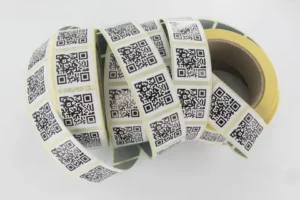
Some packaging stickers serve a functional rather than purely decorative purpose. A barcode, QR code, batch reference, or product identifier may need to be printed clearly enough for scanning equipment or smartphones to recognise it.
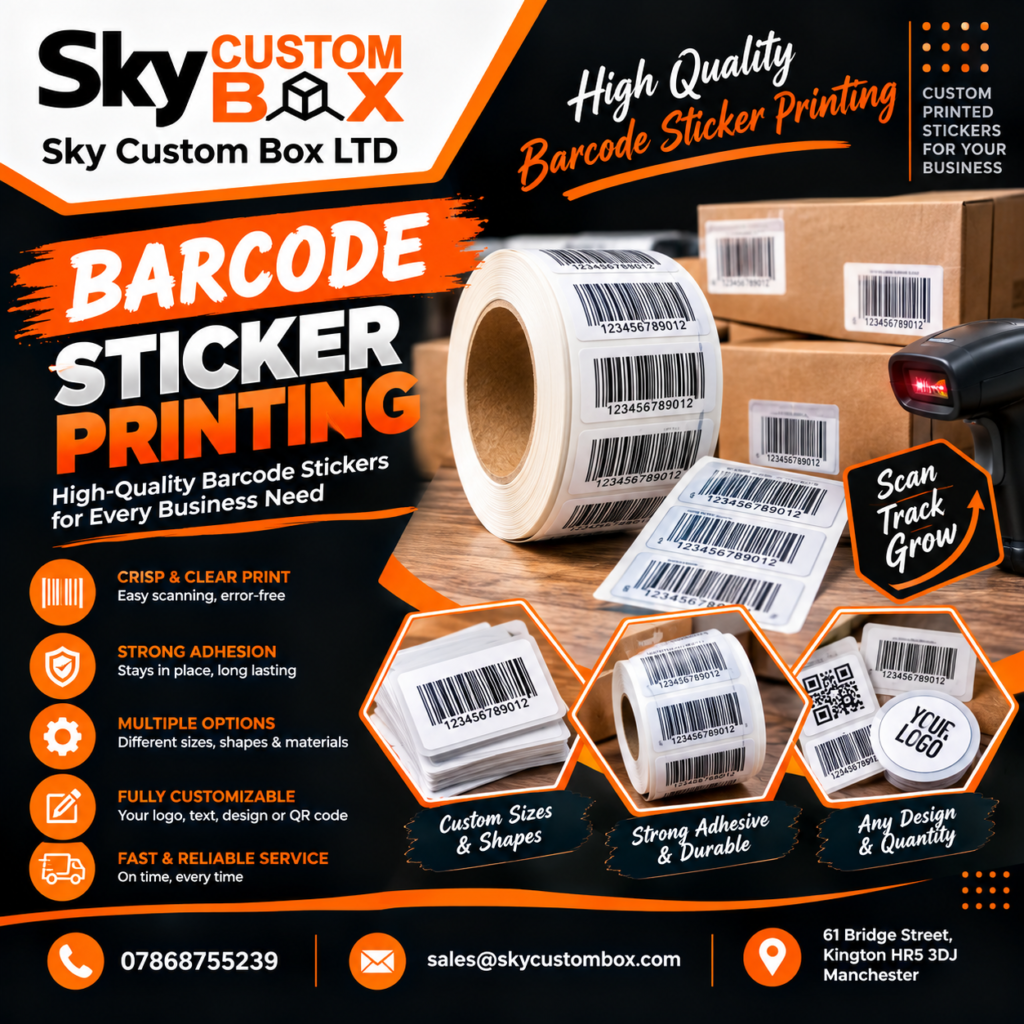
This is where barcode sticker printing requires particular attention to technical accuracy. The size, contrast, quiet zone, print resolution, and surface finish can all influence scan performance.
A barcode should not simply be treated as another graphic element. It contains machine-readable information, so distortion or insufficient contrast can create operational problems.
Before production, check:
- Barcode dimensions
- Adequate contrast
- Quiet zones around the code
- Print resolution
- Whether the selected material affects readability
- Whether the final printed version has been tested
QR codes require similar attention. A visually attractive design is useful only if customers can reliably scan the code.
For this reason, functional labels should be tested at their actual intended size rather than relying entirely on a digital proof.
Adhesive Selection Is Often Overlooked
A beautifully printed sticker can still fail if the adhesive does not match the packaging surface.
Different packaging materials have different surface characteristics. Uncoated cardboard, glossy cartons, glass, plastic containers, kraft paper, and recycled materials can require different adhesive properties.
Temperature and storage conditions may also affect performance.
For example, a label applied in a cold environment may behave differently from one applied at room temperature. Similarly, packaging stored in humid conditions can create challenges for certain paper-based labels.
Before finalising an order, consider:
- The material of the packaging
- Surface texture
- Temperature during application
- Storage temperature
- Exposure to humidity
- Expected handling
- Whether the label needs permanent or removable adhesion
Testing a small quantity before committing to a large production run can help identify adhesion problems early.
Finishes Can Change the Packaging Experience
The finish applied to a sticker influences both its appearance and practical performance.
Gloss finishes can create a bright, polished appearance and may enhance the visual impact of photographs or colourful graphics. Matte finishes generally provide a softer appearance and can reduce reflections, which may make certain text easier to view under strong lighting.
Other finishing options may include:
- Clear labels
- Metallic effects
- Foil details
- Laminated surfaces
- Textured finishes
- Die-cut shapes
The appropriate choice depends on the packaging concept and intended customer experience. A premium cosmetic package, for example, may require a different finish from a recyclable kraft food box.
The important point is to balance appearance with function. A finish should not interfere with readability, scanning, adhesion, or required product information.
Common Problems and How to Prevent Them
Several packaging sticker problems can be avoided through careful preparation.
Poor Colour Matching
Colours displayed on a monitor may not reproduce exactly in print. Designers should understand the difference between digital colour and print colour processes and request a proof when colour accuracy is important.
Text That Is Too Small
Small stickers create space limitations. Avoid filling every available area with information. Prioritise the content that customers actually need.
Peeling Corners
Peeling can result from unsuitable adhesive, contamination on the packaging surface, moisture, or incorrect application. Testing the label against the actual packaging material can help identify the cause.
Misaligned Designs
A circular sticker with artwork positioned too close to the edge can look uneven after cutting. Keep important elements within an appropriate safe area.
Unreadable Barcodes
Low resolution, insufficient contrast, incorrect sizing, or poor print quality can affect scanning. Barcode artwork should be checked and tested before mass production.
How Packaging Trends Are Influencing Sticker Design
Packaging design continues to move toward clearer information, stronger brand consistency, and more flexible labelling systems. Sustainability is also influencing material choices, particularly as businesses examine paper-based materials, recyclable packaging, and reduced packaging waste.
Another developing trend is the use of smart packaging elements. QR codes can connect physical products with digital information such as product instructions, traceability information, brand stories, recycling guidance, or additional product details.
This creates an opportunity for a relatively small sticker to perform several functions simultaneously.
At the same time, minimalist packaging remains popular. Instead of covering an entire package with graphics, businesses can use carefully positioned labels to provide identity and information while maintaining a clean appearance.
Providers such as Sky Custom Box can serve as useful reference points when considering how labels and custom packaging components can work together as part of a broader packaging system.
A Practical Checklist Before Printing
Before approving custom circle stickers, review the following checklist:
- Confirm the final sticker diameter.
- Select a material appropriate for the packaging environment.
- Check adhesive compatibility.
- Confirm all text is readable at actual size.
- Verify logos and brand elements.
- Allow suitable bleed and safe margins.
- Check barcode or QR code dimensions.
- Test machine-readable elements.
- Decide whether a matte, gloss, clear, or specialty finish is appropriate.
- Request a physical proof when colour or sizing is critical.
- Test the sticker on the actual packaging before larger production.
These simple checks can prevent expensive reprints and improve consistency across finished products.
Final Thoughts
Custom circle stickers may be small packaging components, but they can perform several important roles. They can reinforce brand identity, provide product information, support inventory processes, create tamper-evident seals, and connect physical packaging with digital content.
The most effective approach is to consider the sticker as part of the complete packaging system rather than as an isolated decorative item. Material, adhesive, dimensions, artwork, print quality, finishing, and application conditions should all work together.
For businesses considering barcode sticker printing, functional requirements deserve the same attention as visual design. Testing labels at their final size and on the intended packaging surface can reveal issues before production begins.