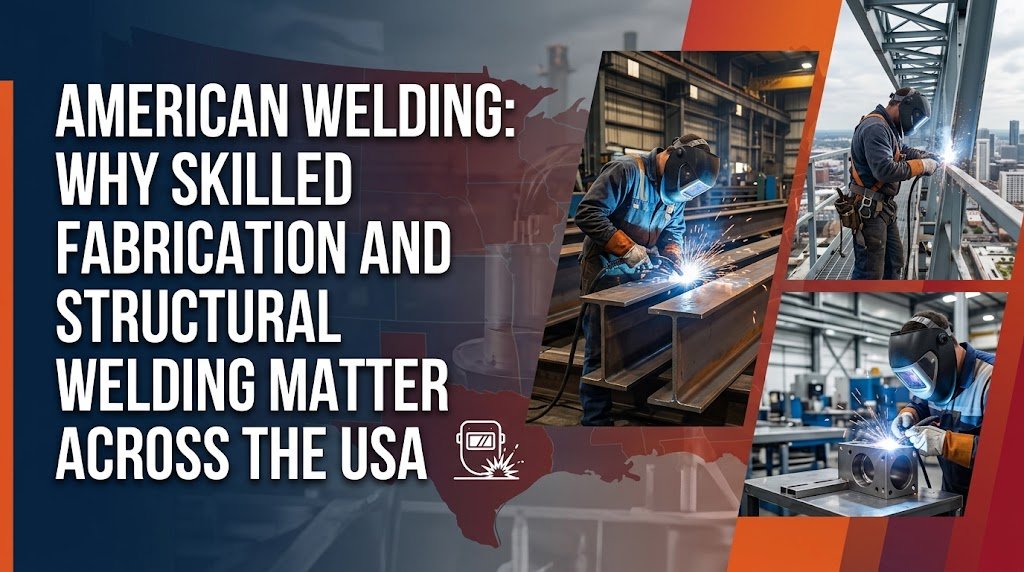
Welding plays a vital role in modern infrastructure, manufacturing, transportation, and construction. From bridges and commercial buildings to industrial equipment and pipelines, welded structures support many of the systems people rely on every day. American welding continues to be a critical part of the nation’s industrial landscape, helping businesses maintain safety, durability, and operational efficiency across a wide range of sectors.
As industries evolve and projects become more complex, the demand for skilled welders, quality fabrication, and reliable structural welding practices continues to grow. Understanding how welding contributes to modern industry can help business owners, contractors, engineers, and project managers make informed decisions when planning projects or evaluating fabrication requirements.
The Role of Welding in Modern Infrastructure
Infrastructure projects american welding depend heavily on welding for structural integrity and long-term performance. Steel frameworks used in commercial buildings, warehouses, transportation hubs, and public facilities often require precise welding techniques to ensure strength and stability.
For example, when constructing a large distribution center, steel beams and support structures must withstand significant loads over many years. Poor welding can compromise structural performance, while properly executed welds help maintain safety standards and reduce future maintenance concerns.
Across the United States, infrastructure investments continue to create opportunities for fabrication and metalworking professionals who specialize in structural steel, heavy equipment, and industrial construction projects.
Understanding Fabrication and Structural Welding
Although the terms are often used together, fabrication and welding serve different functions within a project.
Metal fabrication involves cutting, shaping, forming, and assembling metal components according to engineering specifications. Welding is one of the final processes used to permanently join those components.
A typical fabrication project may include:
- Reading technical drawings and blueprints
- Cutting raw materials to precise dimensions
- Forming metal components
- Assembling structural sections
- Performing welds according to industry standards
- Inspecting finished products for quality assurance
Structural welding, in particular, requires strict adherence to codes, specifications, and inspection requirements. Industries such as construction, energy, transportation, and manufacturing often rely on certified welding procedures to meet safety and compliance expectations.
How American Welding Supports Key Industries
The welding industry serves a broad range of sectors throughout the USA. Each industry has unique requirements that influence material selection, welding methods, and quality control procedures.
Construction
Commercial and industrial construction projects depend on welded steel structures. Office buildings, warehouses, manufacturing facilities, and bridges all require strong, durable connections between structural components.
Manufacturing
Manufacturers rely on welded assemblies for machinery, production equipment, storage systems, and custom metal products. Consistent weld quality helps improve equipment reliability and operational performance.
Energy and Utilities
Power generation facilities, utility infrastructure, and energy-related projects often involve specialized welding applications. These environments frequently require high-strength materials and rigorous inspection processes.
Transportation
Trailers, rail systems, commercial vehicles, and transportation equipment all depend on welding for structural performance and safety. Precision fabrication helps ensure components meet demanding operational conditions.
Quality Standards and Industry Best Practices
One of the most important aspects of professional welding is adherence to established industry standards. Quality welding is not simply about joining metal. It involves careful planning, material preparation, proper procedures, and inspection throughout the process.
Common quality considerations include:
- Material compatibility
- Weld design requirements
- Heat control during welding
- Surface preparation
- Post-weld inspection
- Compliance with applicable codes
Certified welders and experienced fabrication teams typically follow documented procedures to maintain consistency and quality across projects.
For example, a fabrication shop producing structural steel components for a commercial building may conduct visual inspections, dimensional checks, and additional testing to verify that welds meet project specifications before installation.
These quality assurance practices help reduce risks associated with structural failures, rework, and unexpected maintenance costs.
Technology’s Growing Influence on Welding Operations
Advancements in technology have transformed many aspects of welding and fabrication. Modern equipment, digital design tools, and automated processes are helping improve precision, efficiency, and project outcomes.
Computer-aided design (CAD) software allows engineers and fabricators to create highly detailed models before production begins. This helps identify potential issues early and improves communication between project stakeholders.
Automation is also becoming more common in manufacturing environments. Robotic welding systems can perform repetitive welds with a high degree of consistency, particularly in large-scale production settings.
However, skilled welders remain essential. Human expertise is still required for custom fabrication, field installations, complex structural projects, repairs, and quality inspections where judgment and experience play a critical role.
Industry professionals continue to balance technological innovation with practical craftsmanship to achieve the best results.
The Importance of Skilled Workforce Development
As infrastructure projects expand and manufacturing demands evolve, workforce development remains a key focus within the welding industry.
Training programs, apprenticeships, vocational schools, and certification pathways help prepare the next generation of welders and fabrication specialists. These programs teach both technical skills and safety practices that are necessary for real-world job sites.
Employers often look for professionals who understand blueprint reading, welding procedures, metal fabrication techniques, and inspection requirements. Ongoing education is equally important, as new materials, equipment, and industry standards continue to emerge.
Organizations such as American Welding, along with many industry stakeholders across the country, contribute to discussions around quality workmanship, technical expertise, and professional development within the welding and fabrication sector.
A well-trained workforce not only supports project success but also strengthens the broader manufacturing and construction industries throughout the United States.
Conclusion
Welding remains one of the foundational trades supporting infrastructure, manufacturing, transportation, and industrial development across the country. From structural steel fabrication to specialized industrial applications, American welding USA continues to play an important role in maintaining the systems and facilities that power modern life.
By focusing on quality standards, skilled craftsmanship, advanced technology, and workforce development, the industry helps ensure that welded structures and fabricated components meet the performance, safety, and durability requirements expected across today’s demanding projects.