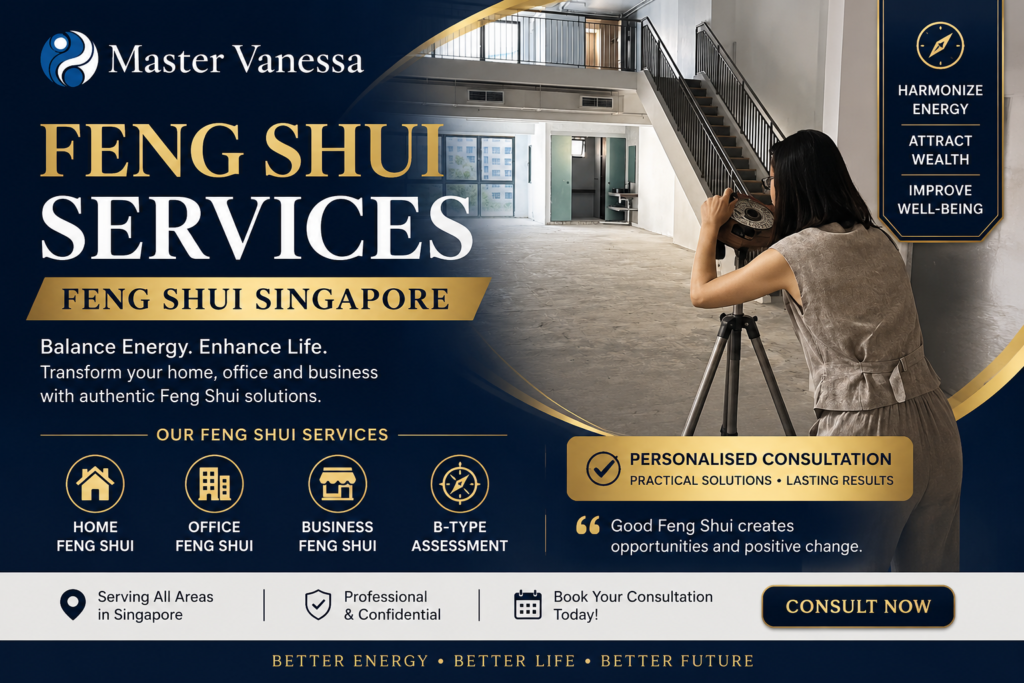
Choosing a home in Singapore involves more than finding a property that looks attractive. Between comparing HDB flats, viewing condominiums, planning renovation costs and deciding where to settle down, homeowners have plenty to consider before making a long-term commitment. For those who value traditional Chinese practices, feng shui Singapore consultations offer another perspective on evaluating a property’s layout, orientation and surroundings before making important decisions.
Whether you are purchasing your first property, moving into a resale flat or preparing to renovate an existing home, understanding the available options can help you plan more carefully. Master Vanessa at Siiri Geomancy is a practitioner to explore if you want to understand how traditional feng shui principles may be applied to your living environment through a personalised consultation.
What Should You Know About Feng Shui Singapore?
Feng shui is a traditional Chinese practice that examines the relationship between people and their physical surroundings. Depending on the method used, a property assessment may consider its orientation, entrance, internal layout and surrounding environment to develop recommendations based on traditional principles.
For homeowners, this provides a framework for reviewing a property before committing to renovation or furnishing decisions. Feng shui should not be treated as a guarantee of wealth, happiness or other personal outcomes, but it can be considered alongside practical factors such as affordability, accessibility, comfort and the suitability of the home for your household.
Why Property Layout Matters
The layout of a property affects how people use its available space, move between rooms and organise their daily routines. A compact HDB flat may require careful furniture planning, while a condominium with several bedrooms may present different considerations involving room usage, privacy and shared spaces.
A personalised feng shui assessment can examine these features within the context of traditional principles. Rather than assuming that one arrangement is suitable for every home, the consultation should consider the actual floor plan, structural limitations and the questions you want to address.
Understanding Property Orientation
Property orientation is one of the factors considered in certain traditional feng shui methods. The direction of the property, the location of the entrance and the relationship between internal spaces may be examined together, depending on the practitioner’s approach.
It is important not to judge a property solely by its compass direction or assume that one direction is universally better than another. A meaningful assessment should explain the method being used and consider the property’s individual characteristics rather than relying on a single rule.
When Should You Consider a Feng Shui Consultation?
The timing of a consultation depends on your property plans and the decisions you need to make. If you are still comparing homes, you can enquire whether a preliminary assessment is possible using the available floor plan and property information before making a purchase commitment.
If you have already purchased a home, a consultation before renovation may provide more flexibility to consider furniture placement and room arrangements. Homeowners who have been living in the same property for years can also enquire about reviewing their existing layout if they want to explore traditional feng shui principles.
Before Purchasing a Property
Property buyers often need to balance location, price, transport access, renovation requirements and long-term suitability. If feng shui is important to you, it may be worth considering the property’s layout alongside these essential factors before making your final decision.
Prepare the floor plan and any available orientation details, then ask the consultant what can be assessed before purchase. Remember that a feng shui consultation does not replace legal checks, a building inspection, financial planning or an assessment of the property’s market value.
Before Renovation Begins
Renovation decisions can become expensive to reverse once built-in furniture, cabinetry and other fixtures have been installed. If you want traditional feng shui principles to inform your home design, discussing the layout before finalising the renovation plan may give you more flexibility to evaluate different arrangements.
A consultation can help you identify which aspects of the property you want to review. Any proposed changes should still be discussed with your interior designer and evaluated against structural constraints, building requirements, accessibility and your available budget.
Four Areas to Review in Your Home
1. The Main Entrance
The entrance is an important consideration in traditional feng shui because it is assessed in relation to the property’s orientation and internal layout. It also serves a practical purpose by providing access for residents and visitors, so clear pathways and suitable storage should remain priorities.
A consultation can help you understand how the entrance is evaluated within the chosen feng shui method. Avoid making costly changes based only on generic online advice, particularly when the existing doorway or surrounding structure cannot easily be modified.
2. Bedrooms and Personal Spaces
Bedrooms should provide privacy, comfortable movement and suitable space for furniture. Traditional feng shui may consider the position of the bed and its relationship with doors or windows, while practical planning must also account for ventilation, lighting and storage.
If you are preparing a renovation, review the bedroom layout before installing built-in wardrobes or platform beds. This allows you to compare practical options and discuss any relevant feng shui considerations before the design becomes difficult or expensive to change.
3. Living Areas and Shared Spaces
Living rooms often serve several functions, including relaxing, entertaining guests and spending time with family. Furniture placement should support these activities while allowing people to move comfortably between the entrance, seating areas and adjoining rooms.
Traditional feng shui may provide another framework for reviewing the arrangement of these spaces. The goal is to understand the layout more carefully rather than assume that a particular decoration or furniture position will automatically improve family relationships or financial outcomes.
4. Kitchen and Dining Areas
Kitchens and dining areas need to support daily routines, safe appliance use and convenient access to storage. Their layout should be evaluated according to the household’s needs, including cooking habits, the number of occupants and available working space.
If you wish to consider feng shui as part of your planning, discuss the kitchen and dining area in relation to the overall floor plan. Any recommendation should remain compatible with fire safety, ventilation, electrical requirements and the technical limitations of the property.
How to Choose the Right Feng Shui Services
Not every consultation covers the same areas or follows the same assessment method. Before booking, ask whether the service includes a property assessment, floor-plan review, on-site visit or written recommendations, and confirm which details you need to provide.
Master Vanessa at Siiri Geomancy is an option for homeowners exploring feng shui services in Singapore. Visit the official website to review the available services and enquire about the consultation process, fees and scope before deciding whether it meets your needs.
What Information Should You Prepare?
Prepare your property floor plan, relevant orientation details and a list of questions about the areas you want to assess. If you are renovating, include the proposed furniture arrangement or renovation drawings where available, together with any restrictions that may affect possible changes.
You should also explain your priorities and budget so the discussion remains realistic. A clear consultation scope helps you understand the recommendations, evaluate their practical value and avoid spending money on adjustments that are unsuitable for your home.
Frequently Asked Questions About Feng Shui Singapore
What is feng shui used for in a home?
Feng shui is a traditional practice used to assess the relationship between people and their surroundings. A residential consultation may consider the property’s orientation, entrance, floor plan and room arrangement.
Should I consult a feng shui master before buying a house?
You can enquire about a consultation before committing to a purchase, depending on the information available and the practitioner’s service scope. Continue to prioritise affordability, legal checks, building condition and other essential property considerations.
Can feng shui guarantee good fortune?
No. Feng shui cannot guarantee wealth, happiness or other personal outcomes. It is best approached as a traditional framework for considering your surroundings, alongside practical planning and informed decisions.
How do I book feng shui services in Singapore?
Visit the consultant’s official website, review the available services and enquire about the consultation requirements. Confirm the fees, scope and information needed before arranging an appointment.
Plan Your Next Property Decision with Master Vanessa
Your home should suit your household, your budget and the way you want to live, whether you are buying a new property or reviewing an existing space. If you are exploring feng shui Singapore services, a personalised consultation can provide another perspective on your property’s layout and orientation before you make important decisions. Visit MasterVanessa.com today to explore the available services and enquire about a home feng shui consultation with Master Vanessa. Discuss your property requirements, clarify the consultation scope and take a more considered approach to your next home decision with guidance that respects both traditional principles and practical realities.