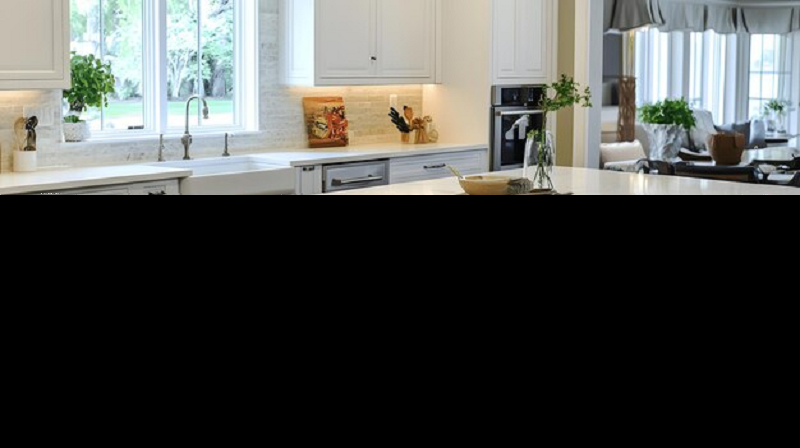
If you’ve spent any time scrolling kitchen renovation photos, you already know white quartz kitchen countertops are everywhere right now. And there’s a good reason for that. They’re one of the few surfaces that look expensive, resist stains, and don’t need the babying that real marble does.
But “white quartz” isn’t one single product. There are dozens of shades, finishes, and price points hiding under that name, and picking the wrong one is an easy (and expensive) mistake. This guide walks through what white quartz kitchen countertops are actually made of, what they cost, and how to choose a shade that won’t look dated in five years.
What Are White Quartz Kitchen Countertops Made Of?
Quartz countertops are engineered, not carved from a single block of stone. Manufacturers grind up natural quartz crystal, mix it with pigments and resin (usually around 90% stone to 10% resin), then compress it into slabs. That resin is what gives white quartz countertops their non-porous, low-maintenance surface, and it’s also why they behave a little differently from natural stone when it comes to heat.
How Much Do White Quartz Countertops Cost?
Expect to pay somewhere between $50 and $150 per square foot installed, with most homeowners landing closer to $70-$100. A typical 40 square foot kitchen runs around $3,500 to $5,000 once fabrication and installation are factored in. Premium white quartz kitchen countertops with heavy veining or a branded pattern (think Cambria or Caesarstone) sit at the top of that range, while plain, solid white slabs are usually the cheapest option in the whole quartz lineup.
What Are the Pros and Cons of White Quartz Kitchen Countertops?
The pros are easy to list: quartz is hard, scratch resistant, and doesn’t need sealing the way granite or marble does. Spills wipe off, it won’t crack under normal use, and every slab looks basically the same as the sample you picked in the showroom, which isn’t always true of natural stone.
The cons matter more with white specifically. Light surfaces show scuffs, water spots, and dust faster than a grey or black countertop would. Quartz also isn’t heat proof. A hot pan set directly on the surface can scorch the resin and leave a permanent yellow or brown mark, so trivets aren’t optional here, they’re essential.
Which White Quartz Shade Fits Your Kitchen Style?
This is where most buying guides stop short, so let’s actually get into it.
- Solid, bright white: best for modern or minimalist kitchens where you want the countertop to disappear into the cabinetry.
- Marbled white with grey veining: mimics Calacatta marble and works well in traditional or transitional kitchens that want a touch of drama without the maintenance.
- Speckled white: hides crumbs and water marks better than the other two, which makes it a smart pick for busy family kitchens.
If you’re not sure, ask your fabricator for a sample larger than the usual palm sized chip. Lighting changes everything with white quartz, and a tiny swatch under showroom lights rarely matches how it looks in your actual kitchen.
How Do You Clean and Maintain White Quartz Countertops?
Daily cleaning is genuinely simple: warm water, a mild soap, and a soft cloth. Skip anything abrasive, including baking soda pastes, since they can dull the surface finish over time. For a deeper clean, a dedicated quartz cleaner and a soft nylon brush handle most buildup around the sink and stove.
The one habit worth building early is wiping up red wine, coffee, and turmeric based sauces quickly. White quartz countertops resist staining far better than marble, but they’re not stain proof, and pigmented liquids left overnight can leave a faint shadow.
Are White Quartz Kitchen Countertops Worth It?
For most kitchens, yes. You’re paying a premium over laminate or basic granite, but you’re getting a surface that won’t need resealing, won’t chip easily, and photographs beautifully for resale. The trade off is a bit more vigilance around heat and dark spills than a darker countertop would need.
Frequently Asked Questions
Do white quartz kitchen countertops stain easily? No, but they’re not immune. Non-porous quartz resists staining far better than marble, though strong pigments like wine or turmeric can leave a mark if left too long.
Can you put a hot pan on white quartz countertops? It’s not recommended. Quartz can scorch above roughly 150°F, so always use a trivet or hot pad.
How long do white quartz kitchen countertops last? With normal care, a properly installed quartz countertop typically lasts 25 to 30 years without needing replacement.