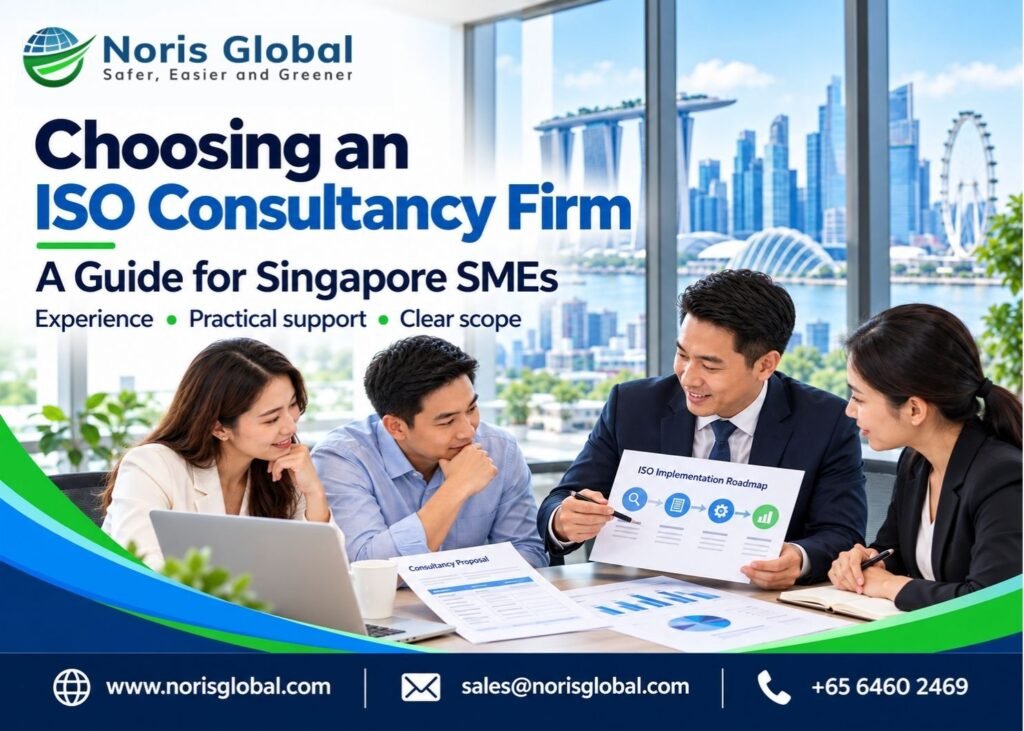
You have found a tender worth bidding for, and the requirements page asks for ISO 9001 and a valid bizSAFE certificate. Your team is busy, nobody has written a quality manual before, and the submission date is closer than you would like. Plenty of small business owners in Singapore land in exactly this spot.
Certification is well within reach for a small company. It simply goes faster, and costs less in wasted effort, when someone who has done it many times guides you. This article covers what a good ISO consultancy firm for SMEs Singapore owners can rely on should do, how bizSAFE fits in, and how to avoid the mistakes that slow people down.
Why Singapore SMEs Pursue ISO and bizSAFE
Customers, main contractors and government agencies want proof that a supplier runs a controlled operation. ISO standards give that proof in a form recognised worldwide. bizSAFE does the same for workplace safety and health at the local level.
The standards small firms ask about most often are:
- ISO 9001 for quality management
- ISO 14001 for environmental management
- ISO 45001 for occupational health and safety
- ISO 27001 for information security
- ISO 22000 for food safety management
Which one matters depends on who buys from you. A cleaning company chasing public contracts, a machining shop supplying a multinational and a software house handling client data all need different things. Start with what your buyer requires, not with a wish to collect certificates.
What an ISO Consultancy Firm for SMEs Singapore Should Actually Do
A consultant does not issue your certificate. Only an independent certification body can do that, and reputable ones are accredited by the Singapore Accreditation Council. The consultant’s job is to get you ready for that audit and to build a system your staff will genuinely use.
Good work usually follows these stages:
- Gap review: The consultant compares your current practice with the standard and lists what is missing.
- System design: You decide together which procedures, records and responsibilities the business needs, sized to your headcount.
- Documentation: Policies and procedures are written in plain language and reflect how your team really works.
- Training: Staff learn their own part of the system, not the whole standard.
- Internal audit and management review: You test the system yourself before an outsider does.
- Audit support: The consultant helps you respond to any findings from the certification body.
Be wary of anyone who sells a bundle of templates with your logo pasted on top. Auditors interview staff, and it shows quickly when people cannot explain the procedures they are supposed to follow.
Understanding bizSAFE and Why Level 3 Matters
bizSAFE is a five level programme run under the Workplace Safety and Health Council. It helps companies build safety capability in stages. The early levels focus on commitment and planning. Level 3 is where a company shows it has put risk management into practice, and an approved third party auditor checks that work.
Level 3 carries real commercial weight. Many public sector tenders and main contractors ask for it, particularly in construction, marine and other higher risk industries. A firm without it can be shut out of a bid it would otherwise win. Requirements differ from one tender to the next, so always read the specific document before you commit to a plan.
When a bizSAFE Level 3 Consultant Singapore Companies Hire Makes Sense
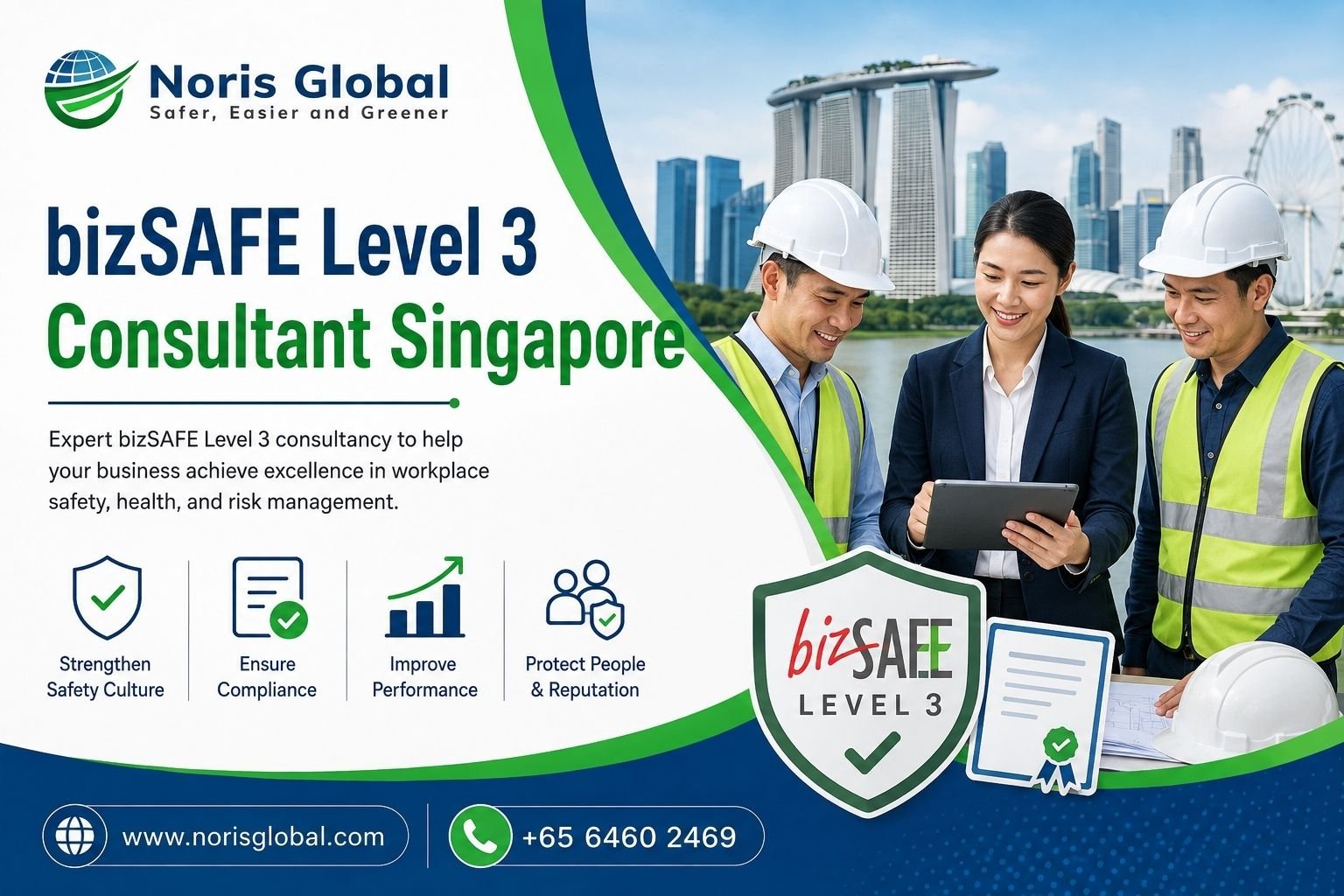
A bizSAFE Level 3 consultant Singapore firms turn to should help you build the safety system the audit will examine. That typically includes:
- A written WSH policy signed by top management
- Risk assessments for each work activity, with control measures
- Safe work procedures for tasks that carry meaningful risk
- Training records and toolbox talk records
- Incident reporting and investigation steps
- Emergency response plans
- Contractor and supplier safety requirements
Some businesses handle this alone, especially if they have a capable safety officer. Others lack the time or the experience, and a consultant closes that gap. What matters most is industry familiarity. The hazards in a warehouse are not the hazards on a fit out site, and a consultant who has never seen your type of work will write generic risk assessments that an auditor will question.
Combining ISO and bizSAFE Work
Many SMEs need both, and the two overlap more than most owners expect. Management commitment, document control, training records, internal audits and corrective actions appear in both. Building them once and using them twice saves a lot of duplicated effort.
ISO 45001 also covers much of the same ground as the higher bizSAFE levels. A company that starts with a solid safety system often finds the step toward ISO 45001 far shorter than it would have been from a standing start. This is one reason to look for a firm that handles quality, safety and environmental work together rather than three separate providers who each start from zero.
How to Vet a Consultant Before Signing
Price matters, but it should not be the first filter. Ask these questions in the first meeting:
- Have you worked with businesses of my size and in my industry?
- Which certification bodies have your clients used?
- Who will do the work on my account, and how often will they be on site?
- What exactly does the fee include? Are audit support and follow up visits covered?
- Can I speak with two or three recent clients?
- Do you advise on funding schemes, such as those offered through Enterprise Singapore?
On that last point, grant terms change from time to time, so confirm the current details on the agency’s website before you plan your budget around them.
Pay attention to how the consultant listens. A good one asks about your customers, your busiest months and your staff turnover before talking about clauses. A poor one opens with a price list.
A Realistic View of Timeline and Cost
Timelines depend on how ready you are. A small company with reasonable records and a committed owner can often reach ISO 9001 certification in a few months. Firms starting from nothing, or those with several sites, take longer. Cost varies with company size, scope, number of locations and the certification body you choose.
Be cautious with quotes that sit far below everyone else’s. They often leave out audit support, on site visits or training, and you end up paying for those separately. Ask for a written scope so you can compare offers fairly.
Common Mistakes Small Businesses Make
Most delays trace back to a short list of problems:
- Leaving the owner out: Auditors look for evidence that management drives the system. If the boss delegates everything, it shows.
- Copying another company’s manual: Procedures that do not match your operation collapse under questioning.
- Overbuilding: A ten person firm does not need a forty page procedure for every task. Keep it proportionate.
- Treating certification as the finish line: Surveillance audits come every year, and the system must keep running between them.
- Skipping records: If it is not recorded, an auditor will treat it as not done.
Where to Start This Month
Begin with your customers. Check which certifications they or their tender documents require, and set a realistic date. Then shortlist two or three providers, ask the vetting questions above and request written scopes. Choosing the right ISO consultancy firm for SMEs Singapore businesses can work with over months, rather than the cheapest or fastest one, is usually the decision that shapes how smooth the whole process feels.
Frequently Asked Questions
1. What does an ISO consultancy firm do for a small business?
It reviews your current practices against the chosen standard, helps you design and document a proportionate system, trains your staff and prepares you for the certification audit. It does not issue the certificate itself.
2. How long does ISO certification take for an SME?
It depends on your starting point. Small firms with decent records and active management support often finish in a few months. Larger scopes or multiple sites take longer. Your consultant should give you a written timeline after the gap review.
3. Is bizSAFE Level 3 compulsory?
It is not a general legal requirement for every business. However, many public sector tenders and main contractors require it for certain types of work. Check the requirements of each tender or client contract you are pursuing.
4. Can the consultant also certify my company?
No. Certification must come from an independent certification body. A consultant who offers to certify you directly is a warning sign, since that would be a conflict of interest.
5. Do I need a bizSAFE Level 3 consultant in Singapore, or can I do it myself?
Some companies with an experienced safety officer manage on their own. A bizSAFE Level 3 consultant becomes valuable when your team lacks time or risk assessment experience, or when a tender deadline leaves little room for trial and error.