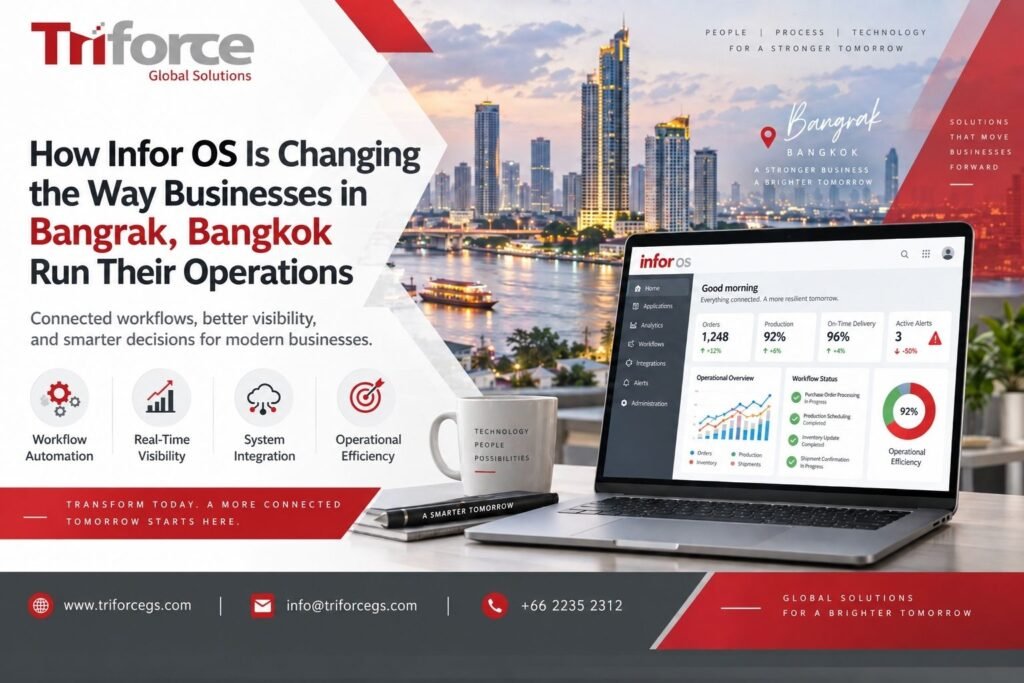
If you run a business in Bangrak, Bangkok, you already know the daily juggling act. Sales numbers sit in one spreadsheet, inventory sits in another system, and finance is somewhere else entirely. By the time anyone pulls a report together, the numbers are already out of date. This is the exact problem Infor OS was built to solve, and it is why more companies across Bangrak and greater Bangkok are looking at it as their foundation for growth.
This guide walks through what the platform actually is, why it matters for businesses operating in this part of the city, and how to approach adopting it without disrupting the work you already have running.
What Infor OS Actually Is
Infor OS is the operating platform that sits underneath Infor’s business applications, including its ERP, supply chain, and asset management tools. Think of it less as a single product and more as the connective layer that lets different business systems talk to each other, share data, and work from one consistent set of numbers.
Instead of forcing a company to rip out every existing tool and start fresh, Infor OS is designed to sit on top of what a business already uses and bring it into one coherent environment. That includes data management, workflow automation, analytics, and a shared user experience across applications.
For a business owner in Bangrak dealing with a mix of legacy software and newer cloud tools, this matters a great deal. It does not ask you to throw everything away. It asks you to connect what you have and build from there.
Why Bangrak Businesses Are Paying Attention to Infor ERP Thailand Solutions
Bangrak is one of Bangkok’s busiest commercial districts, home to trading companies, logistics operators, hospitality groups, and manufacturers who supply the wider region. These businesses share a common pressure. Growth has outpaced the systems they built years ago.
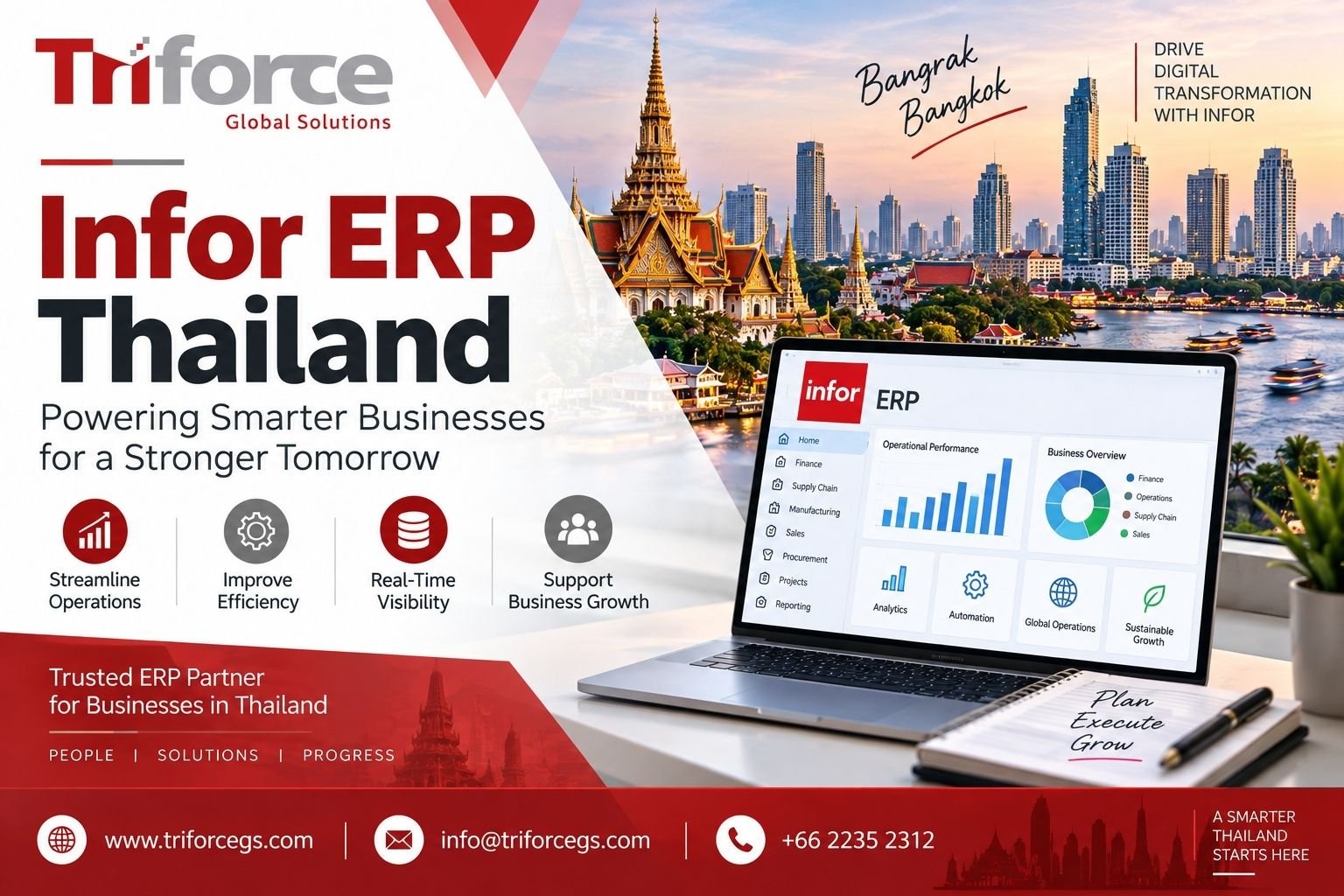
Interest in Infor ERP Thailand solutions has grown alongside this pressure. Local companies are realizing that spreadsheets and disconnected software cannot keep up with the volume of transactions, suppliers, and regulatory requirements they now handle. An Infor ERP Thailand deployment built on Infor OS gives these companies a single source of truth without forcing a complete overhaul of daily operations.
There is also a practical reason Bangrak businesses lean toward this platform specifically. Many companies here trade internationally, work across multiple currencies, and need to comply with Thai tax and reporting rules alongside global standards. It supports this kind of multi entity, multi currency structure well, which is why it fits naturally into an Infor ERP Thailand rollout for companies with cross border operations.
Core Components of Infor OS
The platform is made up of several parts that work together rather than as separate add ons.
- Infor Data Lake collects and organizes data from every connected application so reporting reflects real time activity rather than end of month snapshots.
- Infor Ming.le acts as the shared workspace where employees access applications, notifications, and workflows in one place instead of switching between logins.
- Birst analytics gives finance and operations teams dashboards built directly from live data, so decisions are based on what is happening now.
- Infor Document Management keeps contracts, invoices, and compliance records searchable and tied to the transactions they relate to.
- ION integration connects Infor applications with outside tools a business already relies on, from banking platforms to logistics software.
None of these pieces are meant to be used in isolation. The value comes from how they work as one system rather than as a collection of separate features.
How Infor OS Improves Daily Operations for Local Teams
The best way to understand it is to look at what changes for the people actually using it day to day.
A warehouse supervisor in Bangrak no longer has to call the finance team to confirm stock levels before approving a purchase order. The numbers update automatically because Infor OS keeps inventory and finance data in sync. A sales manager preparing a client proposal can pull accurate delivery timelines straight from the system instead of guessing based on last week’s report.
This kind of visibility reduces the small delays that add up over a busy month. Teams stop double checking numbers across systems, and managers spend less time reconciling reports that should already match.
For companies running an Infor ERP Thailand implementation, this shift shows up clearly in month end closing. What used to take a week of manual reconciliation often shrinks significantly once finance, sales, and operations are pulled from the same live dataset through Infor OS.
Choosing the Right Infor ERP Thailand Partner
Software alone does not solve operational problems. How a system is configured, who trains your staff, and how well the rollout matches your actual workflow all determine whether an Infor OS deployment succeeds or becomes another underused tool.
This is where working with a partner who understands both the platform and the local business environment makes a real difference. Triforce Global Solutions works with companies in Bangrak and across Bangkok to plan, configure, and support Infor OS and Infor ERP Thailand deployments that match how the business actually operates, not a generic template.
A good implementation partner will start by mapping your current processes before touching any configuration. They will identify which data needs to move first, which teams need training earliest, and which integrations matter most for your specific industry. Triforce Global Solutions builds this groundwork into every Infor ERP Thailand project it handles, which reduces the disruption that often comes with a system change.
What to Expect During Implementation
Businesses considering this move often ask how long a rollout takes and how much disruption to expect. The honest answer depends on the size of the company and how many systems need to connect, but a few patterns hold true across most Bangrak deployments.
- Discovery and planning usually takes several weeks and involves mapping existing workflows before any configuration begins.
- Data migration is handled in stages so daily operations continue without interruption.
- Staff training happens close to go live, focused on the specific tasks each team performs rather than generic system overviews.
- Go live support typically includes a period where the implementation partner stays closely involved to resolve issues quickly.
Companies that plan for this timeline, rather than expecting an overnight switch, tend to have a smoother transition and see faster returns from their Infor ERP Thailand investment.
Final Thoughts
This platform was not built to replace everything a business already relies on. It was built to connect it, clean it up, and make it usable in real time. For companies in Bangrak dealing with the growing pains of disconnected systems, that shift from scattered data to one working environment is often the difference between reacting to problems and staying ahead of them.
Businesses exploring Infor ERP Thailand options have a real opportunity here, provided the implementation is handled by people who understand both the platform and the way local companies actually work. Triforce Global Solutions has built its approach around exactly that combination, helping Bangrak businesses move to Infor OS without losing the operational knowledge they have built over the years.
Frequently Asked Questions
1. What is the difference between Infor OS and a standard Infor ERP system?
Infor OS is the underlying platform that connects data, applications, and workflows across a business. Infor ERP runs on top of it as one of the applications, handling finance, procurement, and operations. It is what allows that ERP data to sync with other tools rather than sitting in isolation.
2. Is Infor OS suitable for small and mid sized businesses in Bangrak?
Yes. While larger enterprises often get more attention, mid-sized companies benefit from it because it scales with the business rather than requiring a full system rebuild every time operations grow.
3. How long does a typical Infor ERP Thailand implementation take?
Timelines vary based on company size and complexity, but most mid sized implementations take a few months from discovery through go live, with data migration handled in phases to avoid disrupting daily work.
4. Does Infor OS support Thai tax and regulatory requirements?
Infor OS and its connected applications are configured to handle local tax rules, reporting formats, and compliance requirements as part of an Infor ERP Thailand deployment, which is one reason it fits well for companies operating under Thai regulations.
5. Can Infor OS integrate with software we already use?
Yes. Integration is one of the core functions of Infor OS through its ION technology, which connects Infor applications with outside platforms such as banking systems, logistics software, and other business tools already in use.