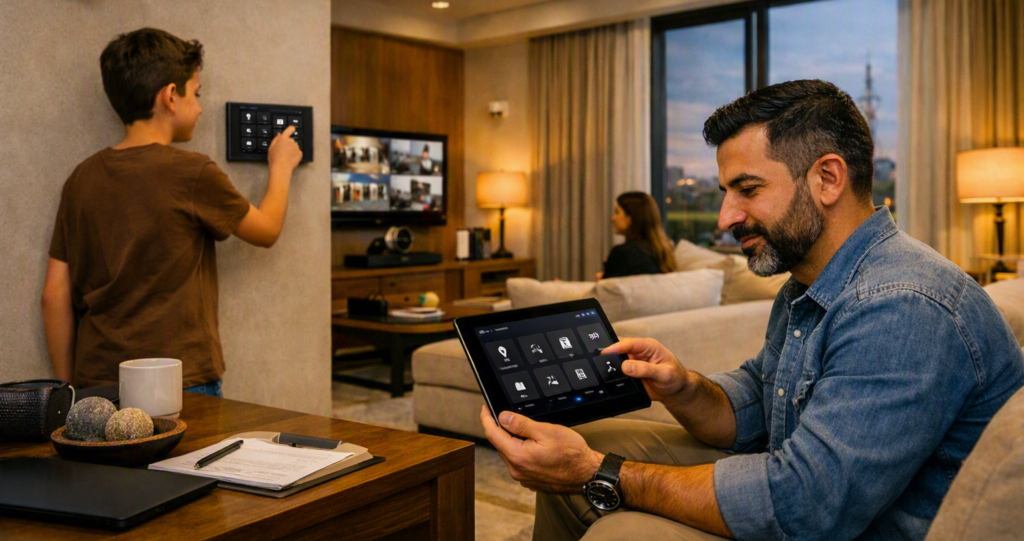
Home automation Dubai can be designed in different ways because every home has its own layout, needs, and daily routines. A small apartment may need only basic lighting and temperature control, while a large villa may need security, entertainment, lighting, curtains, and climate control. This makes customization an important part of planning a home automation system.
Why Home Automation Needs Customization
Homes are not built in the same way. They can differ in size, number of rooms, electrical wiring, internet coverage, and the way people use each space. A system that works well in one home may not be suitable for another.
Customization allows homeowners to select functions that match their actual needs. It can also help avoid adding unnecessary devices or features. The system can be planned around the home’s existing structure and the user’s normal routine.
Customization for Apartments
Apartments usually have less space than villas, so the automation setup can be kept simple. Smart lighting, air conditioning control, smart locks, and curtain control may be useful choices.
For example, lights can be controlled from a phone or through a central control system. Temperature settings can also be adjusted without manually changing each air conditioning unit. These options can make everyday tasks easier without requiring a large installation.
Customization for Villas
Larger homes often have more rooms and separate areas that need different controls. A villa may include bedrooms, living rooms, kitchens, outdoor areas, garages, and entertainment spaces.
A customized system can connect different functions across these areas. Lighting can be set according to each room, while security devices can cover entry points and outdoor spaces. Climate control can also be managed separately in different parts of the house.
This approach gives homeowners more control without requiring every room to operate in exactly the same way.
Lighting Can Be Designed Around Each Room
Lighting is one of the easier areas to customize. Different rooms have different purposes, so they may need different lighting settings.
A living room might use brighter lighting when people are active and softer lighting during the evening. Bedrooms can have gentle lighting for nighttime use. Kitchens may need stronger light for cooking and food preparation.
Automation can group these settings into simple scenes. One command could adjust several lights at once instead of requiring each light to be controlled separately.
Temperature Control Can Be Customized
Temperature preferences can vary between rooms and family members. A customized system can allow different areas of a home to have separate temperature settings.
For instance, bedrooms may have a different temperature preference from living areas. A system can also use schedules to adjust cooling during different parts of the day.
This type of control can be particularly useful in homes where rooms are used at different times.
Security Features Can Match the Home Layout
Security automation should also consider the structure of the property. An apartment may have fewer entry points, while a villa can have several doors, windows, gates, and outdoor areas.
A customized setup may include smart locks, door sensors, motion sensors, cameras, and alerts. The number and location of these devices can depend on the home’s layout.
For example, outdoor areas may need motion detection, while main entrances may require smart access control. This helps ensure that devices are placed where they are most useful.
Entertainment Systems Can Be Built Around Personal Use
Home entertainment is another area where customization can make a difference. Some households may want a simple television and speaker setup, while others may use a dedicated media room.
Audio and video equipment can be arranged based on room size, seating position, and how the space is used. A living room may need a basic setup, while a home cinema can require more detailed control of sound, lighting, curtains, and display equipment.
Automation Can Work With Existing Devices
Customization does not always mean replacing everything in a home. In some cases, automation can be planned around devices that are already installed.
Before choosing new equipment, it is useful to check compatibility. Existing lights, air conditioners, security equipment, or entertainment devices may work with certain automation systems. This can influence which control methods and devices are suitable.
Wired and Wireless Options
The type of home can also affect whether wired, wireless, or mixed technology is appropriate. New homes may provide more opportunities for planned wiring because cables can be installed during construction.
Existing homes may benefit from wireless devices because they can reduce the need for major changes to walls and wiring. A combination of wired and wireless equipment can also be considered when different parts of a home have different requirements.
Planning for Future Changes
A home automation system should also allow room for future changes. A family may add new rooms, devices, or security requirements later.
Choosing a flexible system can make it easier to add compatible devices when needed. Good planning also considers how the system will be controlled as the household’s needs change.
The main idea behind customization is simple: automation should fit the home rather than forcing every home to use the same setup. From a small apartment to a large villa, Home automation Dubai can be planned around the property’s layout, existing equipment, daily routines, and individual preferences.