gutter repair in Cedar Rapids
Your home’s gutter system does much more than collect rainwater. It directs water away from the roof, siding, foundation, and landscaping, helping prevent expensive structural problems. In Cedar Rapids, changing weather conditions, seasonal storms, and falling leaves can put extra stress on gutters throughout the year. The 2020 derecho also demonstrated how severe weather can place additional demands on roofing and gutter systems across the area. When small issues are ignored, they often develop into larger repairs that affect multiple parts of your property. Understanding the early warning signs can help you protect your investment and avoid unnecessary expenses.
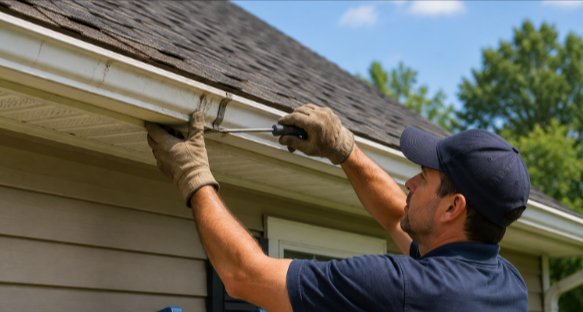
Many homeowners delay maintenance because gutter problems appear minor at first. A loose bracket or a small leak may not seem urgent, but these issues can quickly worsen after heavy rainfall. Scheduling gutter repair in Cedar Rapids, IA as soon as problems appear helps maintain proper drainage and reduces the risk of water damage. Timely repairs also extend the lifespan of your gutter system while keeping your home’s exterior in better condition.
Common Signs Your Gutters Need Repair
Recognizing damage early makes repairs simpler and more affordable. Watch for these common warning signs:
- Water spilling over the sides during rain
- Cracks, holes, or rust spots
- Gutters pulling away from the roofline
- Standing water inside gutter channels
- Peeling paint or water stains on siding
- Soil erosion around the home’s foundation
- Sagging sections or loose fasteners
These symptoms can have different causes, so the condition of the surrounding gutter components should be considered before determining whether repair is necessary.
Why Prompt Gutter Repairs Matter
Ignoring damaged gutters can affect how water moves across and around your property. The consequences depend on where drainage is failing and how long the problem remains unresolved.
Control Water at the Foundation
When downspouts discharge too close to the house, concentrated runoff can saturate soil near the foundation. Correcting gutter alignment and downspout discharge points helps move water away from the structure instead of allowing it to collect beside the foundation.
Keep Roof Edges and Fascia Protected
A gutter that has pulled away from the roofline or developed damaged joints may allow water to reach fascia boards and other roof-edge components. Repairing the affected section helps restore the intended path for rainwater before continued exposure causes deterioration.
Limit Runoff Concentration Around the Property
Poorly directed water can carve channels through soil and carry mulch or loose landscaping material away from planting areas. Functional gutters and properly positioned downspouts help distribute drainage more effectively and reduce concentrated runoff.
Reduce Moisture Exposure on Exterior Surfaces
Overflowing or leaking sections can repeatedly expose siding and exterior finishes to water. Addressing the source of the overflow helps limit recurring moisture contact and the staining or surface deterioration it may cause.
Maintenance Tips for Long-Lasting Gutters
Regular maintenance keeps your gutter system performing efficiently throughout every season.
Clean Gutters Regularly
Leaves, twigs, and debris should be removed several times each year, especially during fall and after major storms.
Inspect After Severe Weather
Strong winds and heavy rainfall can loosen brackets or create hidden damage. A quick inspection helps identify problems before they become costly.
Check Downspouts
Ensure downspouts remain free of obstructions so water flows safely away from your home’s foundation.
Trim Nearby Trees
Overhanging branches increase leaf buildup and may damage gutters during storms. Routine trimming reduces maintenance needs.
When Repairs Are Better Than Replacement
Not every gutter problem requires a completely new system. Many issues can be corrected with professional repairs when damage is limited.
Repairs are often suitable for:
- Small leaks or separated joints
- Loose hangers or brackets
- Minor sagging sections
- Localized rust or corrosion
- Misaligned gutter sections
Replacement becomes more practical when the gutter system is older and multiple sections require attention, particularly when deterioration affects a substantial portion of the total linear footage. Material condition also matters; widespread corrosion or cracking in metal gutters may make continued repairs less practical than replacement. Homeowners should also compare the repair-to-replacement cost ratio: when repeated repairs approach a significant share of the cost of a new system, replacement may provide better long-term value. The overall condition, system age, affected material, and amount of damaged guttering should be evaluated together rather than relying on a single repair symptom.
Choosing the Right Repair Solution
Every home has unique drainage requirements based on roof design, landscaping, and surrounding trees. A thorough inspection helps determine whether simple repairs, resealing, realignment, or component replacement will restore proper performance. The inspection may also consider gutter gauge, K-style or half-round profiles, hidden hangers or spikes, appropriate downspout sizing, and whether gutter guards are contributing to drainage issues. Addressing issues early prevents larger structural concerns and helps your gutter system perform efficiently throughout every season.
Conclusion
Keeping gutters in good condition is one of the simplest ways to protect your home from water-related damage. Routine inspections, seasonal cleaning, and prompt repairs help preserve your roof, siding, foundation, and landscaping. If you notice leaks, sagging sections, or overflowing water, scheduling gutter repair in Cedar Rapids, IA quickly can prevent more extensive repairs and keep your drainage system working as intended for years to come.
Source URL: https://shorturl.at/dzzOM