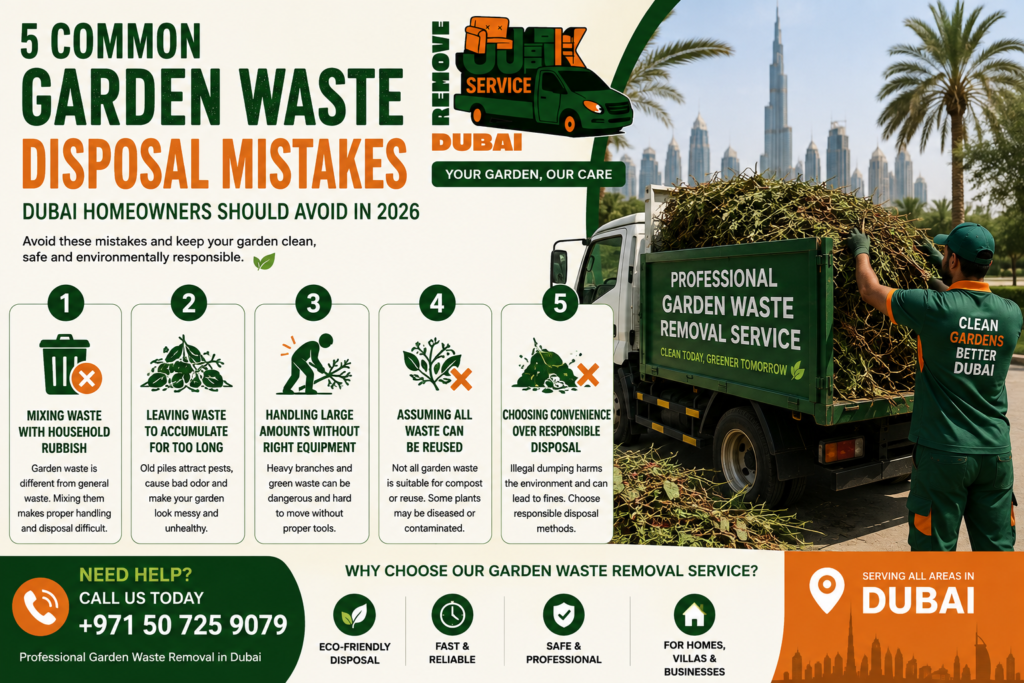
5 Common Garden Waste Disposal Mistakes Dubai Homeowners Should Avoid in 2026
5 Common Garden Waste Disposal Mistakes Dubai Homeowners Should Avoid in 2026
A well-maintained garden can transform the appearance of a home. Regular pruning, trimming, landscaping, and planting keep outdoor spaces attractive, but these activities also create a significant amount of garden waste.
Leaves, branches, grass clippings, weeds, dead plants, and other organic debris can quickly accumulate after even a routine gardening session. While removing this waste may seem straightforward, homeowners can make several common mistakes that create unnecessary work and inconvenience.
Understanding these mistakes can help Dubai residents manage garden waste more efficiently in 2026.
1. Mixing Garden Waste With General Household Rubbish
One of the most common mistakes is putting garden debris together with regular household waste.
Garden waste often includes materials such as branches, leaves, grass clippings, hedge trimmings, and dead plants. These materials are different from household rubbish such as packaging, food waste, plastics, and other domestic items.
Mixing different types of waste can make proper handling more difficult.
Instead, homeowners should separate garden debris during the cleanup process. Keeping organic garden materials together makes it easier to determine the appropriate disposal, reuse, or removal option.
For larger quantities, arranging garden waste removal Dubai services can also help homeowners avoid the problem of storing large amounts of debris at home.
2. Leaving Garden Waste to Accumulate for Too Long
Another mistake is assuming that garden waste can simply be left in a corner until there is enough time to deal with it.
Small amounts may not seem like a problem initially, but several weeks of pruning, trimming, and landscaping can quickly turn into a large pile of branches and organic debris.
Accumulated garden waste can take up valuable outdoor space and make the property look untidy. It can also make future garden maintenance more difficult.
A better approach is to deal with garden waste regularly. Small quantities can often be managed as part of routine maintenance, while larger amounts can be removed when necessary.
3. Trying to Handle Large Amounts of Waste Without the Right Equipment
Garden waste isn’t always lightweight.
Large branches, thick hedge trimmings, palm fronds, and debris from landscaping projects can be bulky and difficult to move. Trying to load and transport these materials without suitable equipment can turn a simple garden cleanup into a physically demanding task.
Homeowners should consider the size and weight of the waste before deciding to handle everything themselves.
If a landscaping project has produced a substantial amount of debris, a professional garden waste removal service may be a much more practical solution.
Professional removal can save time and reduce the physical effort involved in collecting, loading, and transporting garden waste.
4. Assuming Every Type of Garden Waste Can Be Reused
Reusing garden waste is an excellent idea when the material is suitable, but not everything should automatically be placed into a compost pile or reused around the garden.
Healthy leaves, grass clippings, and certain plant materials may be suitable for composting or other forms of reuse. However, diseased plants, contaminated materials, certain treated materials, or unsuitable waste should be handled differently.
Before reusing garden debris, homeowners should consider what the material is, whether it is healthy, and whether it is suitable for its intended purpose.
When there is uncertainty, appropriate waste-management guidance or professional advice can help prevent incorrect disposal.
5. Choosing Convenience Over Responsible Disposal
One of the biggest mistakes homeowners can make is focusing only on getting waste out of the garden without considering where it goes afterward.
Garden waste should not simply be dumped in unauthorized areas, vacant plots, roadsides, or other unsuitable locations.
Improper disposal can affect the appearance of communities and may create environmental and cleanliness concerns.
Responsible disposal means using suitable collection, recycling, reuse, or waste-management channels.
For homeowners with large quantities of garden debris, professional removal can offer a more convenient way to clear the property while ensuring the waste is handled through appropriate channels.
How Can Homeowners Make Garden Waste Management Easier?
Avoiding common mistakes starts with having a simple plan.
After completing garden maintenance, homeowners can follow a few basic steps:
Separate the Waste
Keep garden debris separate from household rubbish whenever possible.
Estimate the Quantity
Determine whether the waste can realistically be handled with existing household resources or whether professional assistance would be more practical.
Reuse Suitable Materials
Some leaves, grass clippings, and healthy plant materials may have potential for composting, mulching, or other garden uses.
Arrange Removal Promptly
Don’t allow large piles of branches and debris to remain around the property for extended periods.
Use Appropriate Disposal Options
Make sure waste is handled through suitable and responsible channels rather than being left in unauthorized locations.
When Should You Hire a Professional?
Not every garden cleanup requires professional assistance. A few bags of leaves or small amounts of grass clippings may be easy for a homeowner to manage.
However, professional help can become useful after larger projects such as:
- Tree and hedge trimming
- Garden renovation
- Landscaping projects
- Removal of dead plants
- Clearing overgrown gardens
- Large-scale pruning
- Villa garden maintenance
- Commercial landscaping
In these situations, the amount of debris can quickly exceed what a homeowner can conveniently collect and transport.
A reliable garden waste removal service can handle the physical cleanup and make the process significantly easier.
Why Regular Garden Waste Removal Matters
Garden maintenance is an ongoing process. Even a property that looks perfectly clean today can generate new waste after the next round of pruning or landscaping.
Regular garden waste removal helps prevent debris from accumulating and keeps outdoor areas more usable.
For Dubai homeowners, this can be especially valuable for villas, private gardens, rental properties, and commercial locations where cleanliness and appearance are important.
Instead of waiting until garden waste becomes a major problem, property owners can include waste removal in their regular maintenance routine.
Final Thoughts
Garden waste disposal doesn’t have to be complicated, but it does require a little planning.
Mixing garden debris with household rubbish, allowing waste to accumulate, attempting to transport bulky materials without suitable equipment, incorrectly reusing organic waste, and choosing inappropriate disposal methods are all mistakes homeowners can avoid.
For small quantities, responsible DIY management may be sufficient. When a garden cleanup produces a large volume of branches, leaves, plants, or other debris, professional garden waste removal Dubai services can provide a faster and more convenient alternative.
By managing garden waste properly, homeowners can maintain cleaner outdoor spaces and make their regular property maintenance much easier throughout 2026.