Feminine hygiene products are everyday essentials, but the way they are packaged can have a significant effect on storage, handling, and customer perception. Sanitary pads and related products need packaging that keeps them organized and protected while also presenting important product information clearly.
For brands selling feminine care products, packaging is therefore more than an outer covering. It can support product protection, brand recognition, convenience, and a consistent retail experience. From compact everyday packs to larger subscription boxes, the right packaging structure can be adapted to different products and selling environments.
Why Feminine Hygiene Packaging Matters
Sanitary products are commonly transported through several stages before reaching the customer. They may be stored in warehouses, moved through distribution networks, placed on retail shelves, or shipped directly to homes.
During this process, packaging can help protect individual products from crushing, dust, handling, and general wear. A well-designed carton also keeps the contents organized, which can make the final product look cleaner and more professional when customers open the package.
For brands, this creates an opportunity to combine practical protection with an attractive visual identity.
Choosing the Right Box Size
Feminine hygiene products are available in many shapes, thicknesses, and pack quantities. A box designed for a small daily-use pack may require a completely different structure from packaging intended for overnight pads or larger multipacks.
Custom dimensions allow brands to build packaging around the actual product rather than forcing different products into a standard carton. A properly sized package can reduce unnecessary empty space while maintaining enough room for safe handling.
The dimensions should also consider how the product will be arranged inside the box. Good structural planning can make filling, storage, transportation, and customer access more convenient.
Different Packaging Styles for Different Uses
There is no single packaging structure suitable for every feminine care product. Tuck-end cartons can provide a straightforward retail solution, while flip-top designs can create easier access to the contents.
Dispenser-style packaging can be useful where individual products need to be accessed regularly. Window designs may also be considered when a brand wants customers to see part of the product or packaging arrangement.
The best structure depends on the product, quantity, distribution method, and desired customer experience. A packaging supplier can help determine which construction is appropriate for each application.
Materials for Sanitary Product Packaging
Custom Boxes Zone plays an important role in the performance and appearance of feminine hygiene packaging. Paperboard and cardstock are commonly considered for retail cartons because they provide a printable surface while maintaining a relatively lightweight structure.
Kraft board can create a natural appearance and may be suitable for brands emphasizing simple, paper-based packaging. SBS cardstock offers a smooth surface that works well with detailed graphics, product information, and vibrant colors.
For larger packs or applications requiring additional strength, corrugated board can provide greater structural support. The appropriate material should be selected according to the product’s size, weight, handling conditions, and packaging objectives.
Building a Recognizable Feminine Care Brand
Packaging is one of the first physical touchpoints between a brand and its customers. A consistent combination of colors, typography, graphics, and logo placement can make products easier to recognize across retail shelves and online stores.
Some feminine care brands use soft and minimal visual designs, while others use bold colors and distinctive illustrations. Natural textures and simple graphics can also be used to communicate a clean or environmentally conscious brand identity.
The important consideration is consistency. When different product variations share similar visual elements, customers can more easily associate them with the same brand.
Clear Product Information on Packaging
Feminine hygiene packaging needs to communicate useful information without creating a cluttered appearance. Depending on the product and market, brands may include product type, quantity, absorbency level, usage instructions, material information, and other relevant details.
Good packaging design gives this information a logical place within the overall layout. Important details should remain easy to identify while branding and graphics continue to create an attractive presentation.
For Canadian businesses serving bilingual markets, packaging design may also need to accommodate English and French information where applicable. Planning this space before printing can help maintain a balanced design.
Sustainable Packaging Considerations
Environmental considerations have become increasingly important for many packaging buyers. Feminine care brands may therefore look for paper-based packaging options that align with their sustainability objectives.
Kraft and recyclable paperboard can provide alternatives for brands seeking a more paper-focused packaging approach. However, sustainability claims should always reflect the actual material, coating, inks, and disposal characteristics of the finished package.
Packaging efficiency can also contribute to a more considered approach. Avoiding unnecessary empty space and selecting an appropriate material thickness can help businesses design packaging around the actual requirements of the product.
The Role of Printing and Finishing
A strong packaging structure does not have to look plain. Modern printing techniques allow feminine care brands to create detailed artwork, consistent brand colors, illustrations, and informative layouts.
Matte and gloss finishes can create different visual effects, while foil stamping, embossing, debossing, and spot UV can be used for selected branding elements. These techniques can be particularly useful when a brand wants its packaging to stand out in a competitive retail environment.
However, finishing should support the overall design rather than overwhelm it. A simple logo treatment or carefully selected detail can sometimes have a stronger effect than applying multiple finishes across the entire package.
Packaging for Online and Subscription Sales
The growth of ecommerce and subscription services has changed how many feminine care products reach consumers. Instead of being handled only in retail environments, products may now travel directly from a warehouse to a customer’s home.
This makes packaging presentation increasingly important. A well-organized box can help create a better unboxing experience while providing additional space for brand messaging and product information.
Subscription brands can also use packaging variations for different quantities or monthly product selections. Consistent design across these variations can help maintain a recognizable customer experience.
Customization for Growing Brands
Startups and established feminine care companies may have different packaging requirements. A new brand might need smaller production quantities and a simple structure, while an established company may require multiple box sizes for an expanding product range.
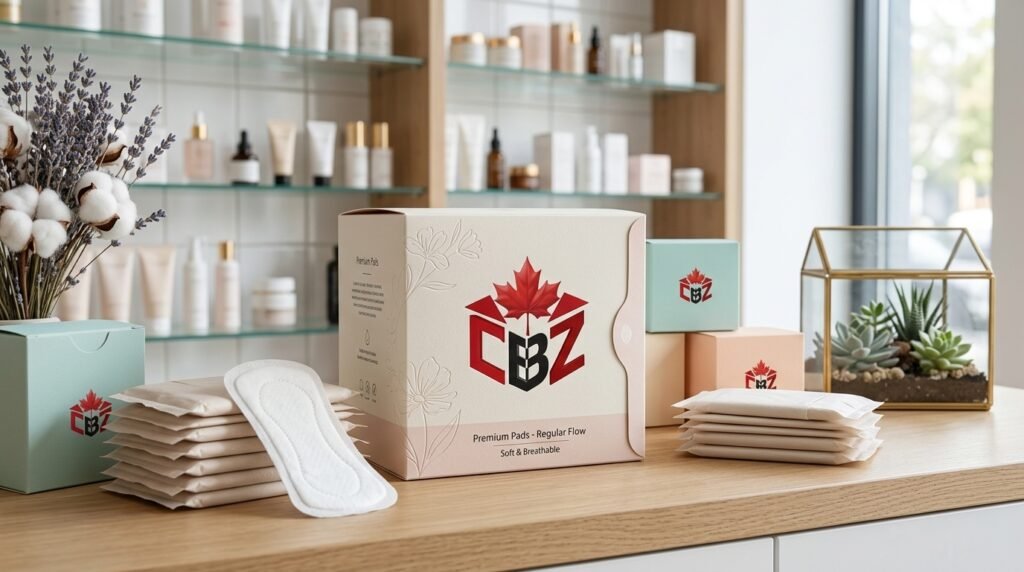
Custom packaging gives businesses greater control over dimensions, materials, printing, and structural design. For example, Custom Pads Boxes can be developed around specific sanitary pad sizes and branding requirements, helping businesses create packaging that fits both the product and the intended market.
This flexibility can also make it easier to maintain a consistent appearance as a product line grows.
Final Thoughts
Good feminine hygiene packaging brings together several considerations: product protection, practical handling, clear communication, branding, and presentation. The right combination of material, size, structure, and printing can help a sanitary product brand create packaging that works throughout the supply chain and at the point of sale.
For businesses entering or expanding within the feminine care market, packaging should be considered early in the product development process. A thoughtful design can support both everyday functionality and long-term brand recognition without sacrificing convenience.
As consumer expectations continue to evolve, feminine hygiene brands can use well-planned packaging to create a cleaner, more consistent, and more memorable product experience.