A vibrant sports jersey, a full-colour event shirt, or a personalised mug can look impressive when the design is sharp, durable, and accurately reproduced. However, no single printing technique works equally well for every material, colour, quantity, or design brief. Choosing the wrong method can result in dull colours, poor adhesion, unnecessary costs, or disappointing product quality.
Sublimation printing is one of the most effective options for certain Singapore custom printing projects, particularly when the design requires vivid colour, detailed graphics, or an all-over finish. However, it also has important material and colour limitations. Understanding how the process works and where it performs best will help you decide whether it is suitable for your project.
How sublimation printing works
Sublimation is a heat-transfer process that uses specially formulated dye inks. First, the design is printed in reverse onto transfer paper. Heat and pressure are then applied using a heat press. The solid dye changes directly into a gas, penetrates the polyester fibres or polymer-coated surface, and becomes part of the material as it cools.
Unlike surface-level printing, the ink is not simply placed on top of the fabric. This is why a successful sublimation print usually feels smooth and does not crack or peel in the same way some surface transfers can.
The process is commonly used for:
- Sports jerseys and teamwear.
- Polyester shirts and uniforms.
- Flags, banners, and fabric displays.
- Mugs, phone cases, plaques, and coated promotional items.
- Full-colour products with photographic or complex artwork.
When sublimation is a strong choice
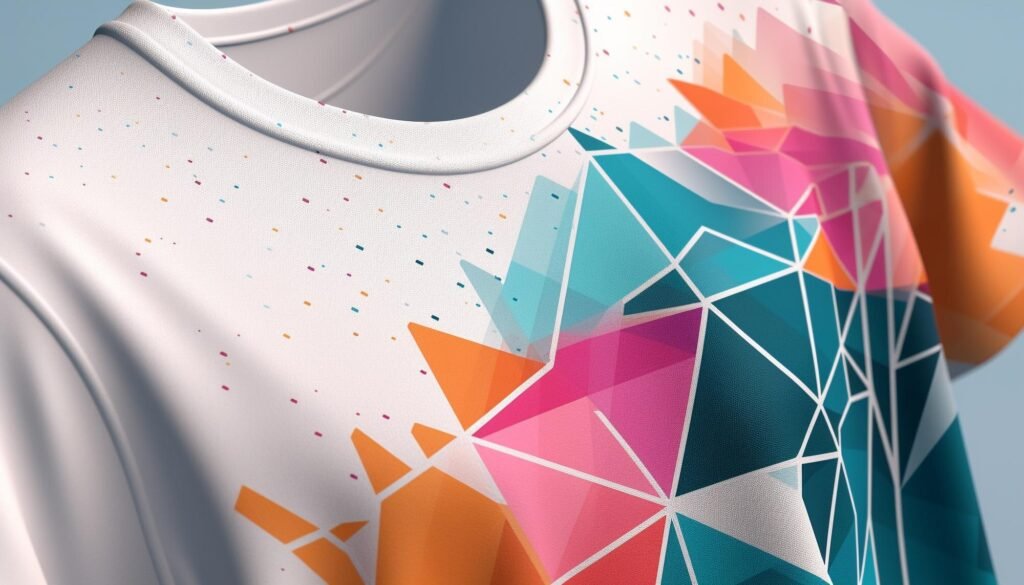
Sublimation is particularly suitable when a project requires bright, detailed artwork. It can reproduce gradients, photographs, fine lines, patterns, and multiple colours without requiring separate screens for each shade. This makes it useful for custom apparel and promotional products with intricate designs.
It is also a practical choice for all-over printing. Instead of limiting artwork to a small chest or sleeve area, the design can extend across much of the garment. This makes sublimation popular for cycling jerseys, esports clothing, sports uniforms, and event apparel.
Durability is another advantage. Because the dye bonds with the fibres or coated surface, the design is less likely to crack or flake as a separate layer. On suitable materials, sublimation can provide a comfortable finish that retains the fabric’s original feel.
The most important material requirement
The biggest limitation is fabric compatibility. Sublimation works best on white or light-coloured polyester, and it is not suitable for ordinary cotton garments. Polyester or a high-polyester blend is needed because the dye bonds with synthetic polymer fibres.
This means sublimation may not be the right method for:
- Cotton T-shirts.
- Canvas bags.
- Jute or other natural fabrics.
- Dark garments requiring light-coloured artwork.
- Materials without a suitable polymer coating.
Polyester blends may produce acceptable results, but the final appearance can be less vivid as the percentage of polyester decreases. For consistent colour and sharpness, it is important to confirm the fabric composition before approving the order.
Why garment colour affects the result
Sublimation inks are translucent and generally do not include opaque white ink. The colour of the garment therefore influences the final artwork. White polyester gives the brightest and most accurate results because it acts as a clean base for the printed colours.
Dark garments present a major challenge. Sublimation cannot place a bright yellow, white, or pastel design over a black shirt in the same way screen printing or direct-to-film printing can. For dark apparel, another printing method may be more appropriate.
Comparing other printing methods
The right method depends on the project rather than on which technology sounds most advanced.
Screen printing can be cost-effective for larger orders with simple artwork and a limited number of colours. Direct-to-garment printing is often considered for detailed designs on cotton clothing, while direct-to-film transfers can work across a wider range of fabrics and garment colours. Embroidery may be more suitable for logos on caps, jackets, uniforms, or workwear where a textured finish is preferred.
Sublimation is usually strongest when the project involves polyester, light backgrounds, full-colour designs, and a requirement for a soft, integrated finish.
Common mistakes to avoid
One frequent mistake is choosing sublimation before checking the product material. A visually attractive design cannot compensate for an unsuitable fabric. Always request material specifications and, where necessary, approve a physical sample before placing a large order.
Another mistake is preparing artwork without considering the base colour. A design created on a white digital canvas may look very different when transferred to a coloured garment. Designers should also check image resolution, colour profiles, bleed areas, seams, and panel alignment for all-over products.
Finally, do not compare prices without comparing the full production requirements. Artwork preparation, sampling, garment quality, quantity, finishing, and delivery can all affect the final cost.
Practical tips for Singapore projects
Before selecting a printing method, answer these questions:
- What material will be printed?
- Is the surface white, light, or dark?
- Does the design require full-colour or all-over coverage?
- How many items are needed?
- Will the products be washed or exposed outdoors?
- Is a soft, embedded finish important?
- Does the project require a sample or colour proof?
Local factors such as humid weather, event deadlines, storage conditions, and delivery schedules may also influence product selection. Planning early gives the printer time to check materials, prepare samples, and identify possible production issues.
Final thoughts
Sublimation printing is a strong choice for Singapore projects involving light-coloured polyester, coated promotional items, vivid artwork, and full-surface designs. It is less suitable for cotton, dark garments, and natural materials. The best decision comes from matching the printing process to the material, artwork, quantity, and intended use.
TJG Print can be referenced as part of that evaluation process, but the final choice should always be based on technical suitability rather than the name of a particular printing method or provider.